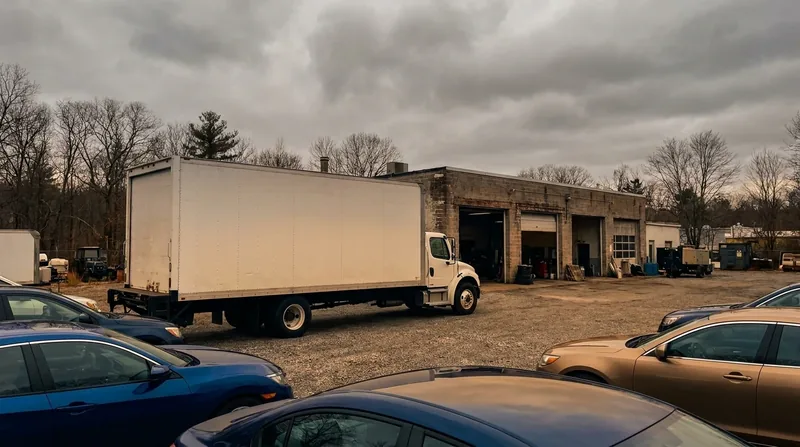
How to Start a Used Car Dealership in Oklahoma: $25,000 Bond and the Dealer Commission License
How to Start a Used Car Dealership in Oklahoma: $25,000 Bond and the Dealer Commission License
Getting an Oklahoma used car dealer license is mostly paperwork, and the paperwork has a clear order. You form your business entity first, then line up a $25,000 surety bond and liability insurance, then apply to the Oklahoma Used Motor Vehicle, Dismantler and Manufactured Housing Commission (OUMVDMHC). Sales tax, titling and tag rules apply once you start selling cars.
Disclaimer: This article is informational content only. It is not legal, tax or financial advice. Fees and rules change, so confirm every figure with the agency named before you spend money. Talk with an Oklahoma attorney and a CPA before you sign a lease, a loan or a purchase agreement for a lot.
What You Need Before You Start
Gather these items before you file anything. Several of them depend on each other, so the order in the steps below matters.
- A legal business entity formed with the Oklahoma Secretary of State, usually an LLC or a corporation
- A federal Employer Identification Number (EIN) from the IRS
- A registered agent with a physical Oklahoma street address
- A permanent business location that meets Commission rules and any city or county zoning
- A $25,000 used dealer surety bond from a bonding company
- A liability insurance certificate for the dealership
- Application and license fees (see the cost table below)
- A sales tax permit from the Oklahoma Tax Commission, issued through OkTAP
- A recordkeeping system for titles, bills of sale and tag issuance
Step 1: Form Your Business Entity
Most small lots form a limited liability company (LLC) because it is simple to maintain. You file Articles of Organization with the Oklahoma Secretary of State Business Filing Department. The filing fee is $100. Online filing is available through the Secretary of State website at sos.ok.gov/business.
Every LLC must file an LLC Annual Certificate for $25. It is due on the anniversary of the date you filed the Articles of Organization, and there is a 60-day grace period. The statute sets no late fee, but an LLC that misses the 60 days stops being in good standing. Reinstatement has no fee of its own, but you must file every delinquent annual certificate. Oklahoma has no franchise tax for tax year 2024 and later, so the $25 annual certificate is the main recurring state filing cost for an LLC.
A corporation files a Certificate of Incorporation instead. The fee is one-tenth of one percent of the authorized capital stock, with a $50 minimum. Domestic for-profit corporations do not file an annual certificate with the Secretary of State. Ask a CPA which structure fits your plans, since the choice affects taxes and liability.
If you plan to sell under a name other than your legal entity name, you need a Trade Name Report. It costs $25, and you file it with the Secretary of State, not the county clerk. No newspaper publication is required.
Step 2: Clear and Reserve Your Name
The name must include “limited liability company,” “limited company,” “LLC,” “LC,” “L.L.C.” or “L.C.” The abbreviation “Ltd.” and “Co.” are also acceptable. The name must be distinguishable from other entity, trade and reserved names on file, both current and those filed within the last three years.
Search the Secretary of State business database at sos.ok.gov business search before you settle on a name. If you need time, you can reserve a name for $10 for 60 days through the name availability page. A reservation does not form the business, so you still have to file the Articles of Organization within the reservation period.
Step 3: Appoint a Registered Agent
Your LLC or corporation must keep a registered agent at a physical Oklahoma street address. A PO box does not qualify. The office must be open during business hours to accept service of process. The agent can be an individual Oklahoma resident, or a domestic or qualified foreign corporation, LLC or limited partnership in good standing. Changing the agent or the office costs $25, so choose a location you will keep.
Step 4: Check Your Location, Zoning and Local Licenses
Oklahoma has no general state business license. The Commission licenses the dealership itself, but your city or county may still require permits for the lot. Start with these checks:
- City licenses: Ask the city clerk whether the city licenses vehicle sales or lots, and whether it charges a general or occupational license. Some cities do, including Bartlesville, Yukon, Sapulpa, Bixby, Tahlequah and Mustang. Oklahoma City and Tulsa issue no general city business license and license only specific activity types, so confirm whether a car lot falls under one of them.
- Zoning: Oklahoma County and Tulsa County run zoning and building permits only in unincorporated areas. If the lot is inside city limits, the city handles zoning. Confirm the use is allowed at your address before you sign a lease.
- Commission location rules: The Commission has rules for a permanent business location. Confirm what it requires for your building, signage and display area before you apply.
A county does not issue business licenses. Treat the county as a zoning and building check, not a license office.
Step 5: Obtain the $25,000 Used Dealer Surety Bond
The bond is the centerpiece of the Oklahoma used car dealer license. A used dealer and a wholesale dealer must each post a $25,000 surety bond. A bonding company writes the bond, and the bond protects consumers who are harmed by a dealer who violates the law.
Your premium is set by the bonding company, not the state, and it varies with your credit and business history. Ask two or three surety agents for quotes and compare them. Keep the bond active for as long as you hold the license, because a lapse can stop your license. Confirm the consequences of a lapse with the Commission.
Step 6: Buy Liability Insurance
The Commission requires a liability insurance certificate for the dealership. Buy the policy through a licensed insurance agent who understands auto dealers. Ask the agent to issue the certificate in the form the Commission accepts. Confirm the required coverage limits with the Commission before you buy, because the minimums are set by the agency and can change.
Step 7: Apply to the Commission for Your Dealer License
The Oklahoma Used Motor Vehicle, Dismantler and Manufactured Housing Commission licenses dealers. Its office is at 421 NW 13th, Suite 330, Oklahoma City, and its phone number is 405-521-3600. Choose the license type that matches your operation:
- Used dealer: sells used vehicles from a permanent lot
- Franchised used dealer: sells used vehicles and holds a franchise
- Wholesale dealer: sells only to other licensed dealers
Other license types, including rebuilder, automotive dismantler, used motor vehicle crusher, temporary-plate vendor and salesperson, have their own requirements. Fees are set under 47 O.S. 583 as last published. The most recent published amounts are a $600 initial used or wholesale dealer license, a $300 renewal, $200 for each additional place of business and $50 for each salesperson. Those figures may have changed, so confirm current amounts with the Commission before you budget.
Each salesperson who works on your lot needs their own license. If you sell from more than one location, each additional place of business carries its own fee. Ask the Commission about its permanent-location rules before you open a second site.
Step 8: Get Your Sales Tax Permit Through OkTAP
A dealership collects sales tax, so you need a sales tax permit from the Oklahoma Tax Commission (OTC). Apply through OkTAP at oktap.tax.ok.gov. The permit costs $20 for three years. Each extra location costs $10. The applicant must be 18 or older. Do not budget the permit as a one-time or free cost, because the three-year fee recurs.
The state sales tax rate is 4.5%. Cities and counties add their own sales taxes, and the Tax Commission collects them with the state tax on one return. Combined rates run from about 8.25% to above 10%, depending on where the sale happens. If you will withhold income tax from employees, register with the Tax Commission through OkTAP as well. The general Tax Commission site is at oklahoma.gov/tax.
Step 9: Set Up Your Tag, Title and Delivery Process
This is where most new dealers make mistakes. Build these rules into your paperwork before your first sale:
- One tag per sale. Each sale uses one paper tag.
- No registration agency. A dealer may not act as agent for registering a used vehicle. Your quotes and advertising should use “tag, title and tax included” wording only, and should not promise that you will register the car for the buyer.
- Title delivery within 30 days. Deliver the title to the buyer or lienholder within 30 days of the sale. A lender has 25 days to perfect a lien, so track lien paperwork carefully.
- Titling and registration. Vehicle titling and registration are handled by Service Oklahoma. Confirm the current titling steps and the tax collection process with them before your first deal.
Step 10: Handle Resale Sales Correctly
Oklahoma has no state-issued resale certificate. When a buyer purchases a vehicle for resale, the buyer gives you an exemption or resale form. Keep that form in the deal file. You will find the form on the Oklahoma Tax Commission website at oklahoma.gov/tax. Confirm the current form and how to use it with the Tax Commission before you rely on it.
Common Mistakes to Avoid
- Assuming there is a general state business license. The Commission license is specific to vehicle sales, and cities or counties may add their own requirements.
- Filing a DBA with the county. A trade name report is filed with the Secretary of State.
- Missing the annual certificate deadline. An LLC that misses the 60-day grace period loses good standing and must file every delinquent annual certificate to fix it.
- Using a PO box as the registered agent address. The agent needs a physical Oklahoma street address.
- Promising registration service. Use “tag, title and tax included” wording only, and do not act as the buyer’s registration agent.
- Letting the bond or insurance lapse. Set calendar reminders for renewals and confirm the consequences with the Commission.
- Opening a second lot without the extra fees. Each additional place of business carries its own Commission fee, and each extra sales tax location costs $10.
- Skipping the local check. Ask your city about vehicle sales, zoning and any general occupational license before you sign the lease.
Cost Summary
The table below lists the costs covered in this article. Amounts marked “confirm” are published figures that the agency may have changed, so verify them before you budget.
| Item | Amount | Where to confirm |
|---|---|---|
| LLC Articles of Organization | $100 | Secretary of State |
| LLC Annual Certificate | $25 each year, 60-day grace period | Secretary of State |
| Corporation Certificate of Incorporation | $50 minimum (one-tenth of 1% of authorized stock) | Secretary of State |
| Name reservation | $10 for 60 days | Secretary of State |
| Trade Name Report | $25 | Secretary of State |
| Change of registered agent or office | $25 | Secretary of State |
| Used dealer surety bond | $25,000 bond; premium set by the surety | Bonding company |
| Used or wholesale dealer license | $600 initial and $300 renewal (confirm) | OUMVDMHC |
| Additional place of business | $200 (confirm) | OUMVDMHC |
| Salesperson license | $50 (confirm) | OUMVDMHC |
| Sales tax permit | $20 for three years | Oklahoma Tax Commission |
| Additional sales tax location | $10 | Oklahoma Tax Commission |
What to Expect After You Apply
Timelines depend on how quickly each filing clears, and some of them are outside your control. The Secretary of State publishes no processing-time guarantee. Documents are handled in the order received, and in-person filings must arrive before 4:30 p.m. Central. Online turnaround is not published, so call the Business Filing Department at 405-522-2520 to ask about current timing. Same-day service is available for $50 per document, but only for documents presented in person at the Secretary of State office.
Once your entity is formed, your bond and insurance are in place, and your Commission application is approved, you may be able to open for business. Many applicants find it helpful to file the entity first and start the bond and insurance applications at the same time, since those steps often take the longest. Results will vary with your location, your paperwork and your local rules, so treat this timeline as a planning guide rather than a promise.
Official Resources
- Oklahoma Secretary of State, Business Filing Department: sos.ok.gov/business
- Secretary of State business search: sos.ok.gov business search
- Secretary of State name availability: name availability page
- Oklahoma Tax Commission: oklahoma.gov/tax
- OkTAP sales tax permit: oktap.tax.ok.gov
- Oklahoma Used Motor Vehicle, Dismantler and Manufactured Housing Commission: 421 NW 13th, Suite 330, Oklahoma City, 405-521-3600
- Oklahoma Small Business Development Center network: oksbdc.org
Start with the entity filing, then move to the bond, insurance and Commission application. Keep a single folder for every filing, receipt and renewal date. A well-organized file makes the first audit, renewal and sale far easier to manage.
Keep exploring: related Oklahoma guides
- How to Start a Moving Company in Oklahoma
- How to Start a Courier or Delivery Business in Oklahoma
- How to Start a Trucking Company in Oklahoma
- How to Start a Towing Business in Oklahoma
- How to Start an LLC in Oklahoma
- Oklahoma Business License
- Cost to Start a Business in Oklahoma
- All Oklahoma business types
- Every Oklahoma guide in one place