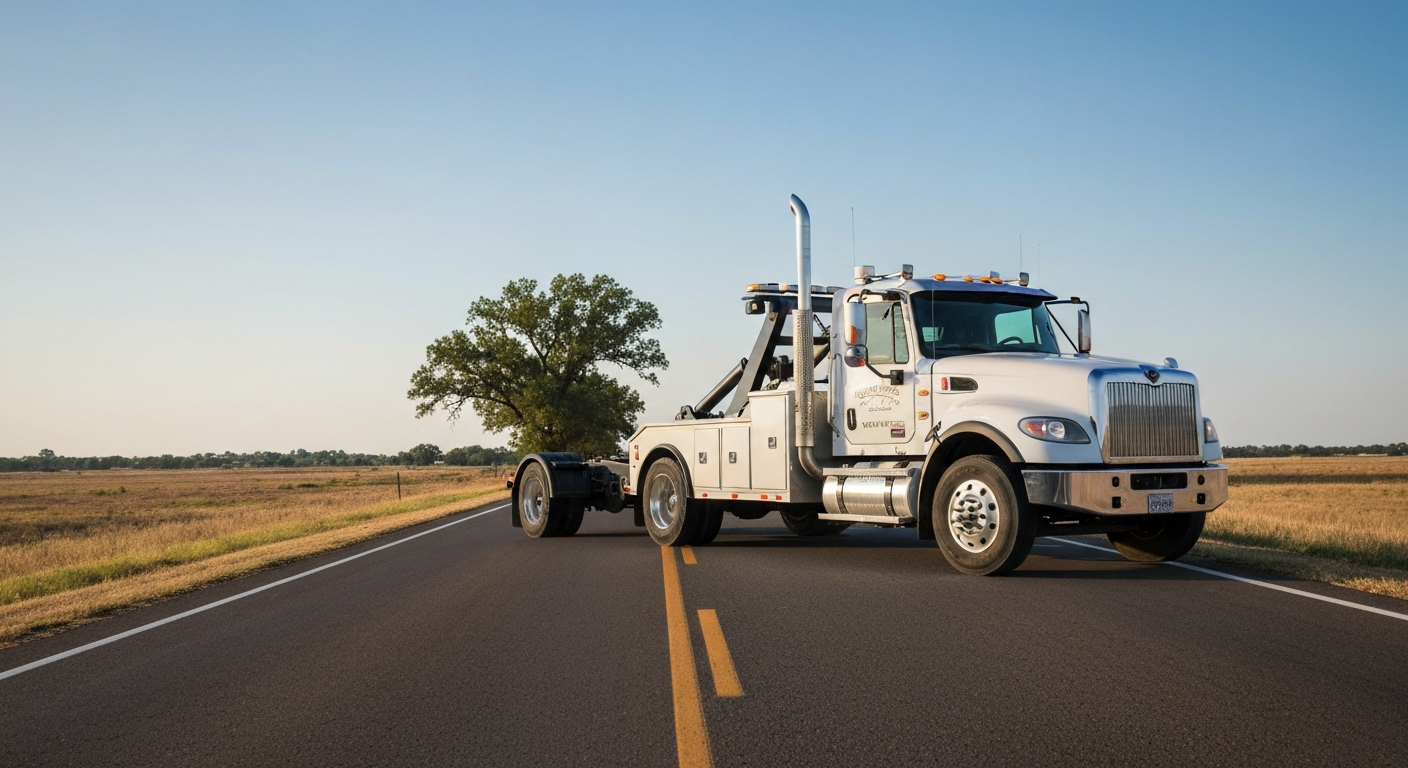
How to Start a Towing Business in Oklahoma
How to Start a Towing Business in Oklahoma
Oklahoma doesn’t let just anyone hook up a truck and start pulling cars off the highway. The Department of Public Safety licenses every wrecker service operating in the state — and the requirements are more specific than you’d expect. We’re talking sign dimensions, 24-hour phone numbers, DPS vehicle inspections, and a $500 non-refundable application fee before you turn a single wheel in commerce.
This guide covers the full licensing path, the physical location requirements, what your drivers need, and what starting a towing business actually costs in Oklahoma.
DPS Wrecker Service License
Every towing and wrecker service in Oklahoma operates under the authority of the Oklahoma DPS Wrecker Services Division. Not the Secretary of State. Not a city permit office. DPS. You cannot legally advertise or operate a wrecker service in this state without this license in hand.
That distinction matters. A lot of new operators assume they can form an LLC, get insurance, and start working. You can’t. The DPS wrecker license is the gate you have to pass through first.
The fees:
- Original application: $500
- Annual renewal: $250
The $500 is non-refundable. If DPS reviews your application, sends an officer to inspect your vehicle, and finds something that disqualifies you, you don’t get that money back. So get everything right before you submit.
OSBI background checks:
Every owner and officer of the business must clear an Oklahoma State Bureau of Investigation criminal history check. There’s no workaround here — it applies to all owners and officers, not just the person driving the truck. If you’re forming a partnership or bringing on co-owners, every one of them goes through the background check process.
Vehicle inspection:
You need at least one tow or wrecker vehicle fully equipped and ready before DPS will issue your license. A DPS officer physically inspects the vehicle. This isn’t a paperwork review — someone shows up and looks at the truck. If the equipment doesn’t meet the division’s standards, you don’t get licensed until it does.
Contact the Wrecker Services Division directly at [email protected] before you submit your application. They can tell you exactly what equipment checklist applies to your vehicle class. Getting this wrong costs you time and, potentially, another trip through the inspection process.
Physical Business Requirements
Here’s where Oklahoma’s wrecker licensing gets unusually specific. Most state business licenses care about your EIN and your insurance. DPS cares about your sign.
To qualify for a wrecker service license, you need a physical Oklahoma business location. Not a PO box. Not a home address with mail forwarding. An actual, functioning business location where you operate.
That location must meet all of the following:
Publicly listed telephone number, available 24 hours a day.
The phone number must be listed — meaning findable in a directory or publicly accessible — and it has to be answered or accessible around the clock. This makes sense when you think about it: DPS dispatches wrecker services for roadside incidents at 2 a.m. If they can’t reach you, you’re not a functional service. The number must also be displayed on your business sign (more on that below).
Functioning utilities.
Electricity and water. Both. This requirement exists to confirm you have an actual operating location, not an empty lot with a mailbox. If you’re leasing a small commercial space or a storage yard office, make sure both utilities are active before your inspection.
The sign.
This is the requirement that surprises most applicants. Your business sign must be:
- At least 2 feet by 4 feet in size
- Letters at least 3 inches high
- Displaying your service name and phone number
That’s a real sign. Not a decal on the door. Not a printed sheet in the window. A mounted, permanent-looking sign with your business name and phone number in letters you can read from the street. DPS is checking that you’re a legitimate, identifiable business — not someone working out of a truck with no fixed presence.
Records kept on-site.
All wrecker records — dispatch logs, vehicle records, operator certifications — must be maintained at this physical location. If DPS audits your business, they expect to find your paperwork there.
The physical location requirements, taken together, describe a real commercial operation. If you’re planning to run this business from home with a storage lot down the road, you need to think carefully about which address qualifies and whether it meets all these criteria. In most cases, you’ll want to lease a small commercial space or a yard with an office structure attached.
Training and Driver Requirements
Every operator and driver you put behind a tow truck needs to meet one of two qualifications:
Option 1: 16 hours of DPS-approved training
DPS approves specific training programs. The 16-hour requirement isn’t just any towing course you find online — it has to be an approved curriculum. Before you hire drivers or plan your training budget, confirm with the Wrecker Services Division which programs currently hold DPS approval.
Option 2: Two years of documented experience
If a driver has been doing this work for at least two years, documented experience can substitute for the training requirement. “Documented” is the operative word — you need records that verify the experience, not just a driver’s word that they’ve been in the industry.
This applies to every operator and driver on your roster. Not just the first one. If you’re growing from a one-truck operation to three trucks, each new driver you bring on has to meet this standard before they operate.
Insurance certificates on file with DPS:
Your certificates of insurance must be on file with the Wrecker Services Division. This isn’t just about having insurance — it’s about DPS having proof. If your policy lapses or you switch carriers, you need to update the certificates on file. A lapse in documentation can put your license at risk even if you’re technically insured.
Vehicle equipment:
Before DPS issues your license, your vehicles have to meet the division’s equipment requirements. This covers things like lighting, towing capacity, safety gear, and rigging equipment. The exact standards vary by vehicle class. Get the equipment checklist from DPS before you buy or lease a truck — buying the wrong rig and having to upgrade before inspection is an expensive mistake.
Startup Costs at a Glance
Starting a towing business in Oklahoma isn’t cheap. Here’s an honest breakdown of what you’re looking at.
Forming your LLC: $100 + $25/year
File your Articles of Organization online at sos.ok.gov for $100. The annual certificate costs $25 and is due on the anniversary of your formation. An LLC is the right structure for most solo operators — it separates your personal assets from business liability, which matters a lot when you’re operating heavy equipment.
Oklahoma eliminated its franchise tax effective January 1, 2024, so there’s no annual franchise tax layered on top of that $25.
DPS wrecker license: $500 initial, $250/year renewal
Budget the $500 as a sunk cost and make sure you’re ready before you apply. The renewal is $250 annually.
Tow truck: $30,000–$80,000 (used)
A used light-duty wrecker runs $30,000–$50,000 on the low end. Medium-duty and heavy-duty rigs push toward $80,000 or higher. New trucks cost significantly more. Most lean startups begin with one used light-duty truck and grow from there.
Before you buy, confirm the vehicle meets DPS equipment requirements. Have a mechanic inspect it. The last thing you want is to spend $45,000 on a truck that fails the DPS inspection and needs $8,000 in upgrades.
Insurance: $8,000–$20,000/year
Commercial auto insurance for a tow truck isn’t cheap. Add garage keepers liability (which covers vehicles in your custody), general liability, and on-hook coverage, and you’re looking at $8,000 on the very low end for a single truck. Operators running multiple vehicles or taking motor club contracts will pay more. Get quotes from carriers who specialize in towing — general commercial auto policies often exclude towing operations or have coverage gaps that will hurt you.
Storage lot: $500–$3,000/month
If you’re doing roadside towing, impound work, or police rotation calls, you need somewhere to store vehicles. A small unfenced lot on the edge of town runs $500–$800/month. A secured, fenced lot with a proper office structure in a metro area — the kind that satisfies DPS’s physical location requirements and can hold 20+ vehicles — can run $2,000–$3,000/month or more. Your storage capacity directly affects which contracts you can take.
Workers’ compensation insurance: mandatory
Oklahoma requires workers’ comp for all employers with no minimum employee threshold. The moment you hire your first driver, you need coverage. There’s no exception for small businesses, no grace period. CompSource Mutual is the state-created carrier, but you can also go through a private carrier. Budget this as a real line item — workers’ comp for towing employees is not inexpensive given the physical risk of the work.
Total lean startup estimate: $45,000–$120,000
| Item | Low | High |
|---|---|---|
| LLC formation | $100 | $100 |
| DPS wrecker license | $500 | $500 |
| Used tow truck | $30,000 | $80,000 |
| Insurance (year 1) | $8,000 | $20,000 |
| Storage lot (6 months) | $3,000 | $18,000 |
| Sign, utilities, misc. setup | $500 | $1,500 |
| Total | ~$42,000 | ~$120,000 |
The $45,000–$120,000 range assumes one truck, one operator, and a modest storage setup. If you’re coming in at the lean end, you’re likely starting with an older truck, leasing a small lot outside a major metro, and handling your own driving. That’s a perfectly viable approach — most towing businesses start exactly that way.
The Sequence That Actually Works
The order you do things matters. Here’s the practical path:
1. Form your LLC first.
File at sos.ok.gov and get your EIN from the IRS (free at irs.gov/ein). You’ll need both for the DPS application and for your insurance quotes.
2. Secure your physical location.
Find a commercial space that can meet the DPS requirements — utilities, sign capability, records storage. Sign a lease before you apply. DPS needs a real address.
3. Get your insurance quotes.
You need certificates of insurance before DPS will finalize your license. Start shopping early — towing insurance takes time to bind, and some carriers require a vehicle inspection of their own.
4. Buy or lease your truck and confirm it meets DPS equipment requirements.
Contact the Wrecker Services Division at [email protected] and ask for the current equipment checklist before you buy anything. Confirm the truck is ready for inspection.
5. Complete the OSBI background check for all owners/officers.
This takes time. Don’t wait until everything else is done to start this step.
6. Submit your DPS application with the $500 fee.
Once your location is set, your truck is ready, your insurance is bound, and your background checks are in process, submit the application.
7. Pass the DPS vehicle inspection.
A DPS officer comes to inspect the truck. Be ready. Have all documentation on-site.
8. Register with the Oklahoma Tax Commission.
If you’re collecting any taxable fees, register at oktap.tax.ok.gov. At minimum, get your business registered with the OTC before you start operating.
The DPS wrecker license is genuinely the hardest part of starting this business. Not because the requirements are unreasonable — they’re not — but because each step depends on the one before it, and the $500 application fee means you want everything in order before you file. Get your truck inspection-ready, lock in your physical location, and call the Wrecker Services Division at [email protected] before you submit anything. They’re the authoritative source on current requirements, and a 20-minute conversation can save you weeks of back-and-forth.