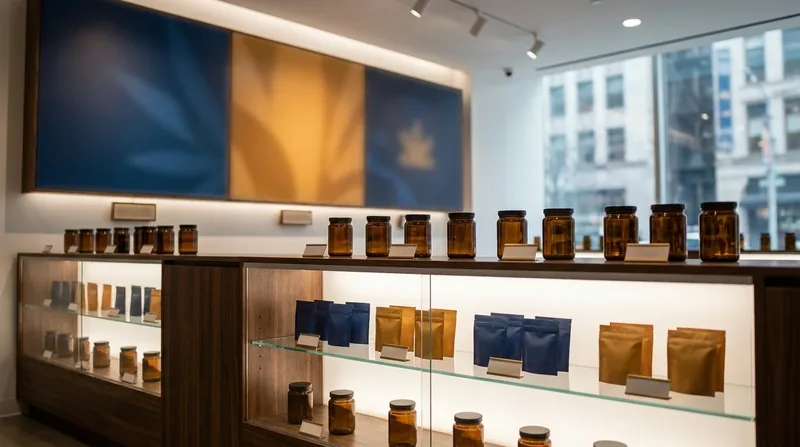
How to Open a Vape or Smoke Shop in Oklahoma: OTC $30 License and the ABLE Vapor Product Directory
How to Open a Vape or Smoke Shop in Oklahoma: OTC $30 License and the ABLE Vapor Product Directory
If you want to know how to start a vape shop business in Oklahoma, plan for more agencies than most retail businesses involve. You form your business with the Oklahoma Secretary of State, register with the Oklahoma Tax Commission (OTC) for sales tax, obtain a tobacco retailer license for each location, and confirm that every vapor product you carry appears in the directory maintained by the ABLE Commission. Miss one of those steps and you can end up selling products you are not allowed to sell. This guide walks through the order we recommend.
This article is informational content, not legal or tax advice. Oklahoma's tobacco and vapor rules have changed recently and are still changing. Confirm every requirement with the agency named, and talk to a qualified attorney or CPA before you sign a lease, buy inventory or file your entity paperwork.
What You Need Before You Start
Gather these items before you file anything. Several steps depend on the others, and the most common delays come from a missing street address or an unchecked product list.
- A business name that you have checked against state records and, if you want it held, reserved
- A decision on entity type: LLC, corporation, sole proprietorship or partnership
- A registered agent with a physical Oklahoma street address (not a PO box)
- A physical retail location that is not a residence
- A federal Employer Identification Number (EIN) and a business bank account
- Your city's requirements for retail sales and zoning, confirmed with the city clerk or planning office
- A sales tax permit from the Oklahoma Tax Commission
- A tobacco retailer license application for each location
- A written list of every vapor product you plan to sell, with its ABLE directory status
- An age verification process, required signage and employee acknowledgment forms
- A budget that covers filing fees, the $25 LLC annual certificate and your opening inventory
Step 1: Choose Your Business Structure
Most vape shop owners form a limited liability company (LLC) because it separates personal and business liability and is simple to maintain. The Secretary of State requires Articles of Organization for an LLC, and the filing fee is $100. Oklahoma publishes no processing-time guarantee. Documents are handled in the order received, and in-person filings must arrive before 4:30 p.m. Central. Online turnaround is not published, so call the Business Filing office at 405-522-2520 before you plan an opening date.
A corporation files a Certificate of Incorporation. The fee is one-tenth of one percent of the authorized capital stock, with a minimum of $50. Shares without par value count as $50 each, so 10,000 no-par shares carry a $500 fee, while 10,000 shares at $0.001 par pay the $50 minimum. Domestic for-profit corporations file no annual certificate with the Secretary of State.
Whichever structure you choose, the entity choice carries tax and liability consequences that depend on your ownership and financing. Ask a CPA and an attorney before you decide. Forming an entity does not, by itself, give you any of the licenses in the steps below.
Step 2: Check and Reserve Your Business Name
An LLC name must contain 'limited liability company', 'limited company', 'LLC', 'LC', 'L.L.C.' or 'L.C.' ('limited' may be 'Ltd.' and 'company' may be 'Co.'). It must also be distinguishable from other entity, trade and reserved names on file, current or within the last three years. Search the Secretary of State business search and the name availability tool before you commit to a name, especially a name that sounds like a national vape brand.
If you need time to line up your lease or financing, you can reserve the name for $10 for 60 days.
Step 3: Appoint a Registered Agent
Your LLC or corporation must keep a registered agent at a physical Oklahoma street address that is open during business hours to accept legal papers. The agent can be the entity itself, an Oklahoma resident or a qualifying business entity in good standing. Changing the agent or office costs $25. The Secretary of State's fee list also shows a $40 annual agent fee line for LLCs. Check with the Secretary of State whether it applies to your LLC.
Step 4: File a Trade Name if You Will Use a Different Name
If your shop will operate under a name other than your legal entity name, file a Trade Name Report with the Oklahoma Secretary of State. This is a state filing, not a county filing, and no newspaper publication is required. It costs $25 to file, amend, transfer or withdraw, and there is no annual fee. General partnerships file a Certificate of Partnership Fictitious Name for $50 instead. Do not file a trade name with your county clerk, because that is not where Oklahoma takes these filings.
Step 5: Get Your EIN and Open a Business Bank Account
Apply for a federal Employer Identification Number through the IRS before you open your bank account, sign a vendor account or apply for the tax permits in later steps. Many of those applications ask for the EIN, and banks will want to see your formation documents, EIN confirmation and an operating agreement or bylaws. Keep business and personal money separate from the first day, because commingled funds are one of the easiest ways to lose the liability protection an LLC provides.
Step 6: Confirm City and County Requirements
Oklahoma has no general state business license, so the local layer is where many vape shop owners get caught. Oklahoma City and Tulsa issue no general city business license, but they do license specific activities. A minority of cities charge a general or occupational license, including Bartlesville, Yukon, Sapulpa, Bixby, Tahlequah and Mustang. Do not assume that your city does or does not have a general license. Call the city clerk and ask three questions: whether the city requires any general or occupational license, whether it licenses tobacco or retail sales specifically, and whether a tobacco retailer must meet a zoning or location rule.
Counties issue no business licenses. Only Oklahoma County and Tulsa County run zoning and building permits in unincorporated areas. If you are buying a building or doing a build-out, confirm the building permit path with the city or county building department before you sign a lease, since a change of use or new signage can trigger permits.
Step 7: Get Your OTC Tobacco Retailer License
Every tobacco retailer in Oklahoma needs an Oklahoma Tax Commission license, except tribal entities and their licensees. The license costs $30 per location under 68 O.S. 304, and tobacco products are covered under 68 O.S. 415. Check with the Tax Commission how the license applies to a shop that sells only vapor products.
Three rules catch new owners. First, a place of business cannot be a location with a physical residential address, so a home-based shop does not qualify. Second, if you sell cigarettes from a vehicle, the vehicle becomes a place of business. A vehicle license costs $10 where you already hold the regular license. Third, each physical location needs its own license, so a second store means another $30. Confirm the application steps, renewal timing and any inspection requirements with the Tax Commission at oklahoma.gov/tax before you open.
Step 8: Register for a Sales Tax Permit
Vapor products bear sales tax. Register through the Oklahoma Tax Commission's OkTAP system. A sales tax permit costs $20 for three years. The state rate is 4.5%, and the Tax Commission collects city and county sales tax on the same return. Combined rates run from about 8.25% to above 10%, depending on where your shop sits. Oklahoma has no separate vapor excise tax in force, so do not build a separate vapor tax line into your pricing model unless a new law creates one.
Set up your point-of-sale system to calculate local rates by address before opening. Charging the wrong local rate is an easy error to make and a hard one to fix after the fact.
Step 9: Verify Every Vapor Product Against the ABLE Directory
This is the step that matters most for your inventory. Under 63 O.S. 1-229.35, manufacturers file an attestation with the ABLE Commission, and the ABLE Commission maintains the vapor product directory. It is unlawful to knowingly sell a vapor product that is not in the directory. The attestation requirement took effect for filings from July 1, 2023, and the directory took effect October 1, 2023.
A 2025 bill, SB 1102, would have moved enforcement to the Attorney General. It did not become law, so the ABLE Commission remains the agency to confirm with. Ask every distributor for the directory listing of each product before you buy, and keep those records in your files. A distributor's assurance is not a substitute for checking the directory yourself.
If you plan to buy in bulk for resale or to make your own products, check whether you need a wholesale or manufacturer license. It costs $250 annually. Confirm whether this license applies to your activity with the Tax Commission before you purchase inventory for resale.
Step 10: Build Your Age 21 and Compliance Program
Oklahoma requires that all tobacco and vapor sales go to buyers age 21 or older under 63 O.S. 1-229.12. The ABLE Commission enforces these rules, so your compliance program should be written down before opening day. At minimum, cover these areas:
- Age verification: Check a valid government-issued ID for every sale, including sales to customers who appear older than 30.
- Signage: Post the required signs under 63 O.S. 1-229.15.
- Employee acknowledgments: Have every employee sign the acknowledgment required under 63 O.S. 1-229.16 before working a register.
- Display and samples: Follow the restrictions on displays and samples in 63 O.S. 1-229.18 and 1-229.21. Keep products out of reach of customers who are not permitted to buy them.
- Vending: Tobacco vending machines are allowed only where under-21 customers are not admitted.
Train staff on these rules in writing, and document the training date for each employee. A written record is the first thing you will want if an inspector visits.
Step 11: Plan for the Heated Tobacco Change on November 1, 2026
SB 680 (2026) takes effect November 1, 2026, which is days away. It expands the definition of 'cigarette' to include heated tobacco products. Heated-not-burned products are taxed at 50% of the cigarette rate. The Tax Commission will set the rules and stamp requirements that follow from the change, so check with the Tax Commission before you stock any heated tobacco product. Do not assume that vapor product rules and heated tobacco rules are the same.
Step 12: Calendar Your Recurring Obligations
Your first year will involve several deadlines, and missing one can create real problems. An LLC's annual certificate costs $25 and is due on the anniversary of filing the Articles of Organization. The statute provides a 60-day grace period and no late fee. An LLC that misses the 60 days ceases to be in good standing. Reinstatement has no fee of its own, but it requires filing every delinquent annual certificate, so the cost grows with each missed year.
Set reminders for your sales tax filings, your tobacco license renewal, your registered agent's address and any local license renewals. Confirm each filing frequency and renewal date with the agency that issued the license, because those terms can change.
Tips for a Smooth Opening
- Call the Secretary of State and the Tax Commission before you sign a lease, and ask each agency to confirm the steps in writing when possible.
- Build your product list before you order inventory, and check every item against the ABLE directory first.
- Choose a location that is clearly commercial, with a business address that matches your filings exactly.
- Ask an Oklahoma Small Business Development Center advisor to review your business plan. The network is at oksbdc.org, and the SBA's Oklahoma district page is at sba.gov/district/oklahoma.
- Keep one folder with every filing, license, receipt and directory printout. Inspectors and lenders both ask for them.
Common Mistakes to Avoid
- Operating from home. A location with a physical residential address does not qualify for the tobacco retailer license.
- Assuming a county license. Counties issue no business licenses, and Oklahoma does not take DBA filings at the county clerk's office.
- Skipping the directory check. Selling a vapor product that is not in the ABLE directory is unlawful when you knew, or should have known, that it was not listed.
- Relying on a distributor's word alone. The distributor's paperwork does not protect you from a sale of an unlisted product.
- Setting one sales tax rate. Combined rates vary by city and county, so program your register by address.
- Missing the LLC anniversary. The $25 annual certificate is easy to forget, and reinstatement means filing every delinquent year.
- Ignoring the age 21 rules. Keep ID checks, signage and employee acknowledgments documented from day one.
Expected Results
If you complete each step, you can open a lawful retail location that holds the required state filings and licenses. Timelines depend on the Secretary of State, the Tax Commission, your city and your landlord, so do not promise an opening date to a landlord or lender until each approval is in hand. Revenue depends on your location, pricing, competition and inventory, and no formation guide can predict those results.
Federal rules also limit what you can say about vapor products. Avoid health, safety and cessation claims in your signage, website and social media unless you have confirmed they are permitted. Describe products factually, and have an attorney review your marketing before launch.
Hemp-derived and THC products follow separate rules and are covered in a different guide. Do not stock them under your tobacco license without confirming how those rules apply.
Where to Confirm Each Requirement
- Oklahoma Secretary of State, Business Filing Department: sos.ok.gov/business. Phone 405-522-2520.
- Oklahoma Tax Commission: oklahoma.gov/tax. Sales tax permits: OkTAP.
- ABLE Commission: confirm the vapor product directory, age 21 requirements and enforcement rules directly with the ABLE Commission before you buy inventory.
- Your city clerk and planning office: confirm any general or occupational license, zoning rules and retail permits.
Opening a vape shop in Oklahoma is manageable when you work through each agency in order and verify every product before it reaches your shelves. Start with the entity and location decisions, then confirm your local rules before you sign anything.