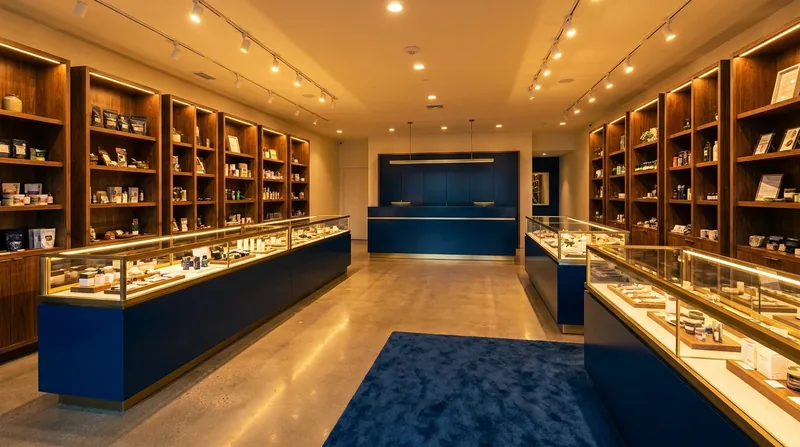
How to Open a Liquor Store in Oklahoma: No LLC, 5-Year Residency and ABLE License $905 to $1,155
How to Open a Liquor Store in Oklahoma: No LLC, 5-Year Residency and ABLE License $905 to $1,155
Selling packaged spirits, wine and beer in Oklahoma requires an ABLE Retail Spirits license, the state's package store license issued by the Alcoholic Beverage Laws Enforcement (ABLE) Commission under 37A O.S. 2-156. This license works differently from most business licenses in the state. You cannot hold it through an LLC or a corporation, you must have lived in Oklahoma continuously for the five years before you apply, and you must control the building before the state will finish reviewing your file.
The oklahoma liquor license cost depends on the population of the city where the store will operate. The state fee runs from $305 to $905, and a surcharge of $150 to $250 brings the total to $455 to $1,155. The $905 to $1,155 range in this guide's title applies to cities with more than 5,000 residents. If your store is in a smaller city, expect to pay less.
What You Need Before You Start
Collect these items before you file. Missing paperwork causes more delays than the state review does.
- Proof of U.S. citizenship and documents showing five years of continuous Oklahoma residence. Ask ABLE which documents it accepts.
- A deed or a written lease for the premises. A verbal arrangement will not satisfy the requirement.
- A certificate of zoning from your city or county, plus certificates of fire, safety and health compliance.
- A sales tax permit from the Oklahoma Tax Commission (OTC), which costs $20 for three years, and the tax receipt that the ABLE process requires.
- Proof of the newspaper notice of your application, published as ABLE requires.
- Personal financial records for the applicant and each partner, for the state's financial investigation.
- A trade name decision. If you operate under a name other than your own, file a Trade Name Report with the Secretary of State for $25. A general partnership that uses a trade name files a Certificate of Partnership Fictitious Name for $50.
- Funds for the ABLE license fee for your city's population tier (see Step 4), plus $30 for an OTC tobacco retailer license if you plan to sell tobacco.
Step 1: Confirm You Qualify as the Applicant
The applicant must be a U.S. citizen, a qualified elector and a continuous Oklahoma resident for the five years before applying (37A O.S. 2-146). The clock starts when you established Oklahoma residence, not when you bought the building or signed the lease. If you moved to Oklahoma four years ago, the license is not available to you yet, no matter how complete your business plan is.
No felony conviction may apply to the applicant, any partner or the applicant's spouse. Review this with your spouse and any future partners before you invest time or money in a site. Ask ABLE to confirm your eligibility in writing if your history includes any question about residency or convictions.
Step 2: Choose an Eligible Ownership Structure
ABLE does not issue this license to a corporation, a limited liability company or any similar entity. The eligible applicants are an individual, a general partnership or a limited partnership. ABLE also warns that other business structures, including limited liability partnerships, may be restricted. Check with ABLE before you choose any structure other than those three.
No person may own an interest in more than two package stores. Any partner or investor who holds an interest in other package stores counts toward that limit, so review every ownership stake before you bring someone into the business.
If you form a limited partnership, the Secretary of State filing fees are not covered in this guide. Confirm the fees and the filing process with the Secretary of State Business Filing Department at 405-522-2520 before you file. The Secretary of State's Business Filing Department is the right office for questions about trade names as well.
Step 3: Secure the Location
You must own the premises or hold a written lease for them. Get the zoning certificate early, because zoning can rule out a site before you commit to a lease. The building must also pass fire, safety and health compliance review, so ask the inspecting agencies what they require before you sign anything.
The store may sell only on the licensed premises. You also cannot hold another ABLE license class while you hold a package store license. If you plan to sell tobacco or other products beside your alcohol inventory, confirm the layout and the license scope with ABLE and the OTC before you finalize your floor plan.
Step 4: Budget the ABLE License Fee
The fee depends on the population of your city, using the latest decennial census. ABLE's fee schedule for 2026 is shown below.
| City population | State fee | Surcharge | Total |
|---|---|---|---|
| 200 to 2,500 | $305 | $150 | $455 |
| 2,501 to 5,000 | $605 | $200 | $805 |
| Over 5,000 | $905 | $250 | $1,155 |
Confirm your city's population tier on the ABLE fee page before you build your budget. The $905 figure in this guide's title is the base fee for the largest tier, and the $1,155 total adds the $250 surcharge.
If your business is a grocery or convenience store rather than a package store, you apply for different license types. Grocery and convenience stores hold Retail Beer (REB) at $500 plus a $250 surcharge, or Retail Wine (REW) at $1,000 plus a $250 surcharge. Wine sold under the REW license may not exceed 15% alcohol by volume. Confirm the current amounts with ABLE, because the license you need depends on what you sell.
Step 5: Register for Sales Tax
Apply for a sales tax permit through OkTAP, the Oklahoma Tax Commission's online system. The permit costs $20 for three years. The state sales tax rate is 4.5%. The OTC collects city and county sales tax on the same return, so your combined rate typically runs from about 8.25% to above 10%, depending on where the store sits.
Tobacco sales require a separate OTC retailer license at $30. Add it to your registration if you plan to sell tobacco products. Keep copies of every OTC document, because ABLE's process requires proof of tax registration.
Step 6: Check City and County Requirements
Oklahoma has no general state business license, so the local layer is where most of your remaining paperwork will come from. Cities may license specific activities, and a minority of cities also charge a general or occupational license. Bartlesville, Yukon, Sapulpa, Bixby, Tahlequah and Mustang are examples of cities that charge a general or occupational license. Oklahoma City, Tulsa and Lawton license only specific activity types, so a general license may not apply there, but a specific alcohol-related permit may.
A city occupational tax of up to the state fee may apply to your store under 37A O.S. 4-104. Ask your city clerk whether your city charges a general or occupational license, whether it requires a separate alcohol-related permit, and how it calculates any occupational tax.
Counties issue no business licenses. Only Oklahoma County and Tulsa County run zoning and building permits in unincorporated areas. If your site is inside city limits, the city is your local office for zoning and building questions. If it is outside city limits, contact the county.
Step 7: Publish the Newspaper Notice
The ABLE process begins with a newspaper notice of your application. Confirm the notice wording, the newspaper and the publication timing with ABLE before you publish, because the requirements apply to the exact application you file. A notice that does not match your filing can delay the review.
Keep proof of publication with your application file. ABLE will want to see it as part of the complete package, so store a copy with your zoning and compliance documents.
Step 8: Gather Compliance Certificates and Submit the Application
Assemble the certificates of zoning, fire, safety and health compliance, the tax receipt and the proof of newspaper notice. Submit them together with your completed application. Incomplete packages are a common reason files stall, so check each item against ABLE's current checklist before you send it.
ABLE then runs a financial investigation of the applicant and each partner. Have your personal financial records organized and ready to answer questions. Be complete and accurate, because a mismatch between your application and your records can slow the review.
Step 9: Wait for the ABLE Decision and Plan Operations
The ABLE decision takes about 60 days from the time the process moves forward. Use that time to set up your supplier relationships, point-of-sale system, insurance and staffing plan. Hold large commitments, such as a full inventory order or a build-out contract, until the license is issued, because the license is not guaranteed.
Rules That Apply After You Open
Once the license is issued, the following limits shape how the store runs:
- Non-alcohol items may not exceed 20% of monthly sales. Track this ratio every month, especially if you add snacks, mixers, ice or merchandise.
- Motor fuel may not be sold.
- Sales must take place only on the licensed premises.
- Curbside and delivery service must be handled only by your own employees. Third-party delivery apps are not permitted (37A O.S. 2-161).
- Tastings are limited to 1 fluid ounce of spirits, 2 fluid ounces of wine and 3 fluid ounces of beer per consumer per day, with no more than six open bottles at one time (37A O.S. 2-109).
- Pricing and markup rules apply. Check with ABLE before you set your price structure or run promotions.
Practical Tips
- Start with the residency clock. If you have not lived in Oklahoma for five years, you cannot apply yet, so plan your timeline around that date.
- Confirm your city's population tier on the ABLE fee page before you commit to a site. The fee difference between tiers is $300 or more at the top end.
- Get zoning confirmed before you sign a lease. A signed lease for a site that fails zoning review is an expensive mistake.
- Call ABLE before you choose a structure. The warning about limited liability partnerships and other structures makes this call worth the time.
- Ask your city clerk about general, occupational and alcohol-related licenses in the same conversation, so you do not miss a local requirement.
- Use the Oklahoma Small Business Development Center network to test your plan with an adviser. The SBA's Oklahoma district page lists additional local resources.
Common Mistakes to Avoid
- Forming an LLC and applying in its name. ABLE will not issue this license to an LLC, so the $100 Articles of Organization fee does not get you a package store license.
- Assuming the five-year residency clock starts at the purchase date. It starts when you established Oklahoma residence.
- Signing a lease before zoning and compliance review. Lease terms can commit you to rent while the license is still pending.
- Ignoring the ownership cap. An investor who holds interests in three stores, or a partner with a felony conviction, can block the application.
- Planning delivery through a third-party app. Only your own employees may deliver or handle curbside service.
- Letting non-alcohol sales drift above 20% of monthly revenue. Review the ratio before the end of each month, not at year-end.
- Skipping the city check. Some cities charge a general or occupational license, and a city occupational tax of up to the state fee may apply.
- Selling tobacco without the $30 OTC retailer license.
Expected Results
Results depend on your location, your competition, your capital and how carefully you prepare. The outcomes below are possible for a well-prepared applicant, but none is guaranteed:
- A complete application package is more likely to move through review without requests for missing documents.
- A decision on the license may arrive in about 60 days, though timing can vary with the file and the agency's workload.
- Staying inside the 20% non-alcohol limit may shape your product mix and shelf layout from the first week.
- Confirming zoning and city requirements early may reduce the chance of a costly site change after you have signed a lease.
Official Resources
- Oklahoma Secretary of State, Business Filing Department: https://www.sos.ok.gov/business/default.aspx
- Secretary of State business search: https://www.sos.ok.gov/corp/corpInquiryFind.aspx
- Secretary of State filings, including the Trade Name Report: https://www.sos.ok.gov/corp/filing.aspx
- Oklahoma Tax Commission: https://oklahoma.gov/tax.html
- OkTAP sales tax permit registration: https://oktap.tax.ok.gov/OkTAP/Web?link=BUSREG
- Oklahoma Small Business Development Center network: https://www.oksbdc.org/
- SBA Oklahoma district: https://www.sba.gov/district/oklahoma
- ABLE Commission (oklahoma.gov/able-commission): confirm the current fee page and application forms directly with the agency before you file.
Disclaimer
This article is informational only. It is not legal, tax or financial advice. Fees, processing times and rules change, and the figures above should be confirmed with the named agency before you rely on them. Speak with an Oklahoma attorney and a certified public accountant before you sign a lease, form a partnership, bring in an investor or commit to inventory, because your situation may involve questions this guide cannot answer.