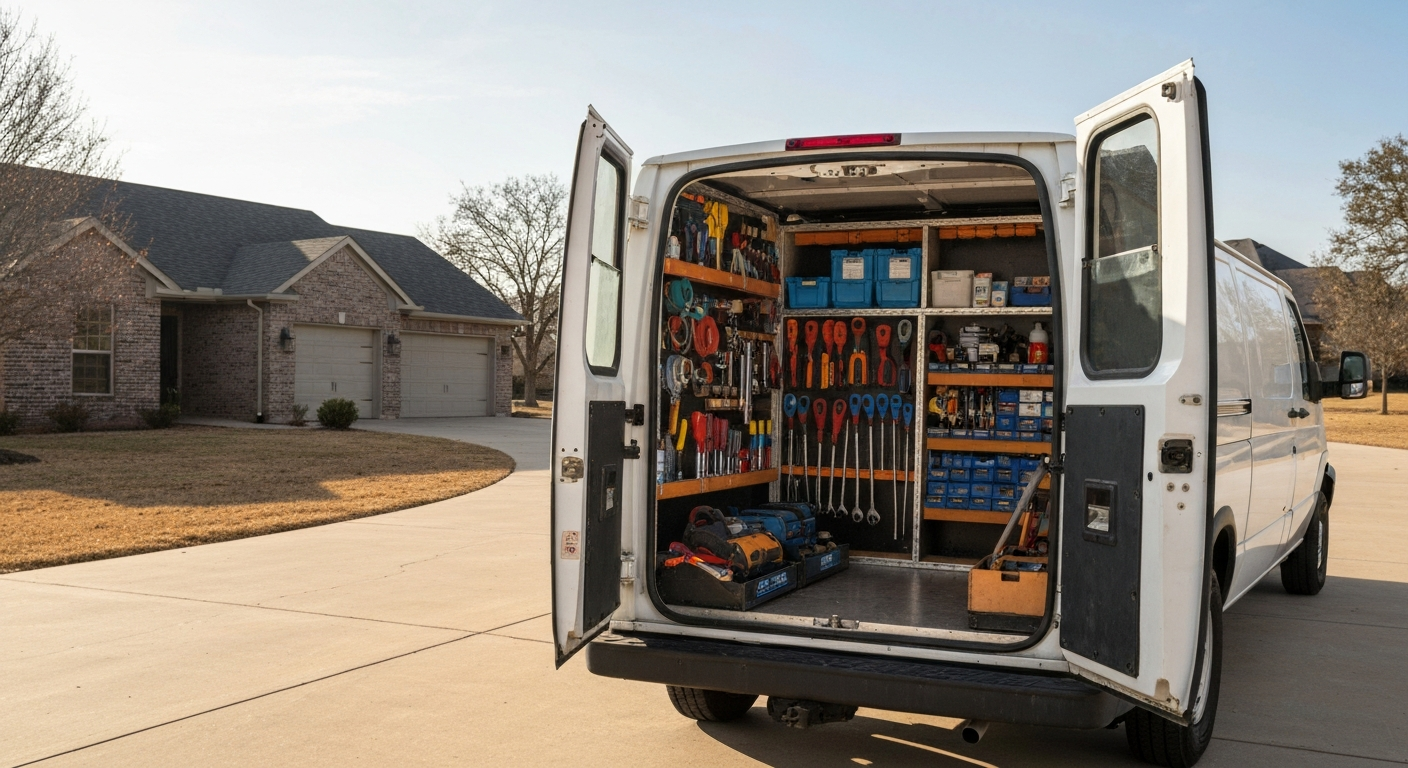
How to Start a Plumbing Business in Oklahoma
How to Start a Plumbing Business in Oklahoma
Oklahoma’s plumbing industry is a solid market for skilled tradespeople ready to go independent. The state licenses plumbers through the Oklahoma Construction Industries Board (CIB), and the path to a contractor license — the one that lets you run your own business — is more accessible than most people realize. Three years of field experience, one additional year as a licensed journeyman, and you’re eligible to sit for the contractor exam. If you went through a Career Tech program, that timeline shrinks considerably.
Here’s exactly how to get there.
Oklahoma Plumbing License Path
The Oklahoma CIB issues plumbing licenses, and the foundational credential you need is the Journeyman Plumber license. You must be 18 or older to apply.
The Experience Route
The standard path requires 3 years of experience working under a licensed plumbing contractor. That’s hands-on, supervised field work — not general construction, not self-directed projects. The experience has to be documented and tied to a licensed contractor who can vouch for it.
Three years sounds like a long runway, but compare it to Virginia’s 4-year requirement for the same credential. Oklahoma actually has one of the shorter journeyman experience thresholds in the region.
Education Substitutions — The Fast Lane
This is where Oklahoma gets genuinely interesting, especially if you came up through Career Tech.
Career Tech diploma with 1,000+ classroom hours substitutes for 2 full years of experience. If you have that diploma plus one year of field work under a licensed contractor, you qualify to sit for the journeyman exam. That’s a significant shortcut — and it’s not some obscure technicality. It’s built into the CIB’s licensing rules specifically because Oklahoma’s Career Tech system produces well-trained tradespeople.
A 500+ hour vocational program substitutes for 1 year of experience. Less credit than the full diploma, but still cuts your required field time from 3 years to 2.
An associate degree in plumbing or a related field also substitutes for experience — check directly with the CIB on how many years your specific program covers, since it depends on the curriculum.
Military plumbing experience — 3 years of documented service-related plumbing work — fully satisfies the experience requirement. If you separated from the military with plumbing MOS or equivalent, you’re not starting from scratch. Bring your documentation.
License Fee
Once you’ve met the experience (or substitution) requirement and passed the exam, the journeyman license costs $75 total — $50 for the license itself, plus $25 processing. That’s it. No annual franchise tax, no inflated application fee.
The CIB exam covers plumbing codes, installation standards, and Oklahoma-specific regulations. Study the current edition of the applicable plumbing code and the CIB’s own rules. Exam prep materials are widely available, and some Career Tech programs include exam prep as part of their curriculum.
Plumbing Contractor License
The journeyman license lets you work under someone else. The Plumbing Contractor license is what lets you run your own business — bid jobs, pull permits in your name, hire plumbers, and operate independently.
To get there from the journeyman license, you need:
1. Hold an active journeyman plumber license. You can’t skip this step. The contractor license builds on it.
2. Work at least 1 year as a licensed journeyman under a contractor. This isn’t the same as your pre-license field experience. This is post-license time, working with your journeyman credential in hand. The point is to develop the business and project management side of the trade before you’re running your own jobs.
3. Pass the business and law exam. This is separate from the technical plumbing exam. It covers contractor law, contracts, liens, business practices, and Oklahoma-specific regulations. People underestimate this exam — it’s not a formality. Budget time to study it seriously.
Once you hold the contractor license, you can bid and manage plumbing projects independently. You’re also responsible for the work your employees do, which is why the business and law exam exists.
One note on journeymen and apprentices: a licensed journeyman can supervise up to 3 apprentices on a job site. If you’re building a crew, that ratio matters for scheduling and compliance.
Continuing Education
Plumbing contractor and journeyman licenses in Oklahoma require 6 hours of approved continuing education per 3-year renewal cycle. That’s a light requirement — 2 hours per year on average, though you can batch it all in one sitting.
CE courses run $39-$79 for a 6-hour course, depending on the provider. Many are available online, which makes scheduling easy around active job sites. The CIB maintains a list of approved providers; don’t just take any course and assume it counts.
The annual renewal fee for a journeyman license is $75. Mark your renewal date and don’t let it lapse — working with an expired license is a CIB violation, and it creates liability exposure on any jobs you’ve pulled permits for.
Business Formation
Your license gets you legal to do plumbing work. Getting your business entity right protects your personal assets and keeps you compliant on the tax and regulatory side.
Form an LLC
Most solo plumbing contractors and small plumbing businesses start as an LLC. It’s simple, flexible, and in Oklahoma, genuinely cheap.
File online at sos.ok.gov — the Articles of Organization cost $100. Annual Certificate to keep the LLC in good standing: $25/year, due on the anniversary of your formation. That’s your total state entity overhead.
No franchise tax. Oklahoma repealed it effective January 1, 2024. California charges $800/year minimum just to exist as an LLC. Oklahoma charges $25. That’s a meaningful difference when you’re building a business from scratch.
You’ll also need a registered agent with a physical Oklahoma address on file. That can be you (if you have a business address), a partner, or a registered agent service for $50-150/year.
Tax Registration
Register with the Oklahoma Tax Commission (OTC) through OkTAP — the Oklahoma Taxpayer Access Point.
Sales Tax Permit: $20 via OkTAP. Whether you need this depends on what you’re selling. Plumbing services themselves may or may not be taxable, but if you’re selling materials or fixtures to customers, you’ll likely need one. Oklahoma is a destination-based sales tax state, so you charge the rate at the buyer’s location — rates typically run 7-11% when you combine the 4.5% state base with local rates.
Get your EIN from the IRS at irs.gov/ein — free, takes about 10 minutes online.
Workers’ Compensation
Oklahoma requires workers’ comp from employee #1. No minimum headcount. No grace period. The moment you hire anyone — full-time, part-time, doesn’t matter — you’re legally required to carry workers’ comp coverage.
This is one of the most important things to understand before you bring on your first helper. Carriers include CompSource Mutual (formerly CompSource Oklahoma) and private insurers. Get this in place before the first day on the job.
City Business License
Oklahoma has no statewide general business license. Licensing is entirely local — your city or county issues it. Oklahoma City, Tulsa, Edmond, Norman — they each have their own process and fees. Contact your city clerk or check the city’s business services page to find the specific requirements where you’ll operate.
If you’re doing work in eastern Oklahoma, be aware of the tribal jurisdiction implications from the McGirt v. Oklahoma (2020) ruling. Businesses operating on tribal land may need tribal business licenses in addition to the city or county license. This is worth a specific conversation with a local attorney if you’re in that region.
Insurance
Your CIB contractor license requires you to operate responsibly. Insurance isn’t just about legal compliance — one uninsured claim from a busted pipe in a customer’s wall can end a young business.
Here’s what you need:
General liability insurance: $500,000-$1,000,000 minimum recommended. This covers property damage and bodily injury you cause on the job. For plumbing work — where a bad connection can mean water damage to an entire home — don’t go cheap here. Many commercial clients and general contractors won’t let you on a job site without a certificate showing at least $1 million.
Workers’ comp: mandatory from employee #1. Already covered above, but worth repeating because the penalties for going without it are steep. Don’t roll the dice.
Commercial auto insurance. Your personal auto policy doesn’t cover your truck when you’re using it for business. If you’re hauling tools, pipe, and equipment to job sites — and you are — you need a commercial auto policy. Personal policies have exclusions for business use that can leave you completely uninsured after an accident.
Tools and equipment coverage. Plumbing tools are expensive. A good set of pipe wrenches, a drain snake, a pipe camera, a press tool — you’re looking at thousands of dollars in equipment that can be stolen from a truck or damaged on a job site. An inland marine or tools-and-equipment policy covers this.
Budget $3,000-$10,000/year for your full insurance package. Where you land depends on your revenue, number of employees, vehicle count, and coverage limits. Get multiple quotes. Local independent insurance agents who work with contractors often get better rates than going direct.
Startup Costs at a Glance
Here’s what it actually costs to launch a solo plumbing contracting business in Oklahoma:
| Item | Cost |
|---|---|
| LLC filing (sos.ok.gov) | $100 |
| Annual Certificate (LLC) | $25/year |
| CIB Plumbing License | $75 |
| Sales Tax Permit (OkTAP) | $20 |
| City business license | Varies by city |
| Insurance (general liability, workers’ comp, auto, tools) | $3,000–$10,000/year |
| Service vehicle | $20,000–$45,000 |
| Plumbing tools and equipment | $5,000–$20,000 |
| Total startup (solo contractor) | ~$10,000–$28,000 |
The lower end of that range assumes you already have a truck and a solid set of tools. The upper end is starting fresh with a new service vehicle and a full equipment setup. Either way, compared to a franchise or a retail business, it’s a lean startup.
The recurring costs are what matter long-term: $25/year for the LLC, $75/year for license renewal, $39-$79 every three years for CE, and your insurance premiums. Keep your books clean from day one — QuickBooks or even a simple spreadsheet — because the Oklahoma Tax Commission will eventually want to see your records, and surprise audits are worse when you’re scrambling.
The Path Forward
If you’re already working as a plumber under a licensed contractor, you may be closer to the contractor license than you think. Pull out your employment records and count your years. If you went through a 1,000-hour Career Tech program, you’ve already banked two years of credit — you might only need one more year of field time to sit for the journeyman exam.
Once you have the journeyman license, give yourself a year of documented work under a contractor. Study for the business and law exam — seriously, treat it like a real exam. Then file your LLC ($100 at sos.ok.gov), get your insurance in place, register with the OTC, and pull a business license from your city.
Contact the CIB directly at oklahoma.gov/cib to confirm current exam requirements and application procedures — rules update, fees adjust, and the official source is always more current than any guide.