How to Start a Daycare Business in Oklahoma
How to Start a Daycare Business in Oklahoma
Oklahoma has a real childcare gap. Licensed spots don’t meet demand in dozens of counties, and the providers who do exist are stretched thin. If you’ve been thinking about opening a daycare — whether a home-based operation or a full center — the market need is there.
The process isn’t simple, but it’s straightforward once you understand who’s in charge of what. In Oklahoma, the Department of Human Services (DHS) runs childcare licensing under the Child Care Facilities Licensing Act (10 O.S., § 401-410). DHS issues your license. But before they do, you’ll also need a separate inspection from the Oklahoma State Department of Health (OSDH) — or Indian Health Services (IHS) if you’re operating in tribal jurisdiction. Two agencies, two inspections, one license.
Here’s how to get there.
Oklahoma DHS License Types
The first thing to figure out is which license you need. DHS issues several types, and the right one depends on how many children you’ll serve and where you’ll operate.
Child Care Center This covers any facility caring for 13 or more children, or any childcare operation running out of a non-residential building regardless of how many kids are enrolled. If you’re leasing commercial space to run a daycare, this is your category — even if you start small.
Family Child Care Home You care for 7 or fewer children in your own residence. This is the entry point for most home-based providers. Lower overhead, more flexibility, but you’re still subject to DHS licensing and inspections.
Large Child Care Home Still operating from your home, but serving 8 to 12 children. DHS treats this as a middle tier — more requirements than the family home, less than a full center. If you’re planning to grow your home operation past 7 kids, you’ll need to meet the large home standards before you hit 8.
Out of School Time Program Before-school and after-school care for school-age children. These programs often operate out of school buildings, churches, or community centers. DHS licenses these separately because the population (older kids, part-day care) has different requirements than full-time infant/toddler programs.
Drop-In Program Care provided on an irregular or sporadic basis — not a standing enrollment. Think gym childcare or occasional supervision services. The rules are different because the relationship with children and families is fundamentally different.
All five license types are issued through DHS Child Care Services. That’s your home base for applications, forms, and contact information throughout this process.
Pre-License Requirements
This is where most of the work happens. DHS won’t issue a license until you’ve cleared several requirements — and some of them take weeks, so plan your timeline accordingly.
The DHS Pre-License Inspection
Before you’re authorized to operate, a DHS licensing specialist will inspect your facility. They’re checking three broad categories:
- Safety measures — exits, fire extinguishers, outlet covers, safe sleep practices, outdoor play area fencing, medication storage
- Hygiene standards — diaper changing stations, handwashing facilities, food preparation areas, cleaning protocols
- Resources for children’s activities — age-appropriate toys, books, learning materials, adequate indoor and outdoor space per child
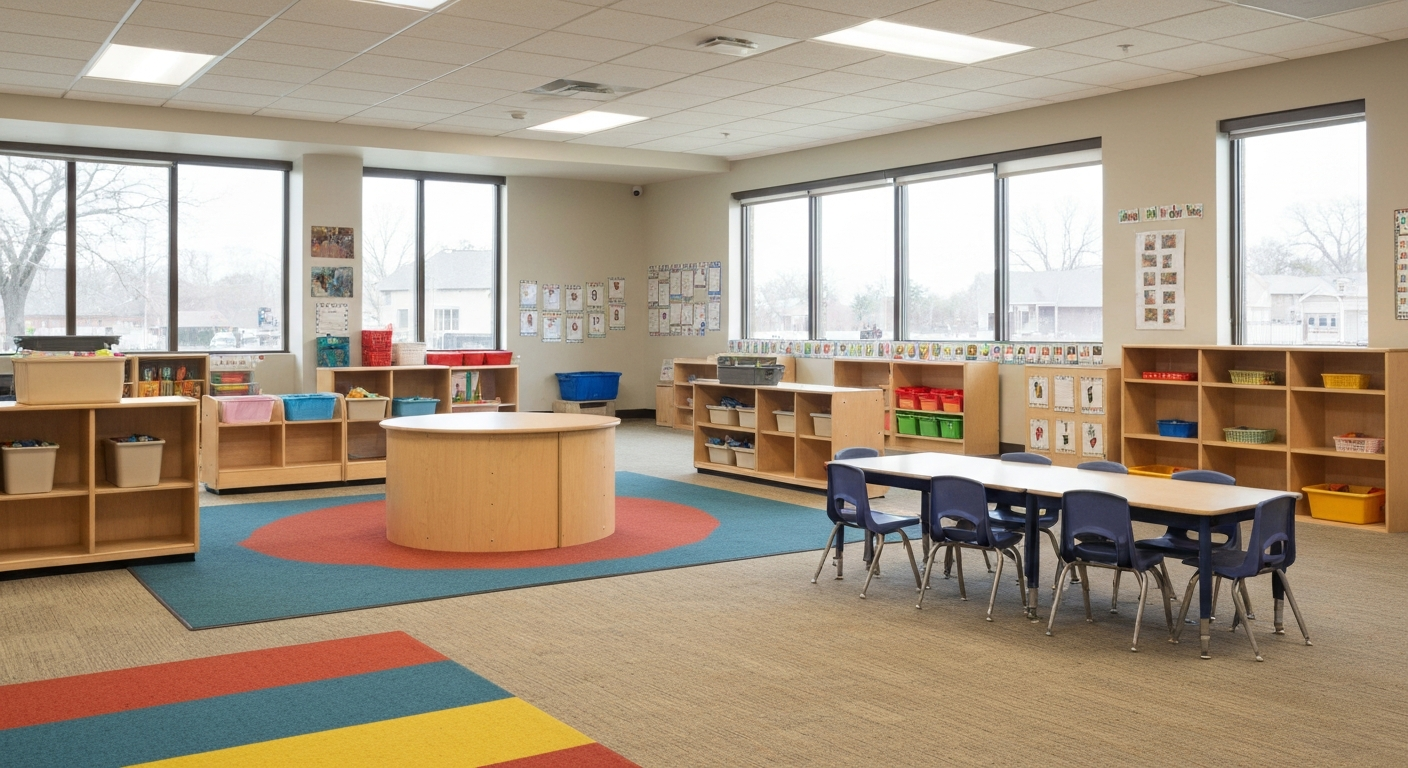
Don’t treat this as a box-checking exercise. Inspectors look at whether your space is actually set up for children, not just whether you have a fire extinguisher on the wall. If you’re converting a garage, basement, or spare room, budget time and money to bring it up to standard before you call for the inspection.
The OSDH (or IHS) Inspection
Separate from the DHS inspection, you need an inspection from the Oklahoma State Department of Health before DHS will finalize your authorization. OSDH checks sanitation, water supply, plumbing, and overall facility health standards.
If your facility is located on tribal land, you may go through Indian Health Services instead of OSDH. This matters for providers in eastern Oklahoma, where McGirt v. Oklahoma (2020) established that large portions of the state remain tribal jurisdiction. If your address falls within a tribal nation’s boundaries, confirm with DHS and IHS whether the IHS inspection route applies to you.
Schedule both inspections as early as possible. Neither agency has unlimited inspector availability, and delays here will push back your opening date.
Criminal Background Checks
Every staff member requires a criminal background check. For home-based programs, this extends to household members — adults living in the home where care will be provided. Budget $50–$100 per person and assume the process takes at least two to three weeks.
Certain criminal history will disqualify individuals from working in licensed childcare. DHS has a specific list of disqualifying offenses. If you have concerns about someone’s background, check with DHS before investing further in that hire.
CPR and First Aid Certification
Required for all staff. Not just the director — everyone working with children needs current CPR and First Aid certification. Classes typically run $50–$150 per person and are available through the Red Cross, local hospitals, and community colleges across Oklahoma. Build this into your pre-opening budget for every person you’re bringing on.
Pre-Service Training
Oklahoma requires pre-service training before you can open, and the required hours vary by your role. Directors face more extensive requirements than assistant teachers. DHS specifies the approved training topics and providers — early childhood development, health and safety, child abuse recognition and reporting, and nutrition are typical components.
Don’t wait until after you find staff to look up training requirements. Some of these courses take weeks to complete, and DHS won’t approve your license until the training records are on file.
Fire Marshal and Zoning
Before your DHS inspection, you’ll also need:
- A fire marshal inspection from your local fire authority. They check exit signage, fire suppression, alarm systems, and evacuation plans.
- Zoning approval from your city or county. Home-based daycares often need a special use permit or home occupation permit, and not every residential zone allows commercial childcare activity.
Check zoning first — before you sign a lease or commit to a location. A building can pass every other inspection and still be in the wrong zone.
Application Fee
DHS charges an application fee payable by check, money order, or credit card. The exact amount varies by license type and capacity, so confirm the current fee schedule directly with DHS Child Care Services when you request your application packet.
Business Formation
Your DHS license covers your right to operate childcare. But you also need to set up a legal business entity and handle state tax registration separately. These run in parallel with your licensing process — there’s no reason to wait.
Form an LLC
Most daycare operators go with an LLC. It separates your personal assets from business liability, which matters a lot in a childcare setting. File online at sos.ok.gov for $100. That’s it for the initial filing.
After that, you owe a $25 annual certificate fee each year on your formation anniversary. Oklahoma repealed its franchise tax effective January 1, 2024 (HB 1039) — so you’re done after the $25. Compare that to California, where LLCs pay a minimum $800 franchise tax every single year. Oklahoma’s cost structure is genuinely better for small operators.
Get Your EIN
An Employer Identification Number (EIN) is free from the IRS at irs.gov/ein. You need it to open a business bank account, hire employees, and register with the Oklahoma Tax Commission. Takes about 10 minutes online.
City Business License
Oklahoma has no statewide general business license — licensing is handled at the local level. Your city or county may require a business license or occupation permit separate from your DHS childcare license. Check with your city clerk’s office early. Some cities process these in a few days; others take longer.
Workers’ Compensation Insurance
Oklahoma requires workers’ comp from your very first employee. No minimum threshold — if you hire one person, you need coverage. This matters for daycare centers especially, since you’ll almost certainly have multiple staff members from day one.
You can get coverage through CompSource Mutual (formerly CompSource Oklahoma), which is the state-created carrier, or through any private insurance carrier licensed in Oklahoma. Get quotes from both. Rates vary based on your payroll and job classifications, but daycare staff generally fall into lower-risk categories than, say, construction workers.
Don’t skip this. Operating without required workers’ comp in Oklahoma is a misdemeanor and can result in fines plus personal liability for any workplace injuries.
Insurance Requirements
Workers’ comp is mandatory, but it’s not the only coverage you need. Childcare is a high-liability business by nature. Here’s what to carry:
General Liability Minimum $1 million per occurrence. This covers bodily injury and property damage claims — a child gets hurt on the playground, a parent slips in your parking lot. Most landlords and DHS will want to see proof of this before you open. Don’t go below $1 million.
Professional Liability (Childcare) Also called errors and omissions, this covers claims related to your professional services — allegations of inadequate supervision, failure to follow established care protocols, or similar claims. General liability won’t cover these. A childcare-specific professional liability policy will.
Workers’ Compensation Covered above, but worth repeating: mandatory from day one in Oklahoma.
Commercial Property Insurance If you’re leasing a facility, your landlord’s property insurance covers the building — not your contents. Your equipment, furniture, supplies, and improvements are your responsibility. If you own the building, you need commercial property coverage on the structure itself.
Budget $2,000–$6,000 per year for a combined insurance package covering general liability, professional liability, and workers’ comp. The range is wide because it depends heavily on how many employees you have, your facility size, and your coverage limits. Get quotes from insurers who specialize in childcare — they understand the risk profile better than general commercial insurers, and their rates reflect that.
Startup Costs at a Glance
The honest answer is: it depends enormously on whether you’re running a home-based program or opening a standalone center. Here’s a realistic breakdown of both.
Home-Based (Family or Large Child Care Home)
| Item | Estimated Cost |
|---|---|
| LLC filing | $100 |
| Annual certificate (ongoing) | $25/year |
| DHS application fee | Varies — confirm with DHS |
| Background checks (per person) | $50–$100 |
| CPR/First Aid training (per person) | $50–$150 |
| Facility modifications (safety, hygiene, activity space) | $5,000–$25,000 |
| Furniture, toys, age-appropriate materials | $3,000–$10,000 |
| Insurance (annual) | $2,000–$6,000 |
| Total estimate | $5,000–$15,000 (not including ongoing insurance) |
The wide range on facility modifications is real. Some homes need almost nothing beyond minor childproofing. Others need a bathroom added, fencing installed, or major reconfiguration to meet DHS space-per-child requirements.
Center-Based (Child Care Center)
| Item | Estimated Cost |
|---|---|
| LLC filing | $100 |
| DHS application fee | Varies |
| Background checks | $50–$100/person |
| CPR/First Aid training | $50–$150/person |
| Facility build-out or modifications | $50,000–$200,000 |
| Furniture, toys, equipment | $3,000–$10,000 |
| Insurance (annual) | $2,000–$6,000 |
| Total estimate | $60,000–$250,000+ |
The facility number is the one that shocks people. If you’re leasing commercial space and converting it into a licensed childcare center, you’re looking at plumbing upgrades, HVAC adjustments, commercial kitchen work if you’re serving meals, playground installation, and a long list of DHS-required physical plant standards. Do not assume you can retrofit a standard office or retail space for $10,000. Get a contractor estimate before you sign any lease.
On the positive side: no franchise tax, competitive workers’ comp rates through CompSource, and a genuine market need in most of the state. The ongoing operating costs in Oklahoma are lower than they’d be in California, Texas (in some metros), or the Northeast.
The Realistic Timeline
Most providers take 3 to 6 months from first inquiry to first child enrolled. Here’s roughly why:
Background checks take 2–4 weeks. OSDH and DHS inspection scheduling depends on inspector availability — sometimes 3–4 weeks out. Pre-service training for you and your staff can take 4–6 weeks if the courses run on a schedule. Zoning and fire marshal approvals vary wildly by municipality.
Start the background checks and training as soon as you decide you’re serious. Don’t wait for your facility to be perfect before you submit your DHS application. The earlier you’re in the queue, the better.
Next Steps
Contact DHS Child Care Services at oklahoma.gov/okdhs/services/child-care-services and request the application packet for your license type. They’ll send you the current forms, fee schedule, and a checklist of pre-license requirements. That checklist is your project plan — work backwards from your target opening date and schedule your inspections, background checks, and training accordingly.
If you’re in eastern Oklahoma and aren’t sure whether tribal jurisdiction affects your situation, call DHS directly before you get too far into the process. It’s a 10-minute conversation that could save you significant headaches later.
The market needs more licensed childcare providers in Oklahoma. The process is real work — but it’s knowable, and it has an end.