How to Start a Cleaning Business in Oklahoma
How to Start a Cleaning Business in Oklahoma
Oklahoma has no state business license. No cleaning contractor license. No franchise tax. The regulatory side of starting a cleaning business here is genuinely short — and that’s not spin, that’s the actual law.
What you’re really signing up for is the operational challenge: finding clients, managing supplies, handling employees if you grow, and doing the work consistently enough that people refer you. The paperwork? A few hundred dollars and an afternoon.
Here’s exactly how to do it.
Why Start a Cleaning Business in Oklahoma?
The short version: low barriers, low overhead, real demand.
Oklahoma requires no state-level cleaning license and no statewide general business license. That already puts it ahead of states that layer on licensing requirements before you can wash a single floor. And as of January 1, 2024, the state franchise tax is gone — repealed by HB 1039. California charges LLCs and corporations a minimum $800/year franchise tax before they’ve earned a dollar. Oklahoma charges $0.
The cost of living helps too. Oklahoma consistently ranks among the five cheapest states to operate a business. Your vehicle, storage space, and supply costs all run lower than in coastal markets. That matters when you’re reinvesting early revenue back into equipment.
On the demand side: the Oklahoma City metro sits around 1.4 million people. Tulsa metro is close to 1 million. Then you have mid-sized cities — Edmond, Norman, Broken Arrow, Lawton — each with their own commercial and residential base. Office parks, apartment complexes, Airbnb rentals, medical offices, newly built homes. All of them need cleaning, and most of them use outside services rather than in-house staff.
Industry averages for small cleaning operations run $50,000–$80,000 per year on the residential side. Commercial operators — those with contracts for office buildings, retail spaces, or medical facilities — regularly push past $100,000 once they’ve built a client base. Those aren’t guarantees, and they require real work to reach. But the market supports those numbers in Oklahoma’s major metros.
Step 1: Choose Your Business Structure
You have two real options: sole proprietorship or LLC. There’s a clear right answer for cleaning businesses.
Sole proprietorship requires no state filing and no fees. You’re operating under your own name (or a DBA), and you can start tomorrow. The problem is liability. Cleaning businesses face property damage claims more than most service businesses — a wrong chemical on marble countertops, a broken heirloom, a client who claims something went missing. As a sole proprietor, those claims come directly at your personal assets. Your car, your savings, your home equity.
LLC costs $100 to file with the Oklahoma Secretary of State at sos.ok.gov. That fee creates a legal separation between your business and your personal finances. When a client files a claim, they’re coming after the LLC — not your personal bank account. For a business that puts employees and contractors inside other people’s homes and offices, that protection is worth the hundred dollars.
After formation, you’ll owe a $25 Annual Certificate each year, due on your LLC’s formation anniversary. That’s your total ongoing state cost. File online through sos.ok.gov.
If you want to reserve your business name before filing, name reservation is $10 — optional, but useful if you’re not ready to file immediately and don’t want someone else to grab the name.
One practical note: the Oklahoma Secretary of State’s office is at 421 NW 13th Street, Suite 210, Oklahoma City, OK 73103. Phone: (405) 521-3912. For most filings, the online portal is faster.
Step 2: Register for State Taxes
This step trips people up because they assume cleaning services are taxable. For most cleaning businesses, they’re not.
Oklahoma generally does not tax cleaning services. If you’re charging a client to clean their home or office — labor, equipment, your time — that’s a service, and services aren’t subject to Oklahoma sales tax.
But here’s where it gets specific: if you sell cleaning products or supplies to clients as a separate line item, that’s taxable. If you bundle products into your service fee and don’t break them out, it’s cleaner (no pun intended). Talk to an accountant about how you structure your pricing if you plan to resell products.
Either way, it’s smart to register at OkTAP — Oklahoma’s Taxpayer Access Point. A Sales Tax Permit costs $20 plus a handling fee. Having it means you’re covered if your business model shifts, and it establishes you as a legitimate business with the Oklahoma Tax Commission.
If you’re hiring employees, register for employer withholding tax through OkTAP at the same time. Do it in one session — the system handles multiple registrations together.
Workers’ compensation insurance is mandatory in Oklahoma for ALL employers. Not “businesses with more than X employees” — all employers. The second you hire someone, you need coverage. No exceptions. This is state law, and the penalties for non-compliance are real. More on coverage specifics in the insurance section below.
Your EIN (Employer Identification Number) comes from the IRS, not the state. It’s free at irs.gov/ein. Get one even as a solo LLC — you’ll need it for banking, tax filings, and any 1099 contractors you hire.
Step 3: Get Local Licenses and Permits
Oklahoma has no state cleaning license. Full stop. There’s no certification required, no state exam, no registration with a licensing board.
What you do need depends entirely on where you operate.
Most Oklahoma cities require a local business license or occupational permit. This is a city-level requirement, not state, which means the fee, process, and requirements vary by municipality.
Oklahoma City: A business license is required. Apply through the OKC Business Licensing portal at okc.gov. Fees are typically in the $25–$100 range depending on business type.
Tulsa: An occupational license may be required depending on your specific business classification. Check with the City of Tulsa’s Finance Department or business services office for current requirements.
Smaller cities: Edmond, Norman, Broken Arrow, Moore, and others each have their own requirements. Your first call should be to the city clerk’s office. Ask directly: “Do I need a local business license to operate a cleaning business here?” You’ll get a straight answer.
If you’re running a home-based business, check local zoning ordinances before you assume you’re clear. Home occupation rules in Oklahoma cities often restrict how many employees can visit the property, whether you can park commercial vehicles in residential areas, and what types of materials — including commercial cleaning chemicals — you can store on-site. These aren’t deal-breakers, but you need to know the rules before a neighbor files a complaint.
Step 4: Get Insurance
This is where you spend the most money and where skimping creates the most risk. Don’t cheap out here.
General liability insurance is your foundation. For a small Oklahoma cleaning business, expect to pay $35–$50 per month — roughly $400–$600 per year. That covers property damage to clients’ homes or offices, slip-and-fall injuries (someone trips over your equipment), and chemical damage claims. If you clean a client’s wood floor and the wrong product strips the finish, your GL policy handles the claim. Without it, you pay out of pocket or face a lawsuit.
Workers’ compensation is mandatory the moment you hire anyone. Oklahoma has no minimum employee threshold — one part-time hire triggers the requirement. Cleaning businesses typically fall into a payroll classification that runs $2–$5 per $100 of payroll for workers’ comp premiums. That’s meaningful but not catastrophic. You can get coverage through CompSource Mutual (formerly CompSource Oklahoma) or a private carrier. Shop rates — they vary.
Commercial auto insurance is worth adding if you’re using a personal vehicle to transport equipment and supplies to job sites. Personal auto policies typically exclude business use. If you’re in an accident driving to a client’s house with a car full of cleaning equipment, a personal policy may deny the claim.
Janitorial bond (also called a surety bond) runs $100–$500 per year. It’s not legally required in Oklahoma. But if you’re pursuing commercial contracts — office buildings, property management companies, medical offices — they’ll often require it before they’ll sign with you. A bond protects the client if an employee steals from the property. Commercial clients expect it. Get it before you start pitching contracts.
Total insurance budget for a solo residential operation: roughly $500–$700 per year. For a team targeting commercial accounts, budget more once workers’ comp premiums factor in.
Startup Costs at a Glance
No guesswork here. These are realistic ranges for Oklahoma:
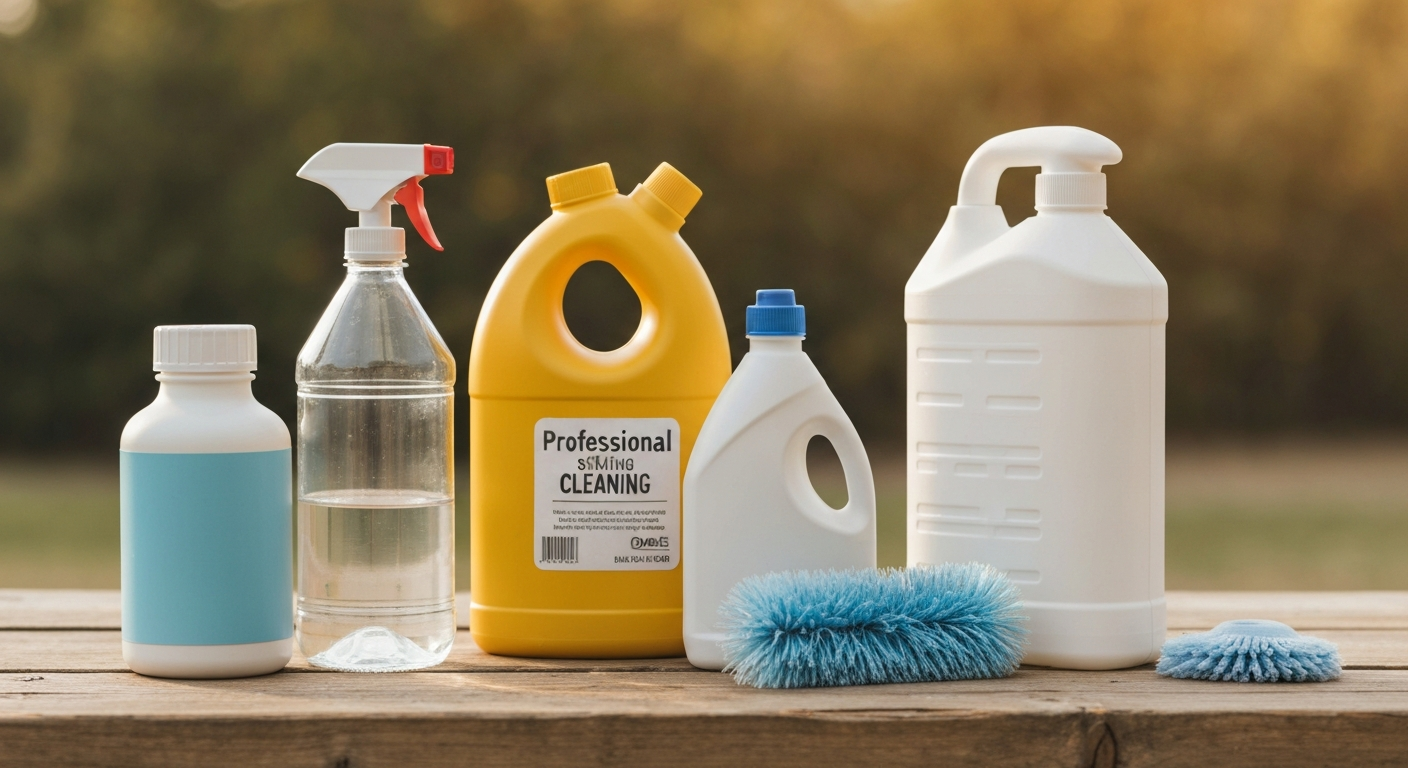
Basic supplies and equipment: $400–$1,200. That covers a commercial vacuum, mop and bucket, microfiber cloths, spray bottles, and your initial cleaning solutions. You can start leaner and scale up as revenue comes in.
LLC filing: $100 one-time, plus $25/year for the Annual Certificate.
Sales Tax Permit: $20 plus handling fee.
Local business license: $25–$100 depending on your city.
General liability insurance: $400–$600/year.
Total first-year government fees: approximately $150–$250, not counting insurance.
Residential cleaning startup total: $2,000–$6,000 when you add insurance, supplies, basic marketing (business cards, a Google Business Profile, maybe a simple website), and a vehicle.
Commercial cleaning startup total: $5,000–$15,000. Industrial floor machines, larger vacuums, bonding, higher insurance coverage, and potentially uniforms and branded materials for presenting to property managers.
The residential path is the lower-risk entry point. Start there, build revenue, then invest in the equipment and certifications that open commercial doors.
Tips for Growing Your Oklahoma Cleaning Business
The regulatory side of this is done. The harder work starts now.
Start residential, then move to commercial. Residential clients are easier to find, faster to close, and more forgiving while you’re refining your systems. Get 10–15 recurring residential clients, collect Google reviews, and use that track record when you approach commercial property managers. Commercial contracts pay better per square foot and often run on annual agreements — but they want proof you’re reliable and insured before they’ll sign.
ISSA certification (International Sanitary Supply Association) is optional but carries weight with commercial accounts. It signals professional training and industry standards. It’s not required in Oklahoma, but a certificate on your proposal stands out when you’re competing against other small operators for a building contract.
Green cleaning is a real differentiator in OKC and Tulsa, particularly in office environments where tenants care about indoor air quality and sustainability commitments. Green Seal or EPA Safer Choice products cost a little more but let you charge a premium. Commercial tenants in newer Class A buildings increasingly request eco-friendly cleaning specs. It’s worth offering.
Specialization commands higher rates. Standard residential cleaning is competitive. But move-out cleaning, Airbnb turnover cleaning, post-construction cleanup, and medical office cleaning all sit in premium pricing territory. Post-construction jobs in particular are in constant demand around the OKC and Tulsa metro areas given ongoing development. Medical offices require specific protocols and products — not complicated to learn, but the bar filters out generalists.
One last thing: the cleaning business is not passive. It’s physical, it’s relationship-driven, and client retention depends entirely on consistency. The business model is simple. Executing it well — that’s the actual work.
The Bottom Line
Oklahoma’s regulatory environment genuinely makes this one of the easiest states to start a cleaning business. One LLC filing, a Sales Tax Permit if you need it, a local business license from your city, and proper insurance. That’s the list.
Your first real task is finding your first five clients. After that, it’s about doing good work and getting reviews. Start at sos.ok.gov to file your LLC, then head to oktap.tax.ok.gov to handle state tax registration. The rest follows.