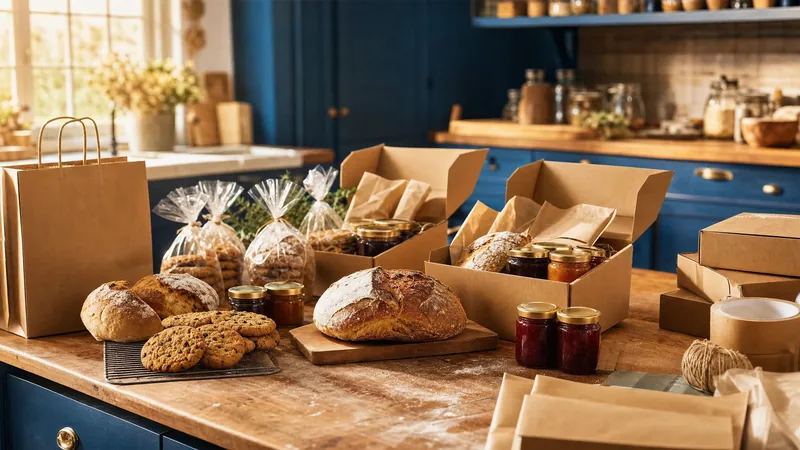
Oklahoma Cottage Food Law: The Local Food Freedom Act, $250,000 Cap and Labels from 2026-11-01
Oklahoma Cottage Food Law: The Local Food Freedom Act, $250,000 Cap and Labels from 2026-11-01
If you want to sell food made in your home kitchen in Oklahoma, you usually do not need a state license to do it. Many people search for an Oklahoma cottage food license, but the state does not issue one. Instead, the Local Food Freedom Act (formerly the Homemade Food Freedom Act) exempts qualifying home food producers from licensing and inspection by the State Department of Health (OSDH) and the Oklahoma Department of Agriculture, Food and Forestry (ODAFF). The exemption comes with a sales cap, labeling rules, sales tax duties and local zoning obligations, and those are the parts that catch people off guard.
The law is found at 2 O.S. 5-4.1 to 5-4.6, as amended by HB 3720 (2026). The amendment takes effect on 2026-11-01, so this guide gives the current rule and the new rule side by side.
This article is informational content, not legal or tax advice. Rules, fees and agency procedures can change. Confirm every figure with the named agency before you rely on it, and talk with a qualified attorney or CPA if your situation is complex, such as selling through several channels or holding other business interests.
Key Numbers at a Glance
| Item | Figure |
|---|---|
| Annual gross sales cap through 2026-10-31 | $75,000 |
| Annual gross sales cap from 2026-11-01 | $250,000 |
| Sales tax permit | $20 for three years; $10 for each additional location |
| LLC Articles of Organization | $100 |
| LLC annual certificate | $25, due on the formation anniversary, 60-day grace period, no late fee in the statute |
| Trade Name Report (assumed name) | $25 to file, no annual fee |
| Name reservation (LLC) | $10 for 60 days |
| OSDH temporary farmers market license | $50 per day, for up to 3 days |
| ODAFF optional annual registration | $15 per year |
| Labeling violation | Fine up to $300 |
Materials You Will Need
- A written recipe with exact ingredient weights, so you can list ingredients in descending order on the label
- A food scale and measuring tools
- Food-grade, sealed packaging
- Label stock or a label template set to at least 10-point font
- A dated sales log or spreadsheet to track gross sales against the cap
- Your sales tax permit once issued, plus a receipt book or point-of-sale system
- A certificate from an approved food safety course, only if you make TCS foods
- A Secretary of State filing, only if you use an entity name or a trade name
Step-by-Step: Selling Under the Cottage Food Exemption
Step 1: Confirm your product qualifies
Start with what you make. The exemption covers a local food establishment, which is a business at any location, including your home, but not a restaurant. Certain foods are excluded entirely: seafood, meat and meat products, poultry and poultry products, alcohol, unpasteurized milk and cannabis.
Every remaining product falls into one of two groups. Non-TCS foods do not need time or temperature control to stay safe. Breads, cookies, dry mixes and most jams and candies typically fall here, but confirm borderline items with ODAFF. TCS foods need time or temperature control. Cheesecake, cream-filled pastries and fresh-cut produce are common examples. The group decides how you may sell, so classify each product before you design a label.
Step 2: Track gross sales against the cap
The cap applies to annual gross sales of all prepared food, sold at any location. Farmers market sales count, and so do online and phone orders. Until 2026-10-31, the annual gross sales cap is $75,000. From 2026-11-01, the cap is $250,000.
Because the cap changes partway through the year, keep a dated sales log so you can show what you sold before and after the change. Review the total monthly. If you are approaching the applicable cap, you need to plan for the point where the exemption no longer covers you.
Step 3: Choose your legal structure and name
Many home producers operate as a sole proprietor under their own name. If you sell under a different name, such as a farmhouse brand, you need a Trade Name Report filed with the Oklahoma Secretary of State. It costs $25 to file, carries no annual fee and requires no newspaper publication. Do not file it with a county.
If you form an LLC, file Articles of Organization with the Secretary of State for $100. The name must contain limited liability company, limited company, LLC, LC, L.L.C. or L.C. ('limited' may be Ltd. and 'company' may be Co.), and it must be distinguishable from entity, trade and reserved names on file. You can reserve a name for $10 for 60 days. The LLC annual certificate costs $25 and is due on the anniversary of formation, with a 60-day grace period. The statute sets no late fee, but an LLC that misses the 60 days stops being in good standing, and reinstatement requires filing every delinquent annual certificate.
Oklahoma has no franchise tax for tax year 2024 and later. If the Secretary of State acts as your registered agent, a $40 annual agent fee may apply, so confirm that with the Secretary of State.
Step 4: Check city and county rules
Oklahoma has no general state business license, but your home food business still needs local clearance. Cities can license specific activities. A minority of cities charge a general or occupational license, including Bartlesville, Yukon, Sapulpa, Bixby, Tahlequah and Mustang. Oklahoma City, Tulsa and Lawton license only specific activity types, so check the city page for each activity you run. Cities separately license activities such as mobile food vendors, so do not assume that state exemption from licensing also exempts you from a city license.
Counties issue no business licenses. The exception is zoning and building permits: only Oklahoma County and Tulsa County run those in unincorporated areas. Local food establishments must follow local zoning and building codes, and counties may regulate without conflict with the exemption. Ask your city or county planning office whether home-based food sales are allowed at your address, and whether customer visits, signage or deliveries raise issues under residential rules.
Step 5: Register for a sales tax permit
The exemption waives only OSDH and ODAFF licensing. It does not waive sales tax. Register through the Oklahoma Tax Commission's OkTAP system at https://oktap.tax.ok.gov/OkTAP/Web?link=BUSREG. The sales tax permit costs $20 for three years and $10 for each additional location. You must be 18 or older to apply. The authority is 68 O.S. 1364.
Step 6: Complete food safety training for TCS foods
If any product is TCS, you must complete an ODAFF-approved online food safety course. The approved course list includes ServSafe Food Handler, and the course runs a maximum of 8 hours. Keep your certificate, because ODAFF may request proof of training after a complaint. Confirm the current approved course list with ODAFF before you enroll.
TCS foods also have a narrower sales path. You must sell and deliver them yourself, directly to the consumer. They cannot move through a store, farm stand, farmers market or other third-party vendor, and they cannot ship by parcel carrier. Non-TCS foods have more options, covered in Step 8.
Step 7: Build a compliant label
Every label needs the following information, printed in at least 10-point font:
- Producer name and phone number
- Physical address of the home production facility
- Description of the food
- Ingredients, listed in descending order
- An allergen statement that names allergens present in the product
- The exemption sentence
The exemption sentence on your label reads:
This product was produced in a private residence facility that is exempt from government licensing and inspection.
An optional ODAFF annual registration costs $15 per year. A registration number can replace the producer name, phone number and address on the label, which is useful if you sell at several venues and want to keep your home address private. Products shipped across state lines must also follow federal labeling law, which can require more than the Oklahoma rules. Violations can bring a fine of up to $300.
Step 8: Choose your sales channel
Direct sales. You can sell directly to consumers in person, online or by phone. Non-TCS foods may ship by parcel carrier. TCS foods must be delivered by you, directly to the buyer.
Designated agents. A store, farm stand, farmers market, buying club, craft fair or flea market can sell your non-TCS foods as your designated agent or third-party vendor. The vendor must post this placard:
This product was produced in a private residence facility that is exempt from government licensing and inspection. This product may contain allergens.
Farmers market vendors may need an OSDH temporary license, which costs $50 per day for up to three days. That is a per-day cost, not a $50 cap on your total market fees. Whole, uncut produce stands need no OSDH license.
Step 9: Collect sales tax correctly
The state sales tax rate is 4.5%, but since 2024-08-29 it does not apply to most food and food ingredients. Local city and county sales taxes still apply, and the Oklahoma Tax Commission collects them on the same return. Combined rates run from about 8.25% to above 10%, depending on location. Prepared, heated or ready-to-eat items and bakery goods can be taxable even when plain groceries are not, so check the treatment of each product with the Tax Commission before you set prices.
Oklahoma has no state resale certificate. When a business buyer purchases your food for resale, the buyer gives you an exemption or resale form instead. Keep those forms with your records. You can find the current forms through the Tax Commission at https://oklahoma.gov/tax.html.
Step 10: Keep records and be ready for ODAFF
For every sale, record the date, product, amount, sales channel and tax collected. Keep your training certificates, sales tax permit, label files, resale forms and any placard arrangements with designated agents. ODAFF may request proof of training and may check labels after a complaint, and organized records make that review faster.
Tips and Common Mistakes
- Treating the exemption as a tax exemption. It waives OSDH and ODAFF licensing only. Sales tax still applies.
- Selling TCS foods through a vendor. A farmers market or store cannot sell TCS foods for you, and TCS foods cannot ship by parcel carrier.
- Skipping the city check. A state exemption does not clear you with your city or county.
- Miscounting the cap. Market, online and phone sales all count toward the gross sales cap. Record the cap change date on 2026-11-01 in your log.
- Using small or hard-to-read labels. Print at no less than 10-point font, and check that the exemption sentence and allergen statement are readable.
- Making health claims. Words such as treats, prevents or cures can cause FDA to treat the product as a drug, which the exemption does not cover.
- Filing the trade name with a county. An assumed name is a Secretary of State filing.
- Assuming a single city rule applies everywhere. Each city licenses different activities, so check the one where you live and sell.
Expected Results
If you complete these steps, you may be able to sell qualifying home-produced foods without an OSDH or ODAFF license. Your timeline depends on how quickly you finish the city and county checks, the sales tax permit and any required training, so treat any start date as an estimate, not a promise. Results vary with your products, your market and your local rules, and no outcome is guaranteed.
Keep your product descriptions factual and hedged. A description such as this sauce may be enjoyed on grilled vegetables is descriptive. A description that says the sauce treats or prevents an illness is not, and it can invite regulatory action. The exemption covers licensing, not product claims.
Official Resources
- Oklahoma Secretary of State, Business Filing Department: https://www.sos.ok.gov/business/default.aspx
- Business entity search: https://www.sos.ok.gov/corp/corpInquiryFind.aspx
- Name availability and reservation: https://www.sos.ok.gov/corp/corpNameAvailability.aspx
- Trade Name Report and filings: https://www.sos.ok.gov/corp/filing.aspx
- Oklahoma Tax Commission: https://oklahoma.gov/tax.html
- OkTAP sales tax permit registration: https://oktap.tax.ok.gov/OkTAP/Web?link=BUSREG
- Oklahoma Small Business Development Center network: https://www.oksbdc.org/
- SBA Oklahoma district office: https://www.sba.gov/district/oklahoma
Confirm the ODAFF and OSDH requirements directly with those agencies, since this guide does not list their web addresses. For a complex setup, such as several sales channels, wholesale orders or an LLC with other operations, speak with a qualified attorney or CPA before you start.
Keep exploring: related Oklahoma guides
- How to Open a Brewery or Distillery in Oklahoma
- How to Start a Bakery in Oklahoma
- How to Start a Vending Machine Business in Oklahoma
- How to Open a Bar in Oklahoma
- How to Start an LLC in Oklahoma
- Oklahoma Business License
- Cost to Start a Business in Oklahoma
- All Oklahoma business types
- Every Oklahoma guide in one place