How to Start a Business in Yukon, Oklahoma
How to Start a Business in Yukon, Oklahoma
Yukon is growing faster than most people realize. The city sits in Canadian County, which has expanded 33.6% over the past decade—among the top 50 fastest-growing counties in the entire nation. That’s not accidental. People are moving here because the OKC metro job market is strong, but they want a smaller-town feel, good schools, and a manageable commute. You’re looking at a city of roughly 27,068 people today, expanding at about 2.34% annually, with a median household income of $76,408—well above Oklahoma’s state average of $66,148.
The economics are straightforward: a rapidly expanding residential base needs everything. Restaurants. Medical services. Home contractors. Retail. Professional offices. The tight labor market (96.9% employment rate, 12,478 residents in the workforce) means people have money to spend. The major employers—Xerox, Banner Health System, Yukon National Bank, Walmart Supercenter, and the school district—anchor the local economy and attract workers from across the region.
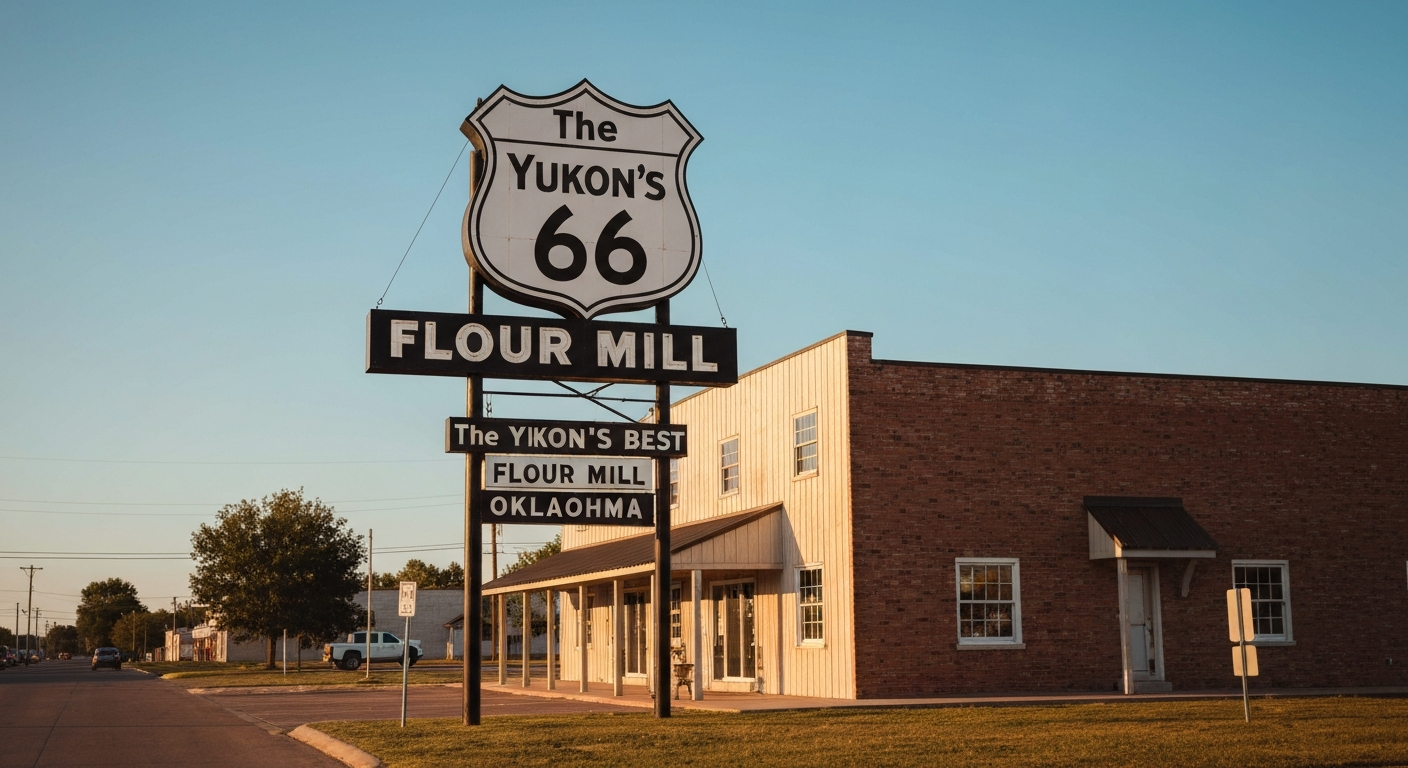
But Yukon has another identity too. The Yukon’s Best Flour Mill, operating for over a century, is a Route 66 landmark. Its iconic neon sign—added in the 1940s—stops tourists cold. Every October, the Oklahoma Czech Festival draws visitors statewide to celebrate the city’s Czech heritage, rooted in the Yukon Czech Hall, built in 1901 and now a National Historic Site. That’s a niche market, but it’s real. If your business can tap into heritage tourism or serve the Czech community, there’s an audience.
The real opportunity, though, is suburban: serving families and young professionals who chose Yukon over OKC proper.
Step 1: Choose Your Business Structure
You have three main options in Oklahoma, and the state makes it simple.
Limited Liability Company (LLC) is what most first-time business owners choose. File at sos.ok.gov for $100. That’s it. Once formed, you’ll pay a $25 annual certificate fee every year on your formation anniversary. An LLC protects your personal assets if the business is sued or goes under. No franchise tax in Oklahoma—that was repealed effective January 1, 2024 (HB 1039)—so you won’t face surprise annual fees like you would in California.
Corporation is another option if you’re planning significant growth or seeking investment. Filing fee is $50, same $25 annual certificate as an LLC. Corporations are more formal and require bylaws, board meetings, and detailed record-keeping. Most small businesses don’t need this complexity early on.
Sole proprietorship requires no state filing at all. You operate under your own name (or a DBA—“doing business as”—registered locally). It’s free, but it offers zero liability protection. If a customer sues, your personal bank account is at risk. For anything beyond a side hustle, you need an LLC or corporation.
For most Yukon startups, an LLC is the right call. It’s cheap, protective, and the paperwork is minimal.
Step 2: Register for State Taxes
Oklahoma’s tax system is straightforward once you know the steps.
Sales Tax Permit is your first move if you’re selling goods or taxable services. Register through OkTAP (Oklahoma Taxpayer Access Point) at oktap.tax.ok.gov. The permit costs $20 plus a handling fee. If you’re not sure whether your business requires a permit, the rule is simple: if you’re selling anything taxable to a customer in Oklahoma, you need one. This includes retail goods, most services (consulting, contracting, salon services), and digital products in many cases. Once approved, you’ll file and remit sales tax monthly or quarterly depending on your volume.
Employer withholding is required if you hire anyone. Register through OkTAP as well. Oklahoma taxes wages at a graduated rate from 0.25% to 4.75% on the individual level.
Workers’ compensation insurance is mandatory in Oklahoma for all employers—no minimum employee threshold. Not one employee, not five. If you hire someone, you need it. You can purchase through CompSource Mutual (formerly CompSource Oklahoma) or a private carrier. The cost varies by industry and payroll. A retail worker costs less to insure than a construction worker, for example. Budget $500–2,000 per year for your first employee, depending on your industry.
Step 3: Get Your Yukon Business License
This is where Yukon’s local requirements kick in. The city requires an occupational license for any business operating within city limits—even home-based businesses are subject to zoning rules and may need approval.
Where to apply: Community Development Office, City Hall, 500 W. Main Street, Yukon, OK 73099. Phone: (405) 354-1895.
What you need: Download the Business License Application from yukonok.gov on the Forms & Applications page. Fill it out and submit with proof of zoning compliance (more on that below).
Cost: $50 for a new occupational license. Renewals are $25 and expire April 30 annually.
Timeline: Expect 3–5 business days for approval once you submit. It’s not instantaneous, so plan accordingly.
Important: Your license will be revoked if you don’t meet occupancy requirements by the deadline specified by inspectors. This means you can’t get licensed, then sit on the property for months. Once you’re approved for occupancy, you have a set window to open.
If you’re a contractor: Contractors need a separate license. Instructions are on the city website. The process is similar but requires proof of insurance and sometimes bonding.
The $50 fee is remarkably affordable—well below what many OKC suburbs charge. Midwest City runs $75, and Oklahoma City’s fees vary by industry but often exceed $100.
Step 4: Handle Zoning and Location
Before you apply for your business license, you need to know if your location is zoned for your business type.
Zoning verification: Contact the Community Development Office at (405) 354-1895. They’ll tell you whether your proposed address permits your business use. This is non-negotiable. You can’t operate a restaurant in a residential zone, and you can’t run a manufacturing operation in a commercial retail corridor.
Zoning ordinances: Find Yukon’s full zoning code at library.municode.com/ok/yukon. Search for “zoning” to review permitted uses by district.
Building permits: If you’re renovating or building out a space, you’ll need a building permit through Development Services. This is separate from your business license and ensures your space meets building codes.
Home-based businesses: If you’re running your business from home, check the zoning ordinances first. Most residential zones allow certain service-based businesses (consulting, freelance work, virtual services) but prohibit retail, manufacturing, and high-traffic uses. You may also need a home occupation permit. Call Community Development to confirm.
Route 66 corridor: Yukon’s downtown runs along Route 66—the historic Main Street corridor. This is prime real estate for tourism-oriented businesses: antique shops, cafés, craft studios, heritage-focused retail. If you’re targeting Route 66 travelers or the Czech Festival crowd, this is your zone. Building here may come with historic district guidelines, but the foot traffic and visibility are worth it.
Sales Tax Breakdown
Yukon’s combined sales tax rate is 8.85% as of 2026, per Avalara.
Here’s the breakdown:
- Oklahoma state: 4.5%
- Canadian County: 0.35%
- Yukon city: 4.0%
Yukon’s 4.0% city rate is competitive for the OKC metro. Midwest City charges 4.6%, Oklahoma City 4.125%. You’re not at a disadvantage here.
How it works: Oklahoma uses destination-based sales tax. You don’t charge the rate at your location; you charge the rate where the customer receives the goods or services. If a Yukon customer has delivery to their home in Bethany, you’d charge Bethany’s rate, not Yukon’s. For in-person retail, you charge Yukon’s 8.85%.
Filing: You register for your Sales Tax Permit through OkTAP (oktap.tax.ok.gov), pay the $20 fee, and then file and remit tax through the same platform. Frequency depends on your volume: typically monthly for most small businesses, quarterly if you’re very small. Oklahoma Tax Commission handles enforcement.
Planning tip: If you’re pricing products or services, account for the 8.85% tax in your cost structure. Customers expect the tax to be added at checkout—it’s not included in displayed prices in Oklahoma.
Costs at a Glance
Here’s what you’ll actually spend to launch a basic LLC in Yukon:
| Item | Cost |
|---|---|
| LLC filing (one-time) | $100 |
| Annual certificate (first year) | $25 |
| Sales Tax Permit (one-time) | $20 |
| Yukon occupational license (new) | $50 |
| Total (first year) | $195 |
If you’re hiring employees, add workers’ compensation insurance. Budget $500–2,000+ depending on industry and headcount.
What’s not here:
- No franchise tax (repealed in 2024)
- No city income tax
- No state-level E-Verify mandate
- No occupancy deposit or hidden city fees
Oklahoma’s tax environment for small business is genuinely straightforward. You pay sales tax (which your customers bear), you pay payroll taxes (standard everywhere), and you pay income tax on profit (standard everywhere). There are no surprise annual fees or hidden compliance costs unique to Oklahoma.
Why Yukon Specifically?
The numbers tell the story.
Canadian County is expanding at 33.6% per decade—the fastest in Oklahoma and among the top 50 nationally. That growth isn’t speculative; it’s driven by real economic activity. Xerox, Banner Health, Yukon National Bank, and Walmart are major regional employers, and they’re hiring. The median household income of $76,408 means your customers have disposable income. A 96.9% employment rate means the labor market is tight but active—people have jobs, money, and needs.
The Route 66 heritage and Czech Festival are real draws, but they’re a secondary market. The primary market is suburban families and young professionals who want to live outside OKC but work in it. They need grocers, restaurants, mechanics, doctors, accountants, dentists, contractors, and childcare. They want good schools (Yukon Public Schools has a solid reputation), safe neighborhoods, and a short commute (about 20 minutes to downtown OKC). You can build a sustainable business serving that base.
The city itself is business-friendly. A $50 occupational license is affordable. The Community Development Office is responsive. Zoning is clear. There’s no red tape relative to other OKC suburbs.
Next Steps
-
Decide on your structure. LLC is the safest bet for first-time owners. File at sos.ok.gov for $100.
-
Research your location and zoning. Call Community Development at (405) 354-1895 or review the zoning code at library.municode.com/ok/yukon. Don’t sign a lease until you’ve confirmed your business is permitted.
-
Register for sales tax. Go to oktap.tax.ok.gov and apply for your Sales Tax Permit ($20). You’ll need this before you open.
-
Apply for your Yukon business license. Download the form from yukonok.gov, submit it to City Hall (500 W. Main Street) or call (405) 354-1895. Budget 3–5 business days for approval.
-
Set up workers’ comp. If you’re hiring, contact a workers’ comp carrier or CompSource Mutual. Get quotes before you bring on your first employee.
-
Open your doors. Once licensed and insured, you’re ready.
Yukon isn’t flashy, but it’s real. The growth is real. The customer base is real. The infrastructure—schools, employers, housing—is solid. If you’re building a business that serves suburban Oklahoma, Yukon is a smart bet.