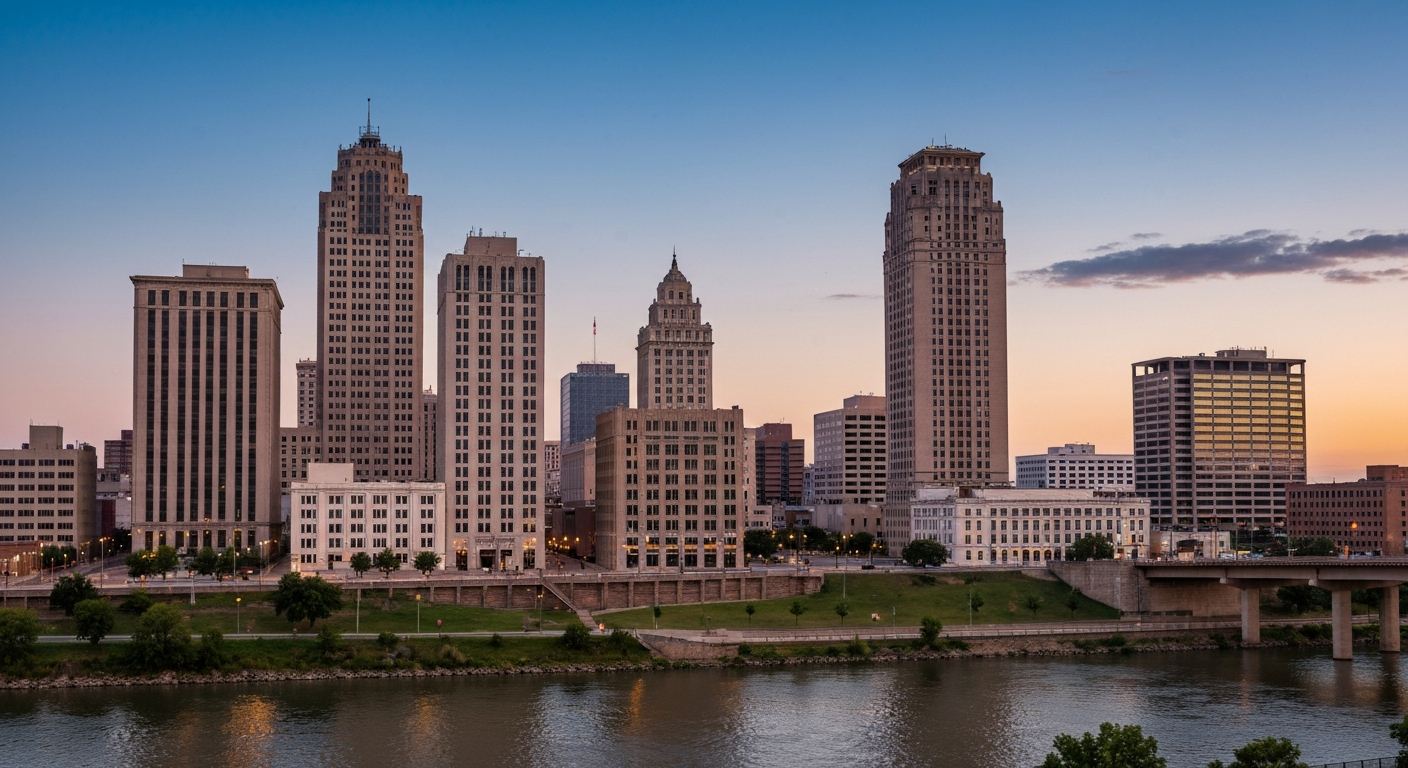
How to Start a Business in Tulsa, Oklahoma
Tulsa paid over 3,000 remote workers $10,000 each to move here through the Tulsa Remote program. The George Kaiser Family Foundation invested $465 million or more into the Gathering Place park, the Tulsa Arts District, and downtown revitalization. A $4 billion data center project at the Port of Inola — the largest in state history — is on the way. Tulsa didn’t wait for its economy to recover from the oil busts. It rebuilt the whole thing on purpose.
With a population of roughly 413,794 and a metro area topping 807,000, Tulsa is Oklahoma’s second-largest city and one of the most intentionally business-friendly markets in the central US. This guide covers every step to get your business open here, from LLC formation through permits, taxes, and the local resources that make Tulsa different from every other mid-size American city.
Why Tulsa Is Reinventing Itself as a Business Hub
Tulsa’s reinvention story is backed by real numbers, not press releases. The Tulsa Remote program at tulsaremote.com has relocated 3,000+ remote workers to the city, each receiving $10,000 to make the move. That influx reshaped downtown housing demand and brought a wave of new business formation from people who arrived as remote employees and launched their own ventures. The program targets remote workers with established income, which means the relocators are bringing stable purchasing power and professional networks with them. That creates a customer base and a potential business partner pool that didn’t exist five years ago.
The George Kaiser Family Foundation (GKFF) has invested more than $465 million into projects that include the Gathering Place — the largest privately funded public park in the United States — along with the Tulsa Arts District revival and broader downtown improvements. These aren’t proposals; they’re built and operating. The Gathering Place alone draws over 3 million visitors annually, generating foot traffic and spending in the surrounding neighborhoods. The Tulsa Arts District has gone from a neglected warehouse zone to a thriving corridor of galleries, restaurants, and creative businesses. If your business benefits from walkable, high-traffic areas, these investments created the infrastructure you’d need.
The Port of Inola’s planned $4 billion data center project has been called a “game changer” by state officials. It’s the largest private investment in Oklahoma history and will anchor economic growth along the East Tulsa and North Broken Arrow corridor for decades. Data centers create direct jobs, but the real impact is the ecosystem they build around them — fiber connectivity, power infrastructure, technical workforce, and the professional services that support all of it.
Tulsa’s energy heritage remains strong — BOK Financial, ONEOK, Williams Companies, and Helmerich & Payne are all major employers with corporate headquarters or significant operations in the city. But the economy has diversified significantly into aerospace, healthcare, and technology. CoStar data shows Tulsa’s industrial market with solid rent growth and office vacancy rates below the national average. The commercial real estate market signals a city where demand is growing, not shrinking.
The cost of living seals the deal: median household income of $59,838, median home sale price around $220,000, and overall living costs well below the national average. Your startup dollars stretch further here than in almost any comparably sized city. Office rent, employee wages, housing costs for you and your team — everything runs cheaper in Tulsa than in a coastal metro or even most Sun Belt cities of similar size. A business that would burn through its startup capital in 12 months in Austin or Denver can stretch the same money to 18 or 24 months in Tulsa — giving you more runway to find product-market fit and reach profitability.
Form Your Oklahoma LLC
Your LLC filing goes through the Oklahoma Secretary of State at sos.ok.gov. The cost is $100 plus a $4 online processing fee — $104 total. Standard processing takes 5-10 business days.
If you need same-day processing, you can file in person at the Secretary of State’s office at 421 NW 13th St, Suite 210, Oklahoma City, OK 73103 — about 100 miles from Tulsa. Add $50 for the expedited service. For most Tulsa-based business owners, the 5-10 day online processing works fine — plan ahead and submit your filing a couple weeks before you need it. If you need the filing done faster but don’t want to drive to OKC, several registered agent services will handle the in-person filing on your behalf for a fee.
You can also reserve a business name for $10 (holds it for 60 days) or file a DBA (Assumed Name) for $25 if you plan to operate under a name different from your LLC’s legal name. Amendments to Articles of Organization cost $50, and a Certificate of Good Standing is $20 — some banks and vendors request one during onboarding.
Your annual obligation is the $25 Annual Certificate, due on your LLC’s anniversary date. Miss it by 60 days and your LLC loses good standing. Miss it for three years and the state administratively dissolves it. Set a reminder the day you file your Articles of Organization.
Oklahoma has no franchise tax — it was permanently repealed effective January 1, 2024 (H.B. 1039). Compare that to California’s $800 per year franchise tax. Your $25 Annual Certificate is quite literally the only annual state fee for maintaining your LLC. No other state-level recurring cost applies.
An Operating Agreement isn’t required by Oklahoma law, but draft one anyway, especially if you have multiple members. It clarifies ownership, profit distribution, and decision-making authority in a way that prevents disputes later. Even single-member LLCs benefit from an Operating Agreement — it demonstrates to banks, landlords, and partners that your business is structured professionally. Many Tulsa banks will ask for it when you open a business account.
If you plan to operate under a different name than your LLC’s legal name, file a DBA (Assumed Name) with the Secretary of State for $25. Name reservation is $10 and holds your chosen name for 60 days.
Register for Taxes in Tulsa
Get your EIN from the IRS first — free and instant at irs.gov/ein. You need it before registering with the Oklahoma Tax Commission.
Apply for your Sales Tax Permit through the OkTAP portal at oktap.tax.ok.gov. The fee is $20 plus handling. Processing takes 2-7 business days online. The OTC also has a Tulsa office where you can register in person for faster processing — a meaningful convenience that OKC-area businesses don’t always have.
The Tulsa combined sales tax rate is 8.517%, broken down as 4.5% state plus 3.65% city plus 0.367% Tulsa County. That Tulsa County component is something OKC doesn’t have — Oklahoma County charges no county tax within OKC city limits. The difference is small but real, and it means your total rate in Tulsa is slightly lower than OKC’s 8.625%.
Oklahoma uses a destination-based sales tax system. If you ship goods within the state, you charge the rate at the buyer’s delivery address, not your store address. This matters if you sell online or make deliveries across city and county lines. For businesses that sell exclusively in-store at a Tulsa location, the 8.517% rate applies uniformly.
The state income tax tops out at 4.75% for individuals. The corporate income tax is a flat 4%. Groceries became exempt from the state 4.5% sales tax as of August 29, 2024, though local Tulsa taxes may still apply to some food items. If you’re in food retail, check with the OTC to confirm which products are exempt at which level.
File your sales tax returns monthly by the 20th of the following month. You can file and pay through OkTAP. Late filing triggers a 10% penalty, with a 25% penalty added if a demand notice is issued. These penalties stack — a $2,000 monthly obligation becomes $2,700 after both penalties. File on time, every month, no exceptions.
If you’re hiring, register for employer withholding through OkTAP and for unemployment insurance through the Oklahoma Employment Security Commission (OESC) at oesc.ok.gov. Workers’ compensation insurance is required for most Oklahoma employers. Get coverage through the Oklahoma Workers’ Compensation Commission system before your first employee starts — not after. Oklahoma is a right-to-work state. There is no state E-Verify mandate, though federal contractors must comply. The minimum wage follows the federal rate of $7.25 per hour, but in practice, Tulsa’s competitive labor market means most employers offer significantly more to attract and retain workers.
Tulsa Business Permits and Licensing
Tulsa, like most Oklahoma cities, does not require a general business license. There is no universal permit or annual occupation tax that every business must pay. Licensing is activity-specific, which keeps your overhead low but puts the responsibility on you to identify which permits apply to your situation.
Zoning Verification: Tulsa Planning and Development handles zoning verification and building permits. Check your proposed location’s zoning before signing a lease — this step costs nothing but skipping it has cost Tulsa business owners thousands in lost deposits and wasted buildout expenses. Tulsa’s zoning map is available online through the city’s planning portal, but for definitive confirmation, contact Planning directly. If your business type isn’t allowed in the zone, you’ll need to find a different location or pursue a variance — the variance route adds weeks to months, requires a public hearing, and isn’t guaranteed.
Certificate of Occupancy: Required for all commercial locations in Tulsa. You cannot legally operate from a commercial space without a valid CO. Apply through Tulsa Permits & Development Services. The process follows the standard sequence: application, plan review (if renovating or changing the use of a space), building and fire inspections, and CO issuance. Timeline varies by the scope of the project but expect 1-3 weeks for straightforward applications. If the previous tenant had a CO for a different business type, don’t assume it covers you — changes in business type or ownership may trigger a new inspection. Include a CO contingency in your commercial lease so you have an exit option if the space fails inspection.
Home Occupation Permits: Tulsa’s zoning code allows many home-based businesses with restrictions on signage, customer traffic, the number of employees working on-site, and the percentage of your home used for business activities. Verify your specific situation with Tulsa Planning before launching. The restrictions are enforced, and neighbors in residential areas do file complaints. If your business model works from home — online sales, consulting, remote services — a home occupation permit keeps your overhead near zero while you build revenue. If your business needs customer-facing space, plan for a commercial location from the start.
Restaurants: You need permits from two separate health agencies. The Tulsa Health Department (which is a separate entity from the state OSDH) handles food service permits for Tulsa, including plan review and pre-opening inspections. You also need a food service establishment license from the state Oklahoma State Department of Health. Plus the city CO. That’s three separate approvals from three separate agencies. Start the Tulsa Health Department plan review as early as possible — it’s the part that takes the longest and creates the most delays for new restaurant owners in Tulsa.
Alcohol: ABLE Commission license at the state level, plus City of Tulsa local approval. Mixed beverages carry a 6% mixed beverage tax. Apply for both the state and local components simultaneously.
Contractors: The Oklahoma Construction Industries Board (CIB) licenses regulated trades (electrical, plumbing, mechanical, HVAC) at the state level. Commercial work exceeding $50,000 requires a CIB-licensed contractor for those regulated trades. City building permits are required for all construction work in Tulsa, regardless of trade or project value. General contractors don’t need a CIB license but must pull city permits for every project. If you’re hiring contractors for your buildout, confirm they hold the appropriate CIB licenses and are registered to pull Tulsa city permits before work begins.
Tribal Jurisdiction Note: Parts of Tulsa fall within Muscogee (Creek) Nation reservation boundaries following the 2020 McGirt v. Oklahoma Supreme Court decision. For most businesses in commercial areas, this primarily affects certain tax compliance questions rather than day-to-day business licensing. However, if your business is specifically located on tribal trust land, you may need tribal business permits from the Muscogee (Creek) Nation in addition to city permits. Most commercial areas in central and south Tulsa operate under standard city jurisdiction. If you’re unsure about your specific location, contact the Tulsa Regional Chamber or a local business attorney for guidance. Don’t guess on this one — get a definitive answer for your specific address.
Tulsa Business Resources and Funding
Tulsa has built an unusually strong support infrastructure for startups and small businesses. The density of resources per capita rivals cities many times its size.
36 Degrees North is Tulsa’s self-described “basecamp for entrepreneurs.” It offers coworking space, accelerator programs, and networking events. If you’re new to Tulsa’s business community, this is where to start making connections. The coworking membership also gives you a professional business address and meeting space while you’re getting started — useful if you’re not ready for a full commercial lease.
Tulsa Innovation Labs focuses on workforce development in cyber, virtual health, analytics, and energy tech. If your business touches any of those sectors, their programs can connect you with talent and training resources. They’re specifically designed to build Tulsa’s workforce in emerging fields, which means they’re actively developing the employees your business might need.
Atento Capital is a Tulsa-based venture capital firm specifically focused on Oklahoma startups. If you’re building a scalable company and looking for investment, they’re one of the few local VC firms with committed capital. Having a local VC that understands the Oklahoma market — rather than trying to pitch a coastal firm that doesn’t — is a meaningful advantage.
Tulsa Regional Chamber provides economic development support, business relocation assistance, and connections to the broader Tulsa business community. Their economic development team can provide demographic data, site selection assistance, and introductions to potential partners and suppliers. If you’re relocating a business to Tulsa from out of state, the Chamber’s relocation assistance program can help with everything from finding commercial space to understanding local regulations.
For banking, Tulsa has strong local options. BOK Financial (Bank of Oklahoma) is headquartered here and has deep ties to the business community. Arvest Bank and MidFirst Bank also have significant Tulsa presence with business banking products tailored to startups. Local banks tend to offer more flexible underwriting for new businesses than national institutions. Open a dedicated business bank account as soon as your LLC is filed and your EIN is confirmed — you’ll need your Articles of Organization, EIN confirmation letter, Operating Agreement (if you have one), and a government-issued ID.
The Oklahoma Small Business Development Center (OSBDC) has a Tulsa office offering free business counseling and workshops. Topics range from business plan development to financial management to marketing strategy. The SBA provides loans and programs through the Oklahoma District Office, including 7(a) loans, 504 loans, and the microloan program.
Ongoing Compliance
Your recurring obligations in Tulsa are straightforward:
- Annual Certificate: $25, filed at sos.ok.gov on your LLC anniversary date. Don’t miss it. Two reminders on your calendar — 30 days before and 7 days before.
- Monthly sales tax filing through OkTAP by the 20th of each month. No exceptions, no grace period before penalties kick in.
- Workers’ compensation insurance if you have employees. Coverage must be active before their first day.
- Industry-specific license renewals per their individual schedules.
- No annual city business license fee. There’s nothing to renew on the city side for general businesses. No occupation tax. No gross receipts assessment. No franchise tax (permanently repealed statewide in 2024).
Tulsa’s deliberate reinvestment — from Tulsa Remote to GKFF to the Port of Inola project — has created a market that’s growing by design, not by accident. The cost to start and maintain a business here is among the lowest of any city its size, and the support infrastructure through organizations like 36 Degrees North, Tulsa Innovation Labs, and Atento Capital gives you access to resources that many larger cities lack. Your Sales Tax Permit, your CO, and your $25 Annual Certificate are the core requirements. The rest is building something people want to buy, in a city that’s investing billions to make sure the customers are here.