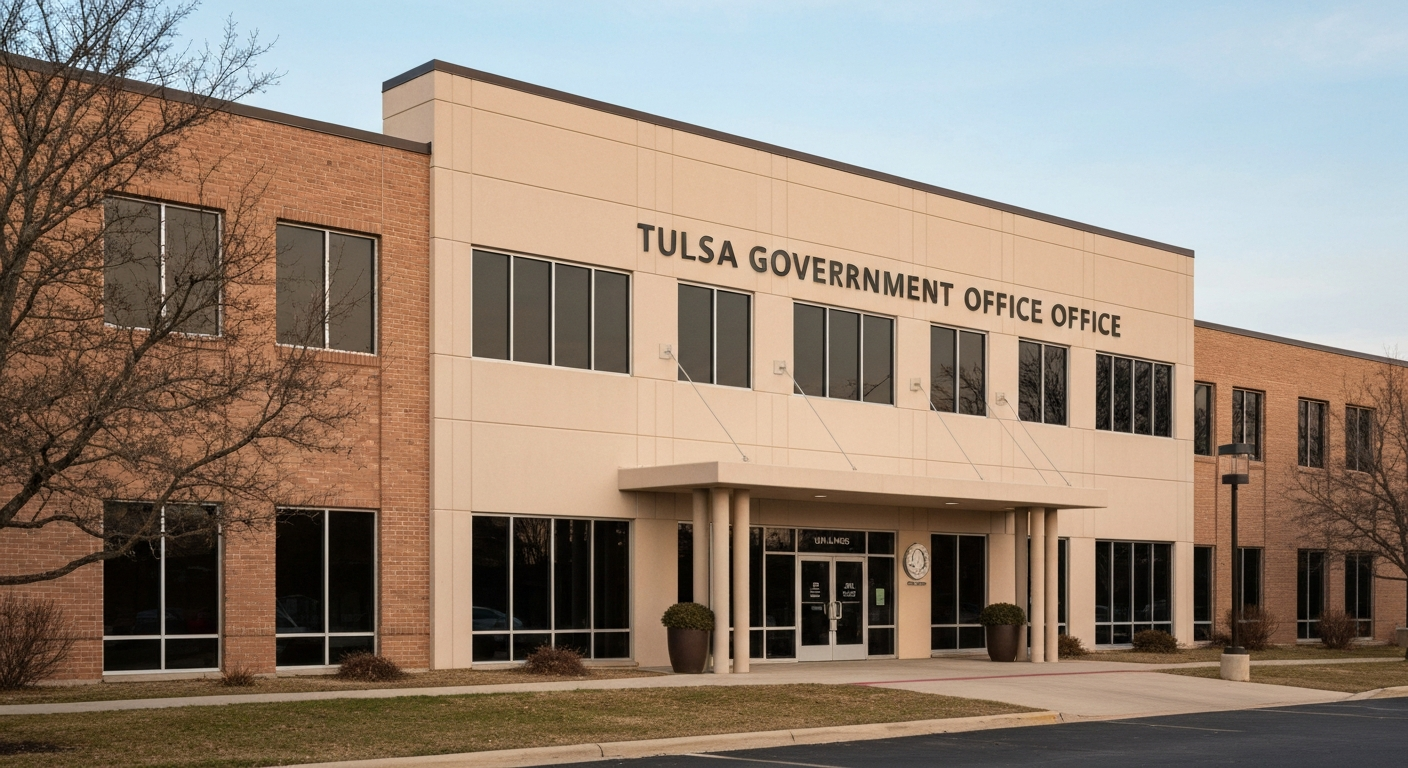
How to Get a Business License in Tulsa, Oklahoma
Tulsa does not have a general business license. If you’ve been looking for a universal “Tulsa business license” application, there isn’t one — and that’s by design. Like most Oklahoma cities, Tulsa uses an activity-specific licensing model instead of charging every business an annual registration fee.
That keeps your costs low, but it also means you have to figure out which specific permits apply to your situation. This guide lays out every requirement in order: the state Sales Tax Permit, the city Certificate of Occupancy, zoning clearance, industry-specific permits, and the tribal jurisdiction question that makes Tulsa’s licensing process more nuanced than any other Oklahoma city.
Tulsa Business Licensing: No General License, but Don’t Skip This
The City of Tulsa requires specific licenses for businesses in regulated industries — cosmetology, food service, alcohol sales, and others — but there is no blanket business license that every company must obtain. Check with the City Clerk’s office for the complete list of activities requiring city-specific permits.
What you DO need in most cases:
- Sales Tax Permit (state, $20 through OkTAP)
- Certificate of Occupancy (city, for physical commercial locations)
- Zoning clearance (verify your business type is allowed at your address)
- Industry-specific permits (only if your business type requires one)
There is no annual city license renewal fee for most Tulsa businesses. Your ongoing obligations are sales tax filing and maintaining whatever industry permits apply to you. Compare that to cities with mandatory annual occupation taxes — Virginia’s BPOL tax, Georgia’s Occupation Tax Certificate, California’s city business tax certificate — and Tulsa’s model saves you real money every year. Not just in the first year. Every year you’re in business.
The no-franchise-tax advantage compounds this. Oklahoma permanently repealed its franchise tax effective January 1, 2024 (H.B. 1039). Between no general business license, no franchise tax, and no annual city registration fee, Tulsa’s total licensing and recurring tax overhead is among the lowest of any metro its size.
Step 1: State Sales Tax Permit
Apply for your Sales Tax Permit through the OkTAP portal at oktap.tax.ok.gov. The fee is $20 plus handling. Get your EIN from the IRS first — free and instant at irs.gov/ein. You need it before OkTAP will let you register. The Oklahoma Tax Commission has a Tulsa office where you can register in person for faster processing, which is a convenience that saves the 100-mile drive to OKC.
The Tulsa combined sales tax rate is 8.517%, broken down as:
- 4.5% state
- 3.65% city
- 0.367% Tulsa County
Note that Tulsa County adds a 0.367% component that Oklahoma City doesn’t have — OKC has no county tax within its city limits. If your business is located near city or county borders, verify your exact rate with the OTC Sales Tax Rate Locator tool using your street address, not just your ZIP code. ZIP codes can straddle jurisdictions, and the wrong rate means you’re either overcharging customers or underpaying taxes — both are problems.
File monthly sales tax returns by the 20th of the following month. Late filing triggers a 10% penalty. A demand notice from the OTC adds a 25% penalty on top. These penalties stack, and they compound fast. On a $5,000 monthly obligation, late filing plus demand notice turns it into $6,750. File through OkTAP — the system tracks your returns and payments in one place and gives you a clear record for your accountant.
Oklahoma uses a destination-based sales tax system. If you ship products within the state, charge the rate at the buyer’s delivery address, not your Tulsa store address. For in-store sales, the Tulsa 8.517% rate applies. If you sell online and ship to Norman, you charge Norman’s 8.75%. This matters for any business with delivery, e-commerce, or multi-location operations.
Step 2: Zoning and Certificate of Occupancy
Zoning verification comes first. Tulsa Permits & Development Services handles zoning questions and CO issuance. Tulsa’s zoning map is available online — check it before signing any commercial lease. If your business type isn’t allowed in the zone where you want to operate, you’ll either need to find a different location or apply for a zoning variance, which takes time, costs money in application fees, requires public notice, and isn’t guaranteed. For most new business owners, finding a properly zoned location is faster and cheaper.
Certificate of Occupancy is required for all commercial occupancy in Tulsa. You cannot legally operate from a commercial space without one. The process follows this sequence:
- Submit your application to Tulsa Permits & Development Services
- Plan review (required if you’re renovating or changing the use of a space)
- Building and fire inspections
- CO issued upon passing inspections
Timeline varies by the scope of the project, but expect 1-3 weeks for straightforward applications. If your space needs significant renovation or a change-of-use review, the plan review step can extend this considerably. Factor that into your lease negotiation — don’t agree to a rent start date that assumes instant CO approval.
Home occupation permits are available for businesses operating from a residential address. Tulsa’s zoning code allows many home-based business types, but restricts signage, the number of employees, customer traffic, and the percentage of the home used for business activities. Verify your specific situation with Tulsa Planning before assuming you qualify. These restrictions are enforced, and complaints from neighbors can result in compliance actions.
Step 3: Industry-Specific Licenses
Depending on what your business does, you may need one or more of the following:
Cosmetology and salon services: You need a state license from the Oklahoma State Board of Cosmetology and Barbering plus a city business license from the City of Tulsa. Both are required — the state license covers your professional credentials, and the city license authorizes your specific location to operate as a salon or barbershop. Operating with only one of these is a violation. The state license must be current before you can obtain the city license, so start the state application first.
Restaurants and food service: This is where Tulsa gets complex. You need three separate approvals from three separate agencies:
- Tulsa Health Department food service permit, which includes a plan review of your kitchen layout and a pre-opening inspection. The Tulsa Health Department is a separate entity from the state Department of Health — you need both. Not one. Both.
- Oklahoma State Department of Health (OSDH) food service establishment license.
- City Certificate of Occupancy from Tulsa Permits & Development Services.
Start the Tulsa Health Department plan review as early in your buildout process as possible. Submit it during construction planning, not after the buildout is complete. The plan review examines your kitchen layout, equipment placement, ventilation, and food storage — all things that are expensive to change after they’re built. This step creates the most delays for new restaurant owners in Tulsa.
Alcohol sales: You need an ABLE Commission license at the state level (Alcoholic Beverage Laws Enforcement handles all alcohol licensing in Oklahoma) plus City of Tulsa local approval. Mixed beverages are subject to a 6% mixed beverage tax. Apply for both components simultaneously — doing them sequentially adds unnecessary weeks to your timeline.
Contractors: The Oklahoma Construction Industries Board (CIB) licenses electrical, plumbing, mechanical, and HVAC contractors at the state level. City building permits are required for all construction work within Tulsa, regardless of trade. General contractors don’t need a CIB license but must pull city permits for every project.
Childcare: Oklahoma DHS licensing is required at the state level. Your location must also be zoned to permit childcare operations in Tulsa. Verify both before committing to a space — not every commercial zone allows childcare, and the zoning step is often overlooked until it’s too late.
Mobile vendors and food trucks: The City of Tulsa requires mobile vendor permits. Contact the City Clerk’s office for the application process, fees, and any location restrictions. Food trucks face additional Tulsa Health Department requirements beyond the mobile vendor permit, including a food service permit and pre-operation inspection. If you’re planning a food truck, budget time for both the city permit and the health department approval — they’re separate processes with separate timelines.
Solicitor’s permits: If your business involves door-to-door sales or canvassing in Tulsa residential areas, check with the City Clerk about solicitor permit requirements. Operating without the proper permit can result in complaints and fines.
Tribal Jurisdiction and Business Licensing
This is the section that makes Tulsa different from every other Oklahoma city in this guide.
In 2020, the US Supreme Court ruled in McGirt v. Oklahoma that much of eastern Oklahoma — including parts of Tulsa — falls within the Muscogee (Creek) Nation reservation for criminal jurisdiction purposes. The implications for business licensing and tax compliance are still evolving, and new legal developments continue to shape the situation.
For most commercial businesses operating in standard commercial areas of central and south Tulsa, city permits and state licensing apply as normal. The McGirt decision primarily affects criminal jurisdiction, and its application to business licensing and taxation has been the subject of ongoing legal proceedings and administrative guidance.
However, if your business is specifically located on tribal trust land, you may need tribal business permits from the Muscogee (Creek) Nation in addition to your city and state permits. This is a real requirement, not a theoretical one. Businesses on tribal trust land may face different tax obligations and permitting requirements that exist alongside (or in some cases instead of) standard city and state requirements.
The practical guidance: most new business owners in Tulsa’s main commercial corridors won’t need to take additional action beyond standard city and state permits. The impact on everyday business licensing for most commercial locations is minimal. But if you’re unsure about your specific location’s jurisdictional status, contact the Tulsa Regional Chamber of Commerce or consult a local business attorney who handles tribal jurisdiction questions. Don’t guess — get a definitive answer for your address before you commit to a lease or begin operations. The cost of a one-hour consultation with a local attorney is trivial compared to the cost of discovering a jurisdictional issue after you’ve signed a lease and invested in a buildout.
Costs and Timeline
Here’s what typical Tulsa business licensing costs look like:
| Requirement | Cost | Timeline |
|---|---|---|
| Sales Tax Permit | $20 + handling | 2-7 business days |
| Certificate of Occupancy | Varies by inspection scope | 1-3 weeks |
| Industry-specific permits | $50-$500+ depending on type | Varies |
| Annual city license renewal | $0 (none for most businesses) | N/A |
Total typical Tulsa startup licensing: $70-$500 depending on your industry. Restaurants and alcohol-serving businesses will be at the higher end due to multiple health and state permits. A standard retail or service business will come in well under $200. Cosmetology and salon businesses fall in the middle range, with both state and city licensing fees to account for.
The ongoing cost advantage is the real story. Cities that charge mandatory annual occupation taxes or gross receipts-based license fees create a recurring expense that compounds year after year. In Tulsa, once you have your permits, your recurring obligations are sales tax filing through OkTAP by the 20th of each month and whatever industry-specific renewals apply. Your only annual state obligation is the $25 LLC Annual Certificate filed at sos.ok.gov. There’s no annual city license fee eating into your margins. No gross receipts assessment. No franchise tax (permanently repealed statewide in 2024). The money you save on licensing overhead stays in your business — every year, compounding.
The sequence that gets most Tulsa businesses legally operating: form your LLC at sos.ok.gov ($104), get your EIN from the IRS (free), register for your Sales Tax Permit through OkTAP ($20), verify your zoning through Tulsa Permits & Development Services, secure your CO, and handle any industry-specific permits. If your location has tribal jurisdiction questions, resolve those before committing to a lease. That’s the complete licensing roadmap for Tulsa.