How to Start a Business in Stillwater, Oklahoma
Why Start a Business in Stillwater?
Stillwater is Oklahoma State University. That’s not hyperbole — it’s the operating reality of this city’s economy. OSU enrolls 20,000-plus students and employs 5,500-plus personnel, and together they make up roughly half the population of a city of approximately 49,269 (2024 estimate). Oklahoma State University is the largest employer by a wide margin, and its academic calendar determines the rhythm of virtually every consumer-facing business in town.
Stillwater is the 10th-largest city in Oklahoma and the county seat of Payne County. The city has earned recognition beyond academics — Forbes named OSU a Best-In-State Employer and Best Employer for New Grads in both 2024 and 2026, which helps explain why the university continues to attract talent and students to a city that’s 65 miles from Oklahoma City and not on any major interstate.
The university dominates, but it hasn’t monopolized. Stillwater has quietly diversified into several economic clusters: aerospace, agribusiness, biotechnology, optoelectronics, printing and publishing, and software development. These sectors employ professionals who live in Stillwater year-round and spend money at local businesses regardless of whether school is in session. They give the city more economic depth than a pure college town.
The demographic profile tells the college-town story clearly. Median household income is approximately $43,700 — well below the Oklahoma state average. But that number is heavily influenced by a population where tens of thousands of people are full-time students with limited declared income. The median age is 23.9 years, the youngest of any Oklahoma city this size. The poverty rate stands at 27.36%, which sounds alarming until you understand it’s primarily a reflection of the student population, not a signal of chronic economic distress among permanent residents.
One statistic that shapes demand for dozens of business types: the homeownership rate in Stillwater is only 37.1%. Nearly two-thirds of Stillwater residents rent. That single fact creates demand for move-in and move-out services, furniture rental, apartment cleaning, storage, moving assistance, and every other service that renters need when they relocate — which in a college town happens every August and May.
The College-Town Economy
Understanding the seasonal cycle is non-negotiable for any business in Stillwater. The city’s population effectively doubles during the academic year (late August through early May) as students return, and it contracts sharply in summer when they leave. If your business model assumes 12 equal months of revenue, Stillwater will disprove that assumption by June.
Two commercial districts define the Stillwater business landscape:
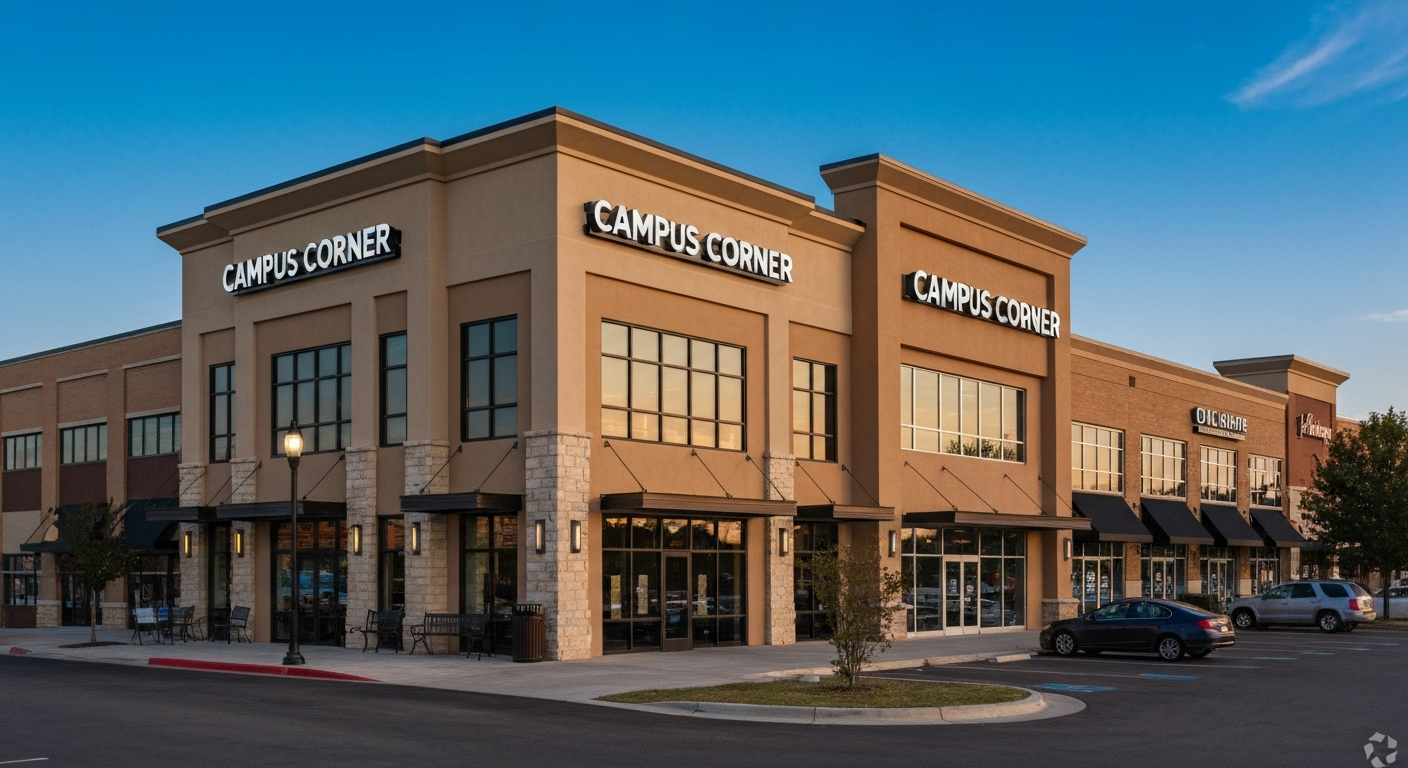
Campus Corner occupies the southwest corner of OSU’s campus, centered at South Knoblock Street and West University Avenue. This is home to Eskimo Joe’s — Stillwater’s most famous restaurant and a statewide brand that’s been operating since 1975 — along with Hideaway Pizza’s original location (another Oklahoma institution that started right here), plus a dense mix of restaurants, bars, coffee shops, and student-oriented retail. Campus Corner is the commercial heart of student Stillwater. During the school year, it’s busy from morning through late night. During summer, foot traffic drops dramatically.
The Strip runs along Washington Street south of campus and is the city’s primary nightlife and entertainment district. Bars, clubs, live music venues, and late-night food spots line The Strip. It’s where the college social scene concentrates on Thursday through Saturday nights, and it’s dead quiet on Monday mornings. The Strip’s revenue pattern is even more concentrated than Campus Corner’s — it’s nightlife-dependent and school-year-dependent simultaneously.
Businesses that thrive in Stillwater: restaurants (especially fast-casual and late-night), bars, coffee shops, tutoring and test preparation services, fitness studios, apparel stores (particularly college-branded merchandise), entertainment venues, student housing services, and delivery operations. These businesses serve what a young, dense, renting population actually needs and is willing to pay for.
Businesses that struggle in Stillwater: anything that depends on consistent summer foot traffic, requires stable year-round revenue without a seasonal contingency plan, or targets demographics that don’t exist in sufficient numbers here (luxury retail, retirement services, premium home improvement). A business that needs eight months of strong revenue to cover 12 months of fixed costs can work — but only if the owner plans for the four lean months from the start.
The game-day economy adds a separate revenue dimension that deserves its own planning. OSU football home games at Boone Pickens Stadium — capacity 55,000-plus — and basketball games at Gallagher-Iba Arena bring tens of thousands of visitors to Stillwater for each event. Tailgating, dining, hotel bookings, retail shopping, and bar revenue spike dramatically on game weekends. For a restaurant or bar near Campus Corner or The Strip, a single home football Saturday can generate revenue equivalent to an entire normal week. But game-day revenue is concentrated into a few hours, requires extra staff and inventory, and creates logistical challenges (parking, traffic, crowd management) that need advance preparation.
Step 1: Choose Your Business Structure
An LLC costs $100 to file with the Oklahoma Secretary of State at sos.ok.gov, plus $25/year for the Annual Certificate due on your formation anniversary. Oklahoma has no franchise tax — it was repealed effective January 1, 2024 — so your ongoing state cost to maintain an LLC is $25 per year. That’s your entire annual obligation to the state for keeping your business entity active.
If you’re an OSU student or faculty member starting a side business — which is common in a university town — an LLC provides personal liability protection that separates your business from your personal finances and your university role. The $100 filing fee is a small price for that separation, even for a small-scale operation like tutoring, freelance work, or a food truck.
A corporation costs $50 to file with the same $25/year Annual Certificate. A sole proprietorship requires no state filing and no fees, but offers no liability protection.
OSU offers entrepreneurship resources that are a genuine competitive advantage for Stillwater-based business owners. The Riata Center for Entrepreneurship at OSU provides mentorship, programming, competitions, and networking specifically designed for student and faculty ventures. The New Product Development Center (NPDC) supports businesses with product design, prototyping, and engineering resources. These aren’t generic university programs — they’re funded, staffed initiatives that give Stillwater entrepreneurs access to expertise and support that would cost thousands of dollars in the private sector. If you have any connection to OSU, use these resources before spending money on outside consulting.
Step 2: State Tax Registration
Register for your Oklahoma Sales Tax Permit through OkTAP (oktap.tax.ok.gov). The cost is $20 plus a handling fee. This permit is required for any business selling taxable goods or services in Oklahoma, and it’s the document that Stillwater will require when you apply for your city business license.
Stillwater adds a specific tax that most Oklahoma cities don’t have: a 7% lodging tax on hotel and short-term rental gross receipts. If you’re operating an Airbnb, VRBO, or any short-term rental property — especially one marketed to game-day visitors, parents coming for campus visits, and graduation weekend guests — you need to register for this tax with the City Finance Department. This 7% excise tax is collected in addition to the standard sales tax, not instead of it. Combined with the 9.313% sales tax, your short-term rental guests are paying approximately 16.3% in total taxes on their stay. That’s a significant amount that affects your pricing strategy and guest expectations.
If you’re hiring employees, register for employer withholding tax through OkTAP at the same time as your Sales Tax Permit. Workers’ compensation insurance is mandatory for all Oklahoma employers with no minimum employee count — your first hire triggers the requirement.
Get your EIN from the IRS before starting the OkTAP registration (free, instant, at irs.gov/ein). You’ll need it for OkTAP, for your business bank account, and for virtually every other registration.
Step 3: City Business License
Stillwater requires a local business license for businesses operating within city limits. The licensing process runs through the Community Development Department, which also handles building permits, occupancy permits, and zoning verification.
City of Stillwater: stillwaterok.gov City Hall: 723 S. Lewis St, Stillwater, OK 74074 Phone: (405) 372-0025
Contact Community Development for the specific requirements for your business type. Standard retail and service businesses have a straightforward path. Restaurants, bars, lodging operations, and home-based businesses each have additional layers involving other city departments or state agencies.
Bring your Oklahoma Sales Tax Permit and your entity formation documents when you apply. The city requires evidence that you’re registered with the state before issuing local operating permission.
Sales Tax in Stillwater
Stillwater’s city sales tax rate is 4.0%. The combined rate is 9.313%: state 4.5% + Payne County 0.813% + city 4.0%. This rate is confirmed by both the City of Stillwater and Avalara 2026 data.
That combined rate is higher than most Tulsa metro suburbs, and the main reason is the Payne County rate. At 0.813%, Payne County’s rate is more than double Tulsa County’s 0.367%. The city rate itself (4.0%) is actually lower than Bixby’s or Sand Springs’ 4.05%, but the county component pushes the total above Tulsa-area rates.
For a college-town business, the 9.313% rate affects pricing psychology. Students are price-sensitive. A $10 burrito becomes $10.93 at the register. On a $50 bar tab, the tax adds $4.66. Most students won’t do the math, but they notice when their total feels higher than expected. Some businesses build tax into their posted prices to create a cleaner checkout experience — this is a strategic choice worth considering.
Oklahoma’s destination-based collection rules apply. For in-person sales at your Stillwater location, charge 9.313%. For deliveries or online sales to addresses outside Stillwater, charge the rate at the delivery address.
The City of Stillwater posts monthly sales tax collection updates in the Newsroom section of stillwaterok.gov. These reports are a useful indicator of the local economy’s health and seasonal patterns. Track them — you’ll see the August spike when students return, the December dip during winter break, and the May decline when the academic year ends.
Location Strategy
Where you locate in Stillwater determines the fundamental character of your business — who your customers are, how much rent you pay, and how the seasonal cycle affects you.
Campus Corner and The Strip offer the highest foot traffic in the city. Rent is the highest in Stillwater, and competition is fierce — but the customer density during the school year is unmatched anywhere else in Payne County. If you’re opening a restaurant, bar, coffee shop, or student-facing retail store, these are the prime locations. The rent premium buys you built-in foot traffic from 20,000 students, their visiting families, and game-day crowds. The trade-off is that foot traffic evaporates in summer, and you’ll carry high fixed costs through the lean months.
Downtown Stillwater (Main Street area) is growing as a commercial district but sees less pedestrian traffic than the campus-adjacent zones. Professional services (accounting, legal, insurance, real estate), boutique retail, and businesses that don’t depend on walk-in student volume fit well here. Rent is more manageable than Campus Corner, and your customer base includes more year-round permanent residents.
Highway 51 and Perkins Road corridors are car-dependent commercial zones designed for businesses that draw customers by car, not by foot. Auto services, chain restaurants, big-box retail, grocery stores, and businesses that serve the broader Stillwater-Payne County community (not just students) locate here. These corridors are less affected by the academic calendar because they draw from the permanent resident and commuter population.
Home-based businesses need home occupation permits from Community Development. Given Stillwater’s low homeownership rate — 62.9% of residents rent — if you’re running a home-based business from a rental property, confirm that your lease allows business use before investing in a home occupation permit. Zoning may allow it, but your landlord may not.
Resources for Stillwater Entrepreneurs
Stillwater has a stronger entrepreneurship support infrastructure than most Oklahoma cities, thanks almost entirely to OSU.
The Riata Center for Entrepreneurship at Oklahoma State University is a nationally recognized program that offers mentorship, pitch competitions, speaker series, and networking events for aspiring and active entrepreneurs. If you’re an OSU student, faculty member, recent graduate, or community member, the Riata Center provides access to expertise and guidance that would cost thousands of dollars from private consultants.
The New Product Development Center (NPDC) at OSU offers product design, engineering, prototyping, and testing services. If you’re developing a physical product — consumer goods, food products, agricultural equipment, technology hardware — the NPDC can accelerate your development process with resources that most startups can’t access independently.
The Stillwater Chamber of Commerce (stillwaterchamber.org) provides traditional business networking, community event information, and economic development advocacy. The Chamber bridges the gap between the university community and the permanent business community — useful for business owners who need to reach both audiences.
OSU’s Spears School of Business also offers periodic workshops, seminars, and consulting services through faculty members and graduate students. These engagements are typically free or low-cost and can provide targeted advice on specific business challenges.
Costs at a Glance
Government fees to launch a basic LLC in Stillwater:
- LLC filing: $100 (one-time) + $25/year Annual Certificate
- Sales Tax Permit: $20 (one-time)
- City business license: Varies by type
- EIN from IRS: Free
- Lodging tax registration (if applicable): No separate fee, but registration is required
- Workers’ comp (if hiring): Varies by industry
Total first-year government fees: approximately $150 to $200.
Commercial rent varies dramatically by location. Campus Corner and The Strip command premium rates that reflect their foot traffic — expect to pay a significant premium over other Stillwater locations. Highway corridors and downtown are more affordable, and the savings in rent can be redirected to marketing, inventory, or a cash reserve for the summer months.
The government fees are minimal. The real financial question in Stillwater is whether your business model can handle the seasonal revenue cycle. A restaurant on Campus Corner might generate $80,000 per month during the school year and $30,000 per month in summer. If your fixed costs — rent, loan payments, insurance, base staffing — assume $80,000 per month year-round, you’ll be underwater by July. Budget for the dip, build reserves during the school year, and plan your staffing model to flex with enrollment. Get this right, and Stillwater’s captive market of 20,000-plus students with immediate needs and limited alternatives makes the math work nine months of the year.