How to Start a Business in Ponca City, Oklahoma
How to Start a Business in Ponca City, Oklahoma
Ponca City sits at an inflection point. Once a one-company oil town — Conoco employed over 5,000 people here in the 1980s — it’s spent the last two decades learning to survive without a single anchor tenant. The 2002 Conoco-Phillips merger, then the 2012 spin-off that created Phillips 66, didn’t kill the city. It forced it to diversify. Today, the Phillips 66 refinery (the largest in Oklahoma) still anchors the economy, but manufacturing, healthcare, logistics, and tourism now carry their own weight.
The result: Ponca City is stable, affordable, and built for the kind of business that values experienced labor, low operating costs, and a community that knows how to show up. It’s not a growth market. Population is ~24,165 and declining slowly at about 0.3% annually. But that’s not a liability — it’s a signal that this is a place where you compete on fundamentals, not hype.
If you’re considering starting a business here, the process is straightforward. State registration, city licensing, and tax setup take weeks, not months. The real work is understanding your market and your costs — and Ponca City gives you both at a discount compared to Oklahoma City or Tulsa.
Why Start a Business in Ponca City?
The Economic Foundation
The Phillips 66 refinery is the reason Ponca City exists as an industrial hub. It’s the largest refinery in Oklahoma, processing crude oil from the Bakken, the Permian, and Canadian sources. The refinery operation drives demand for specialized contractors, maintenance services, safety consulting, and logistics — industries that value reliability and technical expertise over trendy disruption.
Beyond Phillips 66, the city has built a diversified manufacturing base. Smith Technologies (440 jobs), Air Systems Components (400), Mertz Manufacturing (250), and Mid-America Door (200) employ skilled workers in precision manufacturing. The Ponca City Medical Center brings 453 jobs as the primary healthcare provider for Kay County. And the Albertson’s distribution center (355 jobs) anchors a regional logistics network that spans Oklahoma and Kansas.
This isn’t a roster of startups. It’s a roster of stable, long-term employers. They pay solid wages, they train workers, and they create a local economy built on competence rather than speculation.
The Workforce
Because Ponca City grew as an industrial town, the local labor pool is experienced with manufacturing, safety protocols, maintenance, and technical skills. This matters if you’re in any industrial or light-manufacturing sector. You’re not starting from zero with labor training — you’re hiring into a culture that understands precision, deadlines, and safety.
Median household income is ~$55,500, near the Oklahoma state average. Wages are competitive with the region and lower than Oklahoma City, which makes payroll stretch further.
The Cost of Living Advantage
Commercial rent in Ponca City runs well below Oklahoma City or Tulsa rates. A 2,000-square-foot industrial space that might run $1.50–2.00 per square foot in Tulsa runs closer to $0.75–1.25 in Ponca City. Residential real estate is affordable, which means you can attract and retain employees at lower compensation than you’d need in a hot market.
Utilities are standard Oklahoma rates. No state franchise tax (Oklahoma repealed the franchise tax effective January 1, 2024). No state E-Verify mandate. No surprises.
Tourism and Cultural Draw
Ponca City isn’t Branson, Missouri, and it shouldn’t pretend to be. But the Pioneer Woman Museum and the Marland Mansion create a visitor layer that pure manufacturing towns don’t have.
The Pioneer Woman Museum centers on the iconic 17-foot bronze statue by sculptor E.W. Marland, erected in 1958. The museum itself has become a regional destination, drawing visitors from across Oklahoma and beyond. The Marland Mansion — a 55-room, four-story limestone palace built by oil tycoon E.W. Marland (who served as Oklahoma governor, 1935–1939) — offers guided tours seven days a week. The interior features gold leaf ceilings, Waterford crystal chandeliers, and Italian marble. Built in the 1920s at a cost equivalent to $5.5 million in today’s dollars, it’s the kind of architectural statement that draws architecture enthusiasts, history tourists, and photographers.
Standing Bear Park honors the Ponca chief’s historic legal case and serves as another cultural anchor.
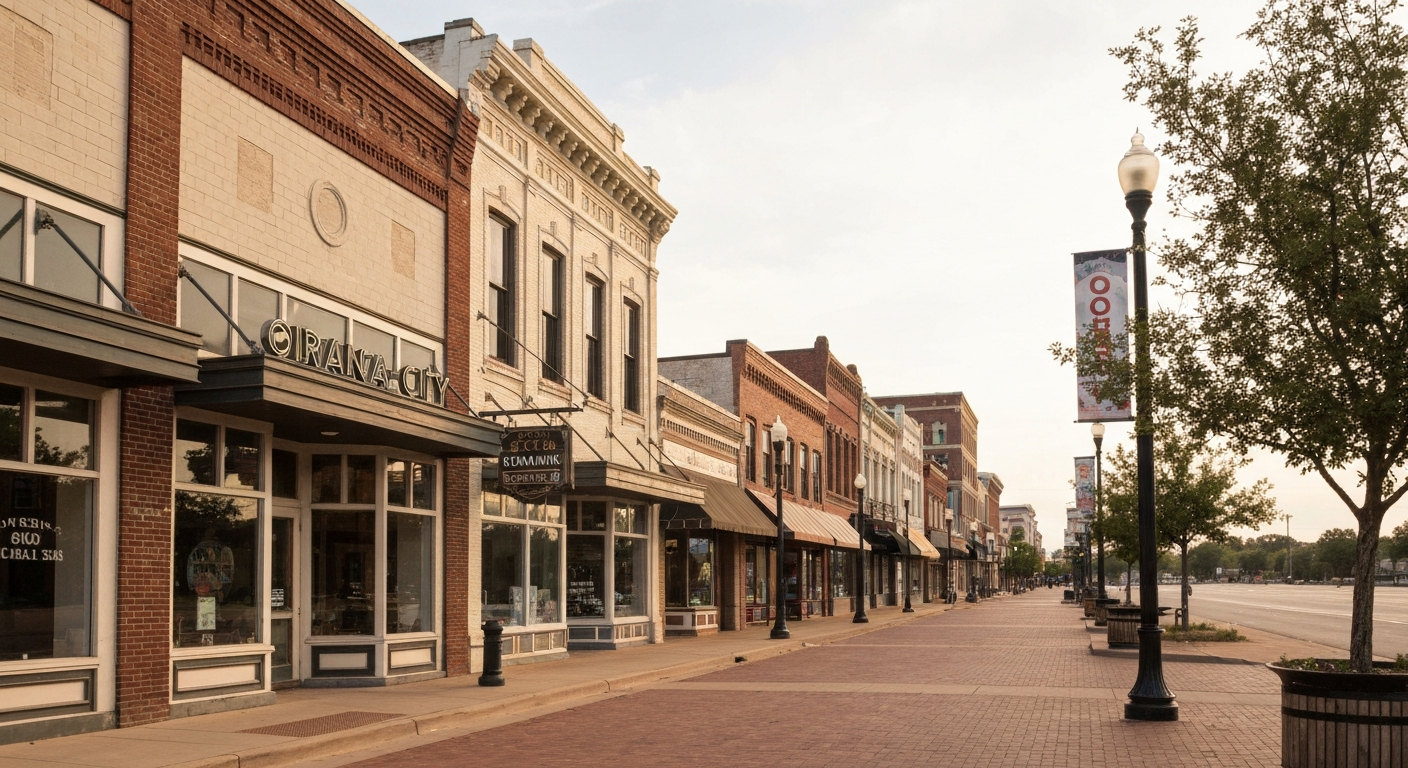
These attractions don’t generate a tourism boom, but they create foot traffic for restaurants, retail, and hospitality businesses along Grand Avenue and the downtown corridor. If you’re opening a coffee shop, a gift store, a bed-and-breakfast, or a restaurant, you’re not starting from zero with customer acquisition — the Marland Mansion and the museum bring visitors.
The Tribal Dimension
The Ponca Tribe of Indians of Oklahoma maintains its tribal headquarters near Ponca City (White Eagle is the tribal capital). The tribe operates tribal enterprises, including the Fancy Dance Casino. This creates additional economic activity and employment opportunities, particularly in hospitality and gaming services.
If you’re Native American or have tribal connections, Ponca City also offers the possibility of tribal business licensing and access to tribal economic development programs. This is beyond the scope of standard state registration, but it’s a layer worth exploring if it applies to you.
Step 1: Choose Your Business Structure
You have three options in Oklahoma: sole proprietorship, LLC, or corporation. Most small businesses go LLC because it protects your personal assets if the business is sued.
LLC (Limited Liability Company)
Filing cost: $100 at sos.ok.gov (online submission, fastest).
Annual certificate: $25/year, due on the anniversary of your formation.
You’ll submit your Articles of Organization to the Oklahoma Secretary of State, 421 NW 13th Street, Suite 210, Oklahoma City, OK 73103. Phone: (405) 521-3912. The state processes online filings the same day or next business day. Mail filing is also accepted but slower.
No franchise tax. Oklahoma repealed its franchise tax effective January 1, 2024 (HB 1039). Previously, the franchise tax applied only to corporations; LLCs were already exempt. This is a genuine cost advantage compared to states like California, which charges a $800 annual minimum.
Corporation
Filing cost: $50.
Annual certificate: $25/year.
Corporations are less common for small businesses because they create double taxation (the corporation pays tax, then shareholders pay tax on dividends). LLCs avoid this by passing income through to your personal return.
Which Structure for Ponca City?
If you’re in manufacturing, industrial services, or any sector where liability risk is real, LLC is the standard. It gives you liability protection (creditors or plaintiffs can’t come after your personal assets) at a low cost.
If you’re in a low-risk service business (consulting, freelance work, online retail), sole proprietorship is simpler to start, though it offers no liability protection.
For most business owners in Ponca City, LLC is the default choice.
Name Reservation
Before you file, you can reserve your business name for $10 (optional). This prevents someone else from registering the same name while you’re finalizing your setup. You can check availability at sos.ok.gov.
Step 2: Register for State Taxes
Oklahoma requires state tax registration for most businesses. This happens through OkTAP (Oklahoma Taxpayer Access Point), the state’s online tax portal at oktap.tax.ok.gov.
Sales Tax Permit
Required for ANY business selling taxable goods or services.
Cost: $20 plus a handling fee (typically $5–10, depending on your county).
Process: Register at OkTAP, provide your business name, address, and structure type, and submit. The state approves sales tax permits within 1–3 business days.
Once approved, you’ll receive a sales tax permit number. You must display this permit at your business location. You’ll use this permit number on the city business license application (see Step 3).
If You’re Hiring: Employer Withholding
If you plan to hire employees, you must register for employer withholding through OkTAP. This allows you to deduct federal and state income taxes from paychecks and remit them to the state.
Registration is free and takes 10 minutes.
Workers’ Compensation Insurance
This is mandatory for ALL employers in Oklahoma. No minimum employee threshold. Not even one part-time employee. If you have a payroll, you need workers’ comp.
You can purchase through CompSource Mutual (formerly CompSource Oklahoma), the state’s insurer of last resort, or through a private carrier. Rates vary by industry classification and claims history. For a small manufacturing operation, expect to pay $500–2,000 per employee per year, depending on job risk. CompSource’s rates are public and available at compsourcemutual.com.
Federal EIN
Get an EIN (Employer Identification Number) from the IRS at no cost. Go to irs.gov/ein. It takes 15 minutes. You’ll use this on your state filings and any business bank account.
Step 3: City Business License
Ponca City requires a local business license. This is separate from your state LLC/corporation filing.
Where to Apply
Ponca City Development Services Department
516 E Grand Ave, Ponca City, OK 74602
Phone: (580) 767-0383
Hours: Monday–Thursday 7:30am–12:00pm, 1:00pm–5:30pm (note: the office is closed for lunch and does not operate on Fridays)
What You Need
- License Registration Form (available at poncacityok.gov)
- Your Oklahoma Sales Tax Permit (proof you’ve registered for state sales tax)
- Business address and description
- Owner name and contact information
The city will issue your license after review. Fees vary by business type and are set by the city. Call Development Services to confirm the fee for your specific industry before you arrive.
Timeline
Most local licenses are issued within 1–2 business days of application. Plan to visit in person or call ahead to confirm requirements for your specific business type.
Sales Tax Breakdown
Ponca City’s combined sales tax rate is approximately 9.58% as of 2026, broken down as follows:
- Oklahoma state base: 4.5%
- Kay County: 1.25%
- Ponca City city tax: 3.833%
This total (9.58%) is on the lower end for Oklahoma cities. For comparison, Tulsa’s combined rate is 9.405%, Oklahoma City’s is 9.025%, and some smaller towns run as high as 10% or more. Ponca City’s modest rate is a small but real competitive advantage if you’re in retail or hospitality and competing on price.
How to Calculate and Collect
Oklahoma uses destination-based sourcing. This means you charge the sales tax rate at the customer’s delivery address, not your business address. If a Ponca City customer orders from your Ponca City store, they pay 9.58%. If a customer from Kay County (outside Ponca City) orders from you, they pay the rate at their address (typically 5.75%, which is state + county only).
E-commerce businesses must track where each order ships and apply the correct rate. In-store retailers simply apply Ponca City’s rate to all transactions.
Filing and Remittance
File and remit sales tax through OkTAP. Oklahoma requires monthly filings if you collect more than $25,000 in taxable sales per quarter. Below that threshold, you can file quarterly. The state deposits your collections into the state general revenue fund.
Penalties for late payment are steep (10% per month), so set a calendar reminder for filing deadlines.
The Tourism Opportunity
Ponca City’s cultural attractions create a visitor economy layer that pure industrial towns don’t have. This opens doors for certain business types.
Pioneer Woman Museum
The iconic 17-foot bronze statue by sculptor E.W. Marland, erected in 1958, is the centerpiece. The museum has operated since 1958 and has become a regional destination. It draws visitors from across Oklahoma and beyond, particularly in spring and fall when travel peaks.
Marland Mansion and Estate
The mansion is the architectural jewel. Built by oil tycoon E.W. Marland (Oklahoma governor, 1935–1939), the 55-room, four-story limestone structure was built in the 1920s at a cost equivalent to $5.5 million in today’s dollars. The interior features gold leaf ceilings, Waterford crystal chandeliers, Italian marble, and period furnishings. Guided tours operate seven days a week, and the estate also hosts weddings and private events.
Standing Bear Park
This park honors the Ponca chief’s historic legal case and serves as another cultural draw, particularly for history enthusiasts and school groups.
What This Means for Your Business
These attractions create foot traffic along Grand Avenue and the downtown corridor. If you’re opening a restaurant, a gift shop, a bed-and-breakfast, or a gallery, you’re not starting from zero — the museum and mansion visitors will walk past your door.
However, be clear-eyed: tourism is a complement to the local economy, not its engine. The Marland Mansion might bring 30,000 visitors a year. Ponca City’s population is 24,165. That’s not insignificant, but it’s not enough to sustain a business alone. Tourism works best as a secondary income stream or as part of a mixed retail/hospitality strategy.
If you’re opening a restaurant, expect 40–50% of revenue from locals and 10–15% from visitors. Price and quality matter more than location.
Costs at a Glance
Here’s what you’ll spend to register a basic business in Ponca City:
- LLC filing (state): $100 (one-time)
- Annual Certificate (state): $25/year
- Sales Tax Permit (state): $20 + ~$5–10 handling fee
- City business license: Varies by business type; call (580) 767-0383 to confirm
- Workers’ comp insurance (if hiring): $500–2,000+ per employee per year, depending on industry
- EIN (federal): Free
First-year total for a basic LLC with no employees: approximately $150–200 in government fees.
First-year total for an LLC with one employee: approximately $700–2,200+ (including workers’ comp and payroll setup), plus wages.
Oklahoma has no franchise tax (repealed 2024), no city income tax, and no state E-Verify mandate. This keeps ongoing compliance costs low.
Timeline and Next Steps
From decision to operational business typically takes 3–4 weeks:
Week 1: Reserve your name ($10), file your LLC ($100), get your EIN (15 minutes online).
Week 2: Register for sales tax through OkTAP ($20), register for employer withholding if you’re hiring (free).
Week 3: Apply for your Ponca City city business license in person or by mail (call first to confirm requirements).
Week 4: Set up your business bank account, purchase workers’ comp insurance if you’re hiring, and start operations.
The state LLC filing is the gating item. Everything else flows from there.
One Logistics Note
Ponca City Development Services keeps limited hours: Monday–Thursday 7:30am–12:00pm, 1:00pm–5:30pm. The office is closed for lunch and does not operate on Fridays. If you work a 9-to-5 job, plan to take a half-day to visit in person, or call (580) 767-0383 ahead of time to confirm exactly what you need to bring and whether you can submit by mail.
The Ponca City Advantage
Ponca City is not a growth market. The population is declining slowly, and the city’s economy remains anchored to industrial and manufacturing sectors that are mature, not explosive. This is honest context.
But stability has value. Labor is experienced and available. Costs are 20–40% lower than Oklahoma City. The Phillips 66 refinery and the diversified manufacturing base create a stable customer base for industrial services, maintenance, and logistics companies. The tourism attractions add a secondary layer for retail, hospitality, and services.
If you’re building a business that competes on reliability, cost discipline, and quality — not on hype or growth-at-all-costs — Ponca City is a serious choice. The process to get started is simple, the costs are low, and the community is built to support businesses that show up and do the work.
Start with your LLC filing at sos.ok.gov, grab your sales tax permit through OkTAP at oktap.tax.ok.gov, then visit the Development Services office at 516 E Grand Ave to get your city license. Four weeks later, you’re operational.