How to Start a Business in Muskogee, Oklahoma
How to Start a Business in Muskogee, Oklahoma
Muskogee isn’t a city chasing growth. Growth is already here. The Port of Muskogee is moving 10+ million tons of cargo annually. A $1.2 billion lithium refinery is under construction. Georgia-Pacific runs an 800-person tissue plant. And the city sits at the administrative and cultural heart of the Muscogee (Creek) Nation — a sovereign government with billions in annual economic impact.
This eastern Oklahoma industrial hub has fundamentally changed in the past five years. If you’re researching starting a business here, you’re looking at a city in the middle of a manufacturing and logistics expansion, not a town in slow decline. But that also means you need to understand the specific situation: the industrial opportunity, the tribal jurisdiction reality, and the local costs that make or break a bootstrap operation.
Here’s what actually matters when you’re starting a business in Muskogee.
Why Start a Business in Muskogee?
The City and Its Size
Muskogee’s population sits at approximately 36,849 as of 2024, making it the largest city in Muskogee County and the regional economic hub for eastern Oklahoma. It’s big enough to have real infrastructure and employers, small enough that you can know your market and move fast. The median household income hovers around $49,000 — below Oklahoma’s statewide median. That tells you two things: your operating costs will be lower than in Tulsa or Oklahoma City, but your customer base is price-conscious. They’re not shopping for luxury; they’re shopping for value and reliability.
The Port and the Industrial Boom
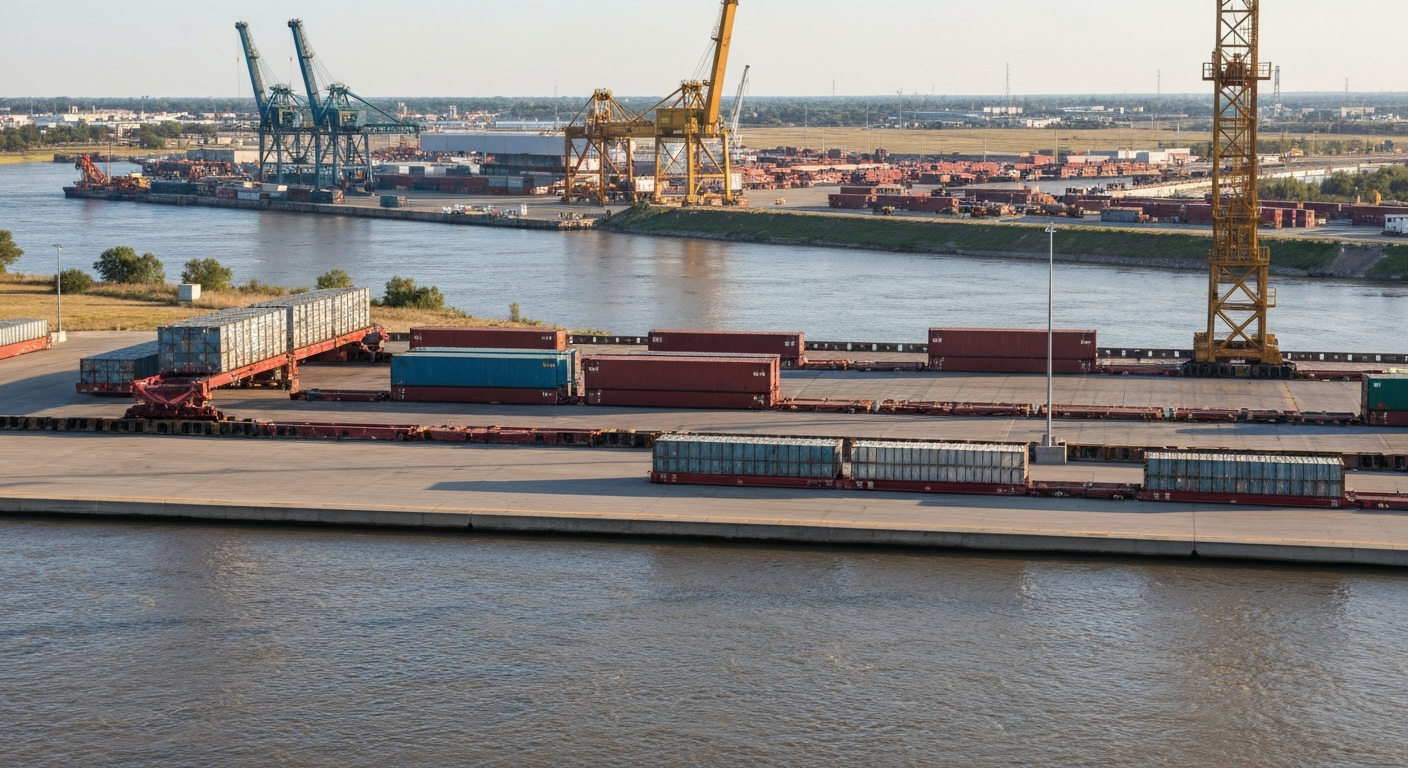
The Port of Muskogee isn’t theoretical. It’s one of the few inland ports in the United States, sitting on the Arkansas River with direct barge access to the Mississippi River and the Gulf of Mexico. The port handles 10+ million tons of cargo annually and generates $3.7 billion in economic impact. In 2024, port leadership announced $1.25 billion in new capital investment and 880 new jobs over the next decade. That’s not incremental growth. That’s structural.
What does that mean for a new business? It means there’s real B2B opportunity. Logistics companies, manufacturing suppliers, warehousing, transportation brokers, equipment repair — these aren’t nice-to-haves. They’re essential to the port ecosystem. If you’re thinking about a service business that touches the industrial supply chain, Muskogee is a market where demand is accelerating.
The Manufacturing Base
Georgia-Pacific runs a tissue and paper manufacturing facility in Muskogee with over 800 employees. That’s not the only manufacturer, either. Dal-Tile Corporation operates a ceramic tile plant here. Advantage Controls manufactures industrial automation equipment. Stardust Power Inc. broke ground on a $1.2 billion lithium refinery near the port — a signal that advanced manufacturing is coming to eastern Oklahoma, not just traditional logistics.
Employment data backs this up. The largest employment sector is Health Care & Social Assistance with 4,186 people. Manufacturing comes second at 3,737 people. Retail Trade is third at 2,787 people. This is a working-class city with real industrial employment, not a service-economy town.
The Tribal Government and Economic Impact
Muskogee is the seat of the Muscogee (Creek) Nation, a federally recognized tribe with tens of thousands of citizens and billions in annual economic impact. The tribal government, tribal enterprises, and tribal citizen-owned businesses are a major economic force in the region. If you’re targeting B2B work — contracting, supplies, professional services — the tribal government and tribal enterprises are legitimate customers with real procurement power.
Step 1: Choose Your Business Structure
You have three main options: LLC, corporation, or sole proprietorship.
LLC (Limited Liability Company)
An LLC costs $100 to file with the Oklahoma Secretary of State at sos.ok.gov. You submit your Articles of Organization online or by mail. The fee is one-time. Then you pay an Annual Certificate fee of $25 every year on your formation anniversary. That’s it. No franchise tax (Oklahoma repealed franchise tax effective January 1, 2024), no hidden state fees, no surprise annual penalties.
For a first-time entrepreneur in Muskogee, an LLC is the standard choice. You get liability protection — your personal assets are separate from the business if something goes wrong. You don’t have to worry about double taxation like a corporation might. And the filing is simple enough that you can do it yourself in 20 minutes.
Corporation
A corporation costs $50 to file and also pays the same $25 annual certificate. Corporations are heavier-weight entities. You need a board, bylaws, annual meetings, and more paperwork. Unless you’re taking on investors or building something that requires corporate structure, you’re overcomplicating your life.
Sole Proprietorship
A sole proprietorship requires no state filing. You just start operating. But you have zero liability protection. Your personal assets and business assets are the same. If someone sues the business, they’re suing you. If the business has debts, they’re your debts. For most people, this isn’t worth the savings.
The No-Franchise-Tax Advantage
Oklahoma repealed its franchise tax in 2024. This matters because other states — California, Texas, and New York — charge annual franchise taxes on top of income tax. California’s is $800 minimum. Oklahoma’s is zero. Your ongoing state cost for an LLC is $25 per year. Full stop.
Step 2: Register for State Taxes
The Sales Tax Permit
If you’re selling any taxable goods or services, you need a Sales Tax Permit. You register through OkTAP (Oklahoma Taxpayer Access Point) at oktap.tax.ok.gov. The fee is $20 plus a handling fee. You’ll do this online, and it typically takes a few days to process.
This is mandatory if you’re selling anything taxable. If you’re a service-only business and your services aren’t taxable in Oklahoma (certain professional services, for example), you may not need it. But when in doubt, get it. It’s cheap and you’ll need it to get your Muskogee city business license anyway.
Employer Withholding Registration
If you’re planning to hire employees, you register for employer withholding through OkTAP as well. Oklahoma has a graduated income tax ranging from 0.25% to 4.75% on wages. You’ll withhold from your employees’ paychecks and remit to the Oklahoma Tax Commission. You’ll also need a federal EIN (Employer Identification Number) from the IRS, which is free at irs.gov/ein.
Workers’ Compensation Insurance — Non-Negotiable
This is critical: Oklahoma requires workers’ compensation insurance for ALL employers. There is no minimum employee threshold. If you hire even one person — even a part-time employee — you must carry workers’ comp.
You can insure through CompSource Mutual (the state mutual carrier) or a private insurer. CompSource Mutual is often the easiest first option because it’s state-operated and designed for small employers. The cost varies by industry classification. A retail employee costs less to insure than a construction worker. But you cannot operate without it.
This is not optional, and it’s not something you can skip the first year to save money. Muskogee’s manufacturing and port ecosystem means workers’ comp audits are real. If you’re audited and don’t have coverage, the penalties are severe.
Step 3: Get Your Muskogee Business License
The City Requirement
Muskogee requires a city business license for any business operating within city limits. The City Clerk’s Department issues all licenses. This is separate from your state LLC filing.
You go to City Hall:
229 W. Okmulgee Ave
Muskogee, OK 74401
Phone: (918) 682-6602 (main) or (918) 684-6270 (City Clerk)
Email: [email protected]
Hours: 8:00 AM – 5:00 PM
All city licenses are due June 30 annually. If you file mid-year, you’ll get a pro-rated license good through June 30 of the following year. Bring a copy of your Oklahoma Sales Tax Permit when you apply — they’ll ask for it.
What Costs?
The city license fee varies by business type. There’s no flat rate. Retail businesses, service businesses, and manufacturing operations have different classifications. Call the City Clerk’s Department and tell them your business type — they’ll give you the exact fee. It’s typically in the $50–150 range for a small startup, but you need to confirm with the city for your specific classification.
Step 4: Handle Zoning and Location
The Port Muskogee Industrial Area
If you’re targeting manufacturing, logistics, or port-adjacent business, the Port Muskogee industrial area is purpose-built. It has rail access, barge access, highway access, and land zoned for heavy industrial use. Muskogee’s Planning Department works with businesses on industrial site selection and permitting.
The industrial area is the obvious location if you’re in B2B manufacturing or logistics. Land costs are significantly lower than in Tulsa, and you’re adjacent to the port itself.
Downtown Muskogee
Downtown Muskogee is in revitalization mode. There’s movement around retail, small business, and mixed-use development. If you’re opening a restaurant, retail shop, or professional services office, downtown has energy and lower rent than you’d find in Oklahoma City. The city is actively working to attract businesses downtown, so there may be incentives or programs worth asking about.
Home-Based Businesses
If you’re running a home-based business, check Muskogee’s zoning ordinances for home occupation restrictions. Most cities allow home-based businesses for professional services (consulting, accounting, freelance work) but restrict retail, manufacturing, or heavy commercial use. Call the Planning Department or City Clerk to confirm your specific use is allowed before you set up.
Building Permits
Any construction, renovation, or structural changes require a building permit from the city. This includes interior renovations to a commercial space. It’s not expensive, but it’s mandatory. Factor it into your timeline if you’re leasing a space that needs work.
Sales Tax: What You’ll Collect
Here’s where Muskogee gets expensive relative to other Oklahoma cities.
The combined sales tax rate in Muskogee is 9.999% as of April 2025. That’s:
- Oklahoma state sales tax: 4.5%
- Muskogee County: 1.499%
- Muskogee city: 4.0%
This is one of the highest combined rates in Oklahoma. Nearly 10 cents on every dollar. For context, Oklahoma City is around 9.125%. Tulsa is around 9.225%. Muskogee is at the top of the state.
Why? County and city sales taxes fund local services, schools, and in Muskogee’s case, port infrastructure investment. The rate is set by local voters and city council. It’s not changing anytime soon.
How It Works
Oklahoma uses destination-based sales tax collection. You don’t charge the rate at your business location. You charge the rate at the buyer’s delivery address. If a customer in Tulsa buys from you in Muskogee, you charge Tulsa’s rate, not Muskogee’s. If a customer in Muskogee buys from you, you charge Muskogee’s 9.999%.
For online businesses, this gets complicated fast. You’ll charge based on where the customer receives the goods, not where you are. Most accounting software handles this automatically if you set it up right. When you register through OkTAP, you’ll get guidance on how to set up your sales tax collection.
You file and remit sales tax monthly, quarterly, or semi-annually depending on your volume. Small businesses often file quarterly. You do this through OkTAP. Miss a payment and you’ll get notices quickly — Oklahoma Tax Commission doesn’t wait around.
McGirt and Tribal Jurisdiction
This is the section that separates Muskogee from most Oklahoma cities.
What McGirt Actually Means for Muskogee
In McGirt v. Oklahoma (2020) and Sharp v. Murphy (2021), the U.S. Supreme Court affirmed that the Muscogee (Creek) Nation reservation was never disestablished. The Muscogee Nation retains jurisdiction over tribal citizens within the reservation boundaries, which includes Muskogee County and surrounding counties.
This is a real legal fact. It’s not going away. But what does it mean for your business?
For Most Businesses: Minimal Impact
For the vast majority of small businesses in Muskogee, McGirt primarily affects criminal jurisdiction. If a tribal citizen commits a crime, the Muscogee Nation has jurisdiction to prosecute (for tribal law violations) alongside state and federal law. This doesn’t affect your business license, your sales tax, or your operations.
You still need your Oklahoma state LLC filing. You still need your Oklahoma Sales Tax Permit. You still need your Muskogee city business license. McGirt doesn’t override any of that.
The Exception: Tribal Trust Land and Tribal Enterprises
If you’re leasing space on tribal trust land (land held in trust by the federal government for the tribe), or if you’re contracting directly with the Muscogee (Creek) Nation government or a tribal enterprise, you may need a Muscogee (Creek) Nation business license in addition to your city and state licenses.
Contact the Muscogee Nation Commerce Department. The tribe’s headquarters is in Okmulgee, OK. You can reach them through muscogeenation.com or call their main line for a referral to Commerce.
If you’re a tribal citizen opening a business, there may be tribal enterprise support, loans, or resources available. It’s worth asking.
The Bottom Line
McGirt is real, but it’s not a barrier to entry. It’s just a fact about jurisdiction in this region. If you’re opening a standard retail or service business on city-zoned land in Muskogee, you won’t encounter tribal licensing requirements. You’ll operate under city and state licensing like any other Oklahoma business. If you’re on tribal land or working directly with tribal entities, you’ll know because you’ll be negotiating the lease or contract with the tribe.
Costs at a Glance
First-Year Startup Costs (Before Payroll and Operations)
- LLC filing with Oklahoma Secretary of State: $100 (one-time)
- Annual Certificate: $25 (first year, then every year)
- Sales Tax Permit: $20 (one-time)
- Muskogee city business license: varies by type, typically $50–150 (annually due June 30)
Total for government filings and licensing: approximately $195–245 for the first year.
Ongoing Annual Costs
- Annual Certificate: $25
- City business license: $50–150 (varies)
What You Don’t Pay
- No state franchise tax (repealed 2024)
- No city income tax
- No statewide business license
- No E-Verify mandate (unlike some states)
What You DO Pay (If Applicable)
- Workers’ compensation insurance: varies by industry, but mandatory if hiring
- Federal employer taxes: if hiring
- State income tax: graduated 0.25%–4.75% on wages
- Sales tax remittance: 9.999% combined rate, remitted monthly/quarterly/semi-annually
The Real Cost Factor: Workers’ Comp
If you’re hiring even one employee, workers’ comp is your largest ongoing government-related cost. It’s not optional. The exact rate depends on your industry classification and claims history. A retail business might pay $500–1,500 per employee per year. A manufacturing or construction business could be significantly higher. Get a quote from CompSource Mutual or a private insurer before you finalize your budget.
Getting Started: The Action Plan
Month 1: Structure and Filing
- Decide on LLC or corporation (LLC is the default choice).
- Check if your business name is available through the Oklahoma Secretary of State website.
- File your Articles of Organization at sos.ok.gov ($100 online, takes 1–2 days).
- Apply for an EIN from the IRS at irs.gov/ein (free, instant online).
Month 2: State Registration
- Register for a Sales Tax Permit through OkTAP at oktap.tax.ok.gov ($20 plus handling).
- If hiring, register for employer withholding through OkTAP.
- Get a quote for workers’ comp insurance from CompSource Mutual or a private carrier.
Month 3: City Licensing and Location
- Visit City Hall (229 W. Okmulgee Ave) with your Sales Tax Permit to apply for a city business license.
- Confirm your business location is properly zoned with the Planning Department.
- If you need a building permit for your space, apply now.
- If you’re on tribal land or contracting with the tribe, contact the Muscogee Nation Commerce Department.
Ongoing
- File your Annual Certificate with the Oklahoma Secretary of State every year on your formation anniversary ($25).
- Pay your city business license fee every June 30.
- Collect and remit sales tax monthly, quarterly, or semi-annually through OkTAP.
- Maintain workers’ comp coverage continuously (if hiring).
Why Muskogee, Now
Muskogee isn’t a city that’s trying to attract business through cheap gimmicks or tax breaks. It’s a city with real structural economics: a working port, active manufacturing, tribal government spending, and an expanding logistics sector. Your operating costs are low. The market is price-conscious but stable. And if you’re in B2B — serving the port, manufacturing supply chains, or tribal enterprises — demand is real and growing.
The McGirt situation is different, but it’s not a barrier. It’s just the local reality. And if you understand it, you actually have an advantage: access to tribal government procurement and tribal enterprises that most small-business guides don’t even mention.
File your LLC. Get your Sales Tax Permit. Get your city license. Make sure you have workers’ comp coverage. Then start selling. Muskogee’s economy is moving fast enough that if you’re ready to work, there’s room to grow.