How to Start a Business in Del City, Oklahoma
How to Start a Business in Del City, Oklahoma
Del City isn’t trying to be the next hot startup hub. It’s a 21,000-person city in southeast Oklahoma City that knows what it is: affordable, practical, and positioned directly next to one of the region’s largest employers. If you’re looking at the OKC metro and doing the math on startup costs, Del City’s numbers are hard to ignore.
The combined sales tax hits 9.0%. Rent doesn’t. Neither does labor. And unlike some affordable neighborhoods that are one rezoning away from displacement, Del City has been genuinely blue-collar for decades — which means the customer base is stable, price-sensitive, and accustomed to straightforward service businesses.
This guide walks you through exactly what you need to do to start a business here, what it costs, and whether the numbers make sense for your situation.
Why Start a Business in Del City?
The size and demographics matter first.
Del City sits at approximately 21,272 people as of 2024. That’s a compact, manageable market — not so small that you’re fighting for every customer, and not so large that you need significant capital to reach scale. The median household income is around $49,000, which is below the state average and reflects a predominantly blue-collar, working-class population.
This isn’t a weakness. It’s market clarity. If you’re starting a service business, an auto shop, a trades company, or anything practical and price-conscious, you’re selling to people who value reliability and cost-effectiveness. You’re not fighting for Instagram-ready branding budget.
Real estate costs tell the actual story.
Typical home values in Del City hover around $112,800. In Oklahoma City proper, they’re $215,100. That’s not a marginal difference — it’s roughly half. Commercial rents track proportionally lower. If you’re budgeting for a small office, a service garage, or retail space, Del City’s lease rates are significantly cheaper than the OKC core or surrounding suburbs. That cost advantage compounds over three years of operation.
Tinker Air Force Base changes the math entirely.
Del City borders Tinker Air Force Base directly. The base is home to 26,000+ military and civilian personnel and generates approximately $4.4 billion in annual economic impact to the region. Midwest City, which sits on the other side of Tinker, has built its entire commercial identity around this fact. Del City sits on the same advantage but with lower overhead.
Most Tinker commutes from Del City are under 20 minutes depending on which gate you’re accessing and traffic conditions. That means your customer base includes thousands of people with stable government income living off-base in affordable neighborhoods — exactly the people who use local auto services, restaurants, childcare, and trades work.
The city identity is built on scrappiness, not decline.
Del City’s official tagline is “Deep Roots. Relentless Spirit.” It sounds like marketing language, but it reflects reality. This is a city that has remained genuinely working-class while surrounding suburbs gentrified. The blue-collar backbone is a feature, not a bug. Businesses here serve customers with steady incomes who expect fair pricing and good work, not cutting-edge aesthetics.
City Hall is accessible and straightforward.
City Hall operates Monday through Thursday, 7:30 AM to 5:30 PM, and Friday 7:30 AM to 11:30 AM (half day Fridays). The address is 3701 SE 15th Street, Del City, OK 73115. Phone: (405) 677-5741. If you have questions about zoning, licensing, or requirements, the city is set up for direct contact rather than buried websites and automated systems.
The real opportunity.
Low-overhead businesses serving a price-sensitive, steady customer base work here. Auto services, food trucks, trades (plumbing, HVAC, electrical, carpentry), family services, cleaning, and anything that serves base personnel living off-base in affordable neighborhoods. If you’re bootstrapping and can’t compete on rent and overhead in OKC proper, Del City’s math works.
Step 1: Choose Your Business Structure
You have three main options in Oklahoma: LLC, corporation, or sole proprietorship. For most small business owners, the choice is between an LLC and staying as a sole proprietor.
An LLC costs $100 to file at sos.ok.gov and $25 per year after that.
You submit your Articles of Organization online at the Oklahoma Secretary of State website. The state processes it, you get confirmation, and you’re legally formed. The $100 is a one-time fee. Every year on the anniversary of your formation, you’ll pay the $25 Annual Certificate fee to keep the LLC active. That’s it.
An LLC gives you liability protection — meaning if your business gets sued, your personal assets are protected. It also makes taxes simpler for a single-owner business (you can file as a sole proprietor for tax purposes while maintaining the liability protection of an LLC). For a bootstrapped business, this is the best ratio of cost to benefit.
Oklahoma eliminated its franchise tax effective January 1, 2024.
If you’ve heard about California’s brutal $800 annual franchise tax, or similar surprises in other states — Oklahoma doesn’t have that. The franchise tax was repealed statewide under HB 1039. This was previously a burden primarily on corporations; LLCs were already exempt. But the repeal means no hidden annual taxes regardless of structure.
A corporation costs $50 to file and carries the same $25 annual certificate.
For most single-owner or small partnership startups, a corporation is overkill. Corporations have more formal filing requirements and slightly higher compliance burden. An LLC does everything you need with less paperwork.
A sole proprietorship has no state filing and no cost.
If you’re bootstrapping hard and liability protection feels like a luxury, you can operate as a sole proprietor with just a business name registration at the county level. But you’re personally liable for everything the business does. One lawsuit, one unpaid debt, and your personal assets are on the line. The $100 LLC filing fee is cheap insurance.
For a bootstrapped business, the math is simple: $100 filing + $25 annual certificate = extremely affordable liability protection.
You’ll recoup that cost in the first month of operations if anything goes wrong.
Step 2: Register for State Taxes
Oklahoma has three tax registrations you need to consider: sales tax, employer withholding (if you’re hiring), and workers’ compensation.
Sales Tax Permit: $20 through OkTAP, required for nearly all businesses.
OkTAP is Oklahoma’s Taxpayer Access Point — it’s the single portal where you register for sales tax, employer withholding, and corporate income tax. The URL is oklahoma.gov/tax (navigate to OkTAP or search for it directly).
You need a Sales Tax Permit if your business sells taxable goods or services. This includes retail, food service, trades work (many services are taxable in Oklahoma), and delivery. The permit costs $20 plus handling fees. It’s not optional if you’re selling anything — the state will hold you liable for uncollected sales tax.
Register on OkTAP, follow the prompts, and you’ll get your permit number immediately or within a few business days. Keep that number. You’ll need it for Del City’s business license.
Employer withholding registration if you’re hiring anyone.
If you’re bringing on employees (even one part-time person), you register through the same OkTAP portal for employer withholding. This is how you remit payroll taxes to the state. No additional fee — it’s part of the OkTAP system.
Workers’ compensation is mandatory for ALL employers — no exceptions, no minimum employee threshold.
This is a major cost many new business owners don’t budget for. Oklahoma law requires workers’ compensation insurance for every employer, including sole proprietors with even one employee. There’s no threshold. One employee = mandatory coverage.
You can get workers’ comp through CompSource Mutual (formerly CompSource Oklahoma) or a private insurance carrier. Rates vary dramatically by industry — a clerical worker costs far less to insure than a construction worker or auto technician. Budget $500–$2,000+ per employee annually depending on what they do. If you’re hiring before you launch, this is a real line item.
Step 3: Get Your Del City Business License
Del City requires a local business license for any business operating within city limits. This is separate from your LLC filing and state tax registration — the city has its own licensing system.
Where and how to apply:
City Hall is located at 3701 SE 15th Street, Del City, OK 73115. Phone: (405) 677-5741. Hours are Monday–Thursday 7:30 AM to 5:30 PM and Friday 7:30 AM to 11:30 AM.
Walk in or call to request the business license application. The city will provide the current forms and fee schedule. Specific fees vary by business type and weren’t available through online search, so contact City Hall directly for exact pricing. Budget $50–$150 as a reasonable estimate, though the city can confirm.
What to bring:
Have your Oklahoma Sales Tax Permit number ready (from OkTAP). Bring your EIN (Employer Identification Number from the IRS, which is free at irs.gov/ein). Bring your LLC formation documents or proof of your business entity. Bring a lease or proof of your business location (or a home address if you’re home-based, with verification that home businesses are allowed in your zoning).
The city will verify that your business use is permitted in your location’s zoning and issue the license. Processing typically takes a few business days.
Step 4: Handle Zoning and Location
Before you sign a lease or commit to a location, verify with Del City’s planning department that your intended business use is zoned for that address.
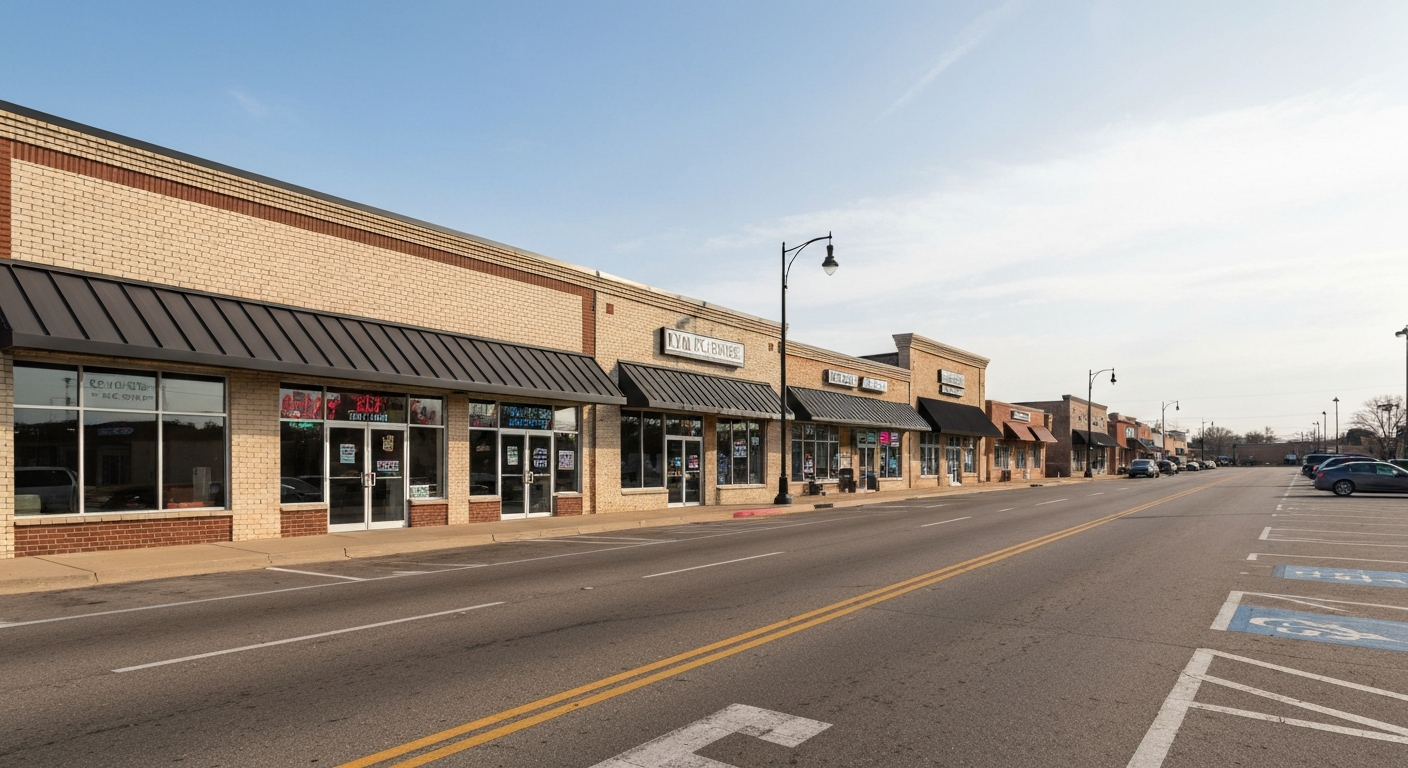
Del City’s major commercial corridors are SE 29th Street, Sunnylane Road, and SE 15th Street. These are the established commercial zones where retail, services, and light industrial businesses operate. If you’re looking at space on one of these roads, zoning is almost certainly fine. If you’re considering something off the beaten path, ask the city first.
Home-based businesses need explicit approval from the city. Del City allows home occupations in certain cases, but there are restrictions — typically around noise, traffic, signage, and the type of work. If you’re running a consulting business or virtual operation out of your home, you’re likely fine. If you’re running an auto shop from your garage, you’re not. Check the ordinances or call City Hall before you set up.
Building permits are required for any construction or renovation. If you’re leasing existing retail or office space, the landlord likely handled any past renovation permits. But if you’re doing any buildout, electrical work, plumbing, or structural changes, you’ll need a permit from the city. This costs money and takes time, so budget accordingly.
Sales Tax: High Rate, Low Overhead
Del City’s combined sales tax rate is 9.0%. This is one of the highest in the OKC metro, and it’s important to understand why and whether it matters for your business model.
The breakdown: state 4.5% + Del City 4.5%.
Oklahoma’s base state sales tax is 4.5%. Del City adds another 4.5% on top, totaling 9.0%. There’s no additional county tax on top of that — Oklahoma County doesn’t charge a separate sales tax in unincorporated areas, and Del City is the city jurisdiction, so you’re looking at those two layers only.
For context on the OKC metro: Oklahoma City proper also charges 4.5%, hitting 9.0% combined. Moore charges 3.875%, totaling 8.375%. Midwest City charges 4.6%, totaling 9.1%. So Del City’s 9.0% is high for the metro, but it’s not an anomaly — it’s typical for established OKC-area cities.
The tradeoff is real: lower rent, lower labor costs, and access to the same Tinker AFB customer base as Midwest City (which charges 9.1%, slightly higher than Del City). If you’re pricing your services or products to your market, you’re competing against other Del City and metro businesses that all face the same tax burden. It’s not a hidden cost — it’s baked into local pricing.
Oklahoma uses destination-based sales tax. If you’re a delivery or shipping business, you charge the sales tax rate at the buyer’s address, not your business’s address. This matters if you’re selling across the OKC metro — you’ll owe different rates depending on where the customer receives the goods. OkTAP handles the complexity of tracking this.
File and remit sales tax through OkTAP. You’ll collect the tax from customers, hold it, and remit it monthly (or quarterly, depending on your volume). OkTAP’s system tracks this and generates remittance reports. If you’re under a certain sales threshold, you may qualify for quarterly filing rather than monthly. Ask the Oklahoma Tax Commission for your specific filing frequency.
Costs at a Glance
Here’s exactly what you’re looking at for startup government fees:
- LLC filing: $100 one-time
- Annual LLC certificate: $25 per year (starts in year two)
- Sales Tax Permit: $20 one-time
- Del City business license: Contact City Hall for current fee (estimate $50–$150)
- Workers’ comp insurance (if hiring): Varies by industry, typically $500–$2,000+ per employee annually
- EIN from the IRS: Free
Total first-year government costs for a basic single-owner LLC with no employees: approximately $150–$200 in direct filing and licensing fees.
No franchise tax. No city income tax. No state E-Verify mandate (unlike some states). No hidden annual fees if you stay compliant.
The real savings come from commercial rent and labor costs. A small retail space or service office that costs $1,200–$1,500 per month in OKC proper might run $700–$1,000 in Del City. A part-time administrative assistant might be easier to find at reasonable wages given the local cost of living. Over three years, that difference is substantial.
For a bootstrapped service business — auto services, trades, cleaning, family services, food trucks — Del City’s math is genuinely favorable. You’re not sacrificing market access or customer quality. You’re just paying less rent and overhead while serving the same Tinker AFB customer base as pricier suburbs.
Next step: Contact City Hall at (405) 677-5741 or visit in person at 3701 SE 15th Street to request current business license application forms and fee schedules. Have your intended business location and type ready so they can confirm zoning and requirements. Then file your LLC at sos.ok.gov, register for sales tax on OkTAP, and you’re legally operational. The whole process takes about two weeks from start to finish.