How to Start a Business in Bartlesville, Oklahoma
How to Start a Business in Bartlesville, Oklahoma
Bartlesville is what happens when a Fortune 500 company decides to build a city around itself—and then gradually, inevitably, evolves into something else.
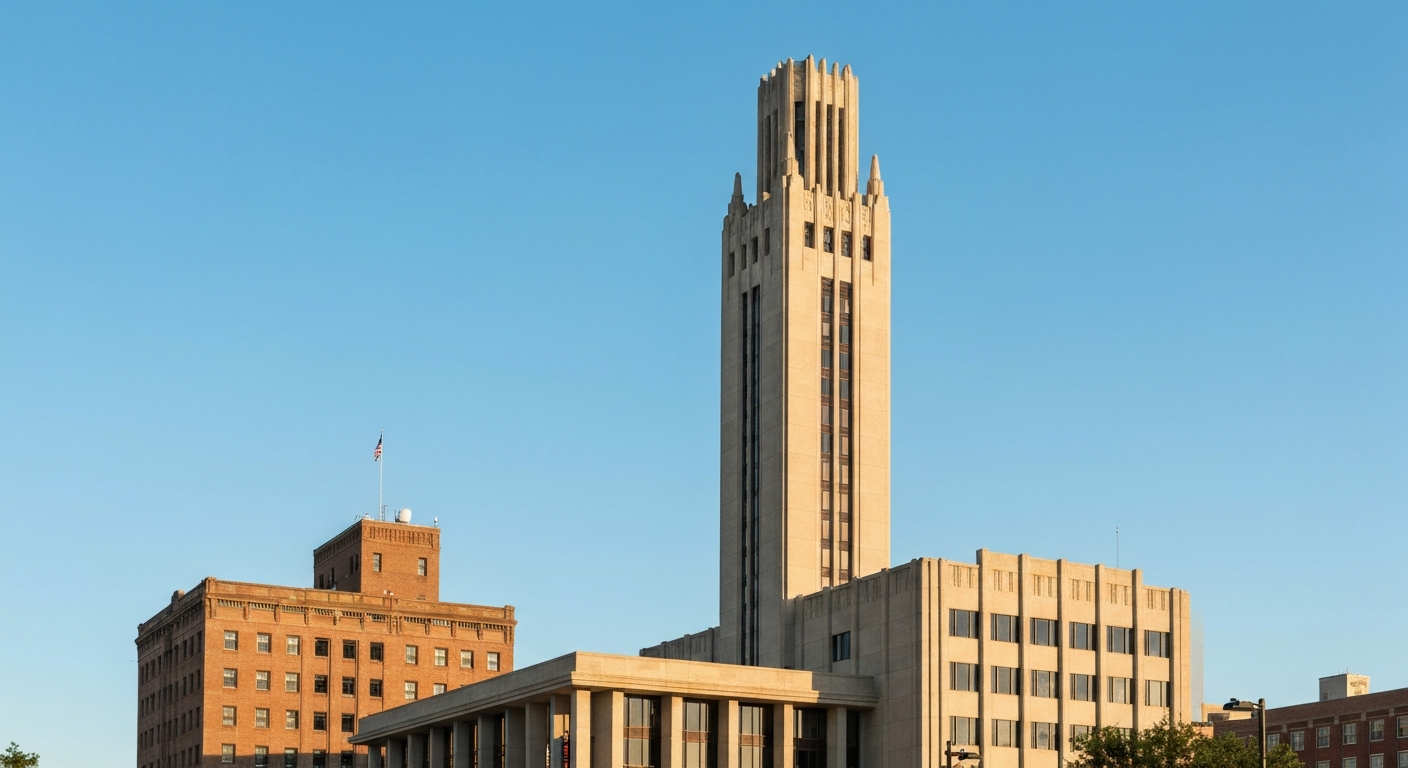
Phillips 66 still operates two major campuses here with 1,700 employees handling everything from corporate IT and procurement to midstream operations and commercial strategy. ConocoPhillips maintains a significant presence. ABB’s global technology operations have a foothold. But the city of 38,355 people has stopped being purely a company town. Downtown now features the Price Tower, Frank Lloyd Wright’s only realized skyscraper and a National Historic Landmark that draws architecture tourists from across the country. The median household income sits at $59,457—solid, professional, white-collar money. And the combined sales tax rate of 8.9% is lower than Tulsa’s 9.517% or Enid’s 9.1%.
For the right entrepreneur, Bartlesville isn’t a place to compete with multinational energy companies. It’s a place to serve them—and the 1,700-plus professionals they employ.
Why Start a Business in Bartlesville?
The Market Base
Population estimates for 2024 put Bartlesville at roughly 38,355 residents, making it Oklahoma’s 12th-largest city. More important than the number itself is what those people do and what they earn. The median household income of approximately $59,457 reflects the presence of Phillips 66’s professional workforce—engineers, finance professionals, HR specialists, IT managers, procurement officers. These are salaried people with disposable income. They eat lunch out. They need business services. They hire contractors. They buy commercial goods. They’re not minimum-wage earners; they’re the kind of customer base that sustains service businesses, professional practices, and specialty retail.
The Employer Anchor
Phillips 66 is the obvious elephant. The company operates two major Bartlesville campuses: the Bartlesville Business Operations & Innovation Center and facilities housing midstream operations, marketing, and commercial business units. With 1,700 employees, it’s the city’s largest employer. But it’s not the only one. ConocoPhillips, the multinational energy corporation, maintains significant operations here. ABB, the global technology and robotics company, also has a Bartlesville presence.
What matters: these aren’t fly-by-night operations. They’re permanent, they employ hundreds of professionals, and they create downstream economic activity. A Phillips 66 engineer needs accounting services. A ConocoPhillips manager wants somewhere to take clients to dinner. ABB employees need landscaping, IT support, commercial cleaning, staffing services. The corporate anchor creates a predictable customer base for the right business.
The Cultural Differentiator
Bartlesville has something almost no other Oklahoma city of its size can claim: the Price Tower, Frank Lloyd Wright’s only realized skyscraper. Built in 1956 for the Johnson Company, it’s a National Historic Landmark—a concrete and copper testament to organic architecture right there on Bartlesville’s skyline. It’s not just a building; it’s a draw. Architecture tourists visit. Design-focused companies relocate. The city has cultural cachet that translates into foot traffic, tourism dollars, and a certain class of client who values aesthetics and design.
The Economic Foundation
Bartlesville’s economy isn’t all oil and gas. Mining and quarrying are significant sectors—Washington County sits on substantial mineral deposits. Healthcare is a major sector. Retail anchors the commercial base. But energy remains the dominant industry. That concentration creates both stability and risk: stable because energy companies are permanent employers, risky because downturns in the sector ripple through the entire city. For a new business owner, it means understanding your customer base includes a significant number of people whose income depends on commodity prices.
Local Support
The Bartlesville Regional Chamber of Commerce actively supports new business formation. They’re not just a networking group; they’re a resource for entrepreneurs trying to understand local requirements, connect with other business owners, and navigate the city’s regulatory environment. Early outreach to the Chamber can accelerate your understanding of the local market and your position within it.
Step 1: Choose Your Business Structure
Your first decision is legal, not financial: are you filing as a sole proprietorship, an LLC, or a corporation?
LLC: The Default Choice
An LLC (Limited Liability Company) costs $100 to file with the Oklahoma Secretary of State at sos.ok.gov. You submit your Articles of Organization online or by mail. The filing is straightforward—the state doesn’t require a lawyer or a formation service for standard filings. The real cost is the $25 annual certificate, due on your formation anniversary every year.
The benefit: you get liability protection (your personal assets aren’t on the hook if the business gets sued), you avoid the franchise tax that used to plague Oklahoma corporations, and you have flexibility in how you’re taxed. An LLC can be taxed as a sole proprietorship, partnership, S-corp, or C-corp depending on what works for your situation.
No Franchise Tax
This is a meaningful advantage. Oklahoma repealed its franchise tax effective January 1, 2024 (via HB 1039). Previously, it applied to corporations. LLCs were already exempt. But the repeal removes a layer of annual compliance. You’re not paying a surprise $800+ tax bill like California does. You’re not filing a separate franchise tax return. The tax environment in Oklahoma is comparatively simple.
Corporation: Still an Option
If you want to incorporate as a traditional C-corp or S-corp, the filing fee is $50 with the Oklahoma Secretary of State. You’ll pay the same $25 annual certificate. Corporations make sense if you’re planning to retain earnings in the business, if you have multiple shareholders, or if you want clear separation between your personal and business identity. For most single-owner startups, an LLC is simpler. But the option exists.
Sole Proprietorship: No Filing Required
You can start a business tomorrow with zero state filing. You operate under your own name (or a DBA—“doing business as”). No liability protection. Your personal assets are vulnerable. No annual compliance. For very small, low-risk operations (a freelance consultant, a one-person service business), it works. But it’s not recommended for anything with meaningful liability exposure.
What Most Bartlesville Entrepreneurs Choose
For a first business, especially one with any customer-facing or asset exposure, an LLC is the standard play. $100 upfront, $25 a year. Done.
Step 2: Register for State Taxes
Once you’ve chosen your structure and filed your formation documents, the state tax machinery kicks in. This is where federal and Oklahoma systems intersect.
Sales Tax Permit
If your business sells any taxable goods or services, you need a Sales Tax Permit from Oklahoma. This is required—it’s not optional. You apply through OkTAP (Oklahoma Taxpayer Access Point) at oktap.tax.ok.gov. The permit itself costs $20 plus a handling fee. You’ll use this permit number on your registration documents, and it identifies you to the Oklahoma Tax Commission.
Taxable services include labor and materials for construction, repairs, alterations, or installation. Professional services—accounting, legal, consulting—are typically exempt. But anything tangible or service-intensive likely triggers a sales tax obligation. When in doubt, register. The permit is cheap, and operating without one when you need it creates liability.
Employer Withholding Registration
If you’re hiring employees, you need to register for employer withholding through OkTAP as well. This is separate from the sales tax permit. You’ll report wages, withhold income tax and FICA, and remit to the state. Oklahoma uses standard federal withholding tables. The registration is free; the compliance is where effort lies.
Workers’ Compensation: Mandatory and Non-Negotiable
This is unique to Oklahoma and often surprises new business owners: workers’ compensation insurance is mandatory for all employers. No minimum employee threshold. You can’t wait until you have ten employees. Day one, if you hire someone, you need coverage.
Your options are CompSource Mutual (formerly CompSource Oklahoma), which is the state-owned insurer, or a private insurance carrier. Rates vary by industry—construction is more expensive than office administration. For a professional services business, you might pay $400–800 annually for a single employee. For construction or manufacturing, multiply that significantly. But it’s not optional. Operating without it exposes you to penalties and personal liability.
Federal EIN
You’ll also need an Employer Identification Number from the IRS, even if you’re a sole proprietor with no employees. It’s free and takes ten minutes at irs.gov/ein. The EIN separates your business finances from your personal ones and is required for business banking, tax filing, and hiring.
Step 3: Get Your Bartlesville Business License
Here’s where Bartlesville-specific requirements come in. Oklahoma has no statewide general business license. Licensing is entirely local—handled by individual cities and counties.
Bartlesville requires a city business license for all businesses, period. Home-based and commercial. It doesn’t matter if you operate from your kitchen or a downtown office. You need a license.
The Application
The business license costs approximately $40 annually. You apply through the City of Bartlesville. The application form is available at cityofbartlesville.org. Building Services handles business licensing and can answer questions at (918) 338-4240.
City Hall is located at 401 S. Johnstone Ave, Bartlesville, OK 74003. The main number is (918) 338-4222. You can visit in person, call, or increasingly, submit applications online through the city’s portal.
Timing
You must complete your state registration (OTC registration for sales tax and employer withholding) before applying for the city license. The city wants proof that you’re registered with the state. So the order is: form your LLC, register for state taxes, then apply for the city license. It’s a three-step sequence, not simultaneous.
Renewal
The license is annual, due on your anniversary. It’s not expensive, but it’s easy to forget. Build it into your annual compliance calendar alongside your LLC’s $25 annual certificate.
Step 4: Handle Zoning and Location
Where you locate your business in Bartlesville matters—both for access to your market and for compliance with zoning regulations.
Downtown Bartlesville
The downtown core is a walkable commercial district anchored by the Price Tower. This is where you’ll find specialty retail, restaurants, professional services, and galleries. Downtown real estate tends to be less expensive than comparable retail in Tulsa, but there’s been significant investment in the district over the past decade. If you’re opening a restaurant, a design studio, a boutique, or a professional services practice, downtown is worth considering. The foot traffic includes both locals and architecture tourists drawn by the Frank Lloyd Wright landmark.
Highway 75 Corridor
The 75 corridor running through Bartlesville is the commercial strip—chain retailers, big-box stores, automotive services, fast-casual dining. If you’re opening something that benefits from highway visibility and parking (a quick-service restaurant, a tire shop, a retail store), this is where you’ll compete on visibility and convenience rather than walkability.
Home-Based Businesses
You can operate from home—many do. But you still need a business license. Bartlesville’s zoning code allows home occupations in residential areas, but there are restrictions. Check with the Community Development department before setting up to confirm your specific address allows your type of business. Home occupations are generally limited to low-traffic, non-manufacturing operations. A freelance consultant, a bookkeeper, a virtual assistant—fine. A manufacturing operation or a business with heavy client foot traffic—probably not.
Building Permits and Renovation
If you’re leasing or buying a commercial space and doing any construction or renovation, you’ll need a building permit from the City of Bartlesville’s Building Services division. Permits are required for everything from minor interior work to major buildouts. The process typically takes 1–2 weeks for review. Plan accordingly.
The Two-County Consideration
Here’s a detail that matters: Bartlesville straddles Washington County and Osage County. Most of the city is in Washington County, but parts extend into Osage County. This affects your sales tax rate. More on that below. When you’re scouting locations, confirm which county your address falls into. The difference is small, but it’s real.
Sales Tax: What You’ll Collect
If you’re selling taxable goods or services, you’re collecting sales tax on behalf of the state and local government. Understanding your exact rate is crucial for pricing and compliance.
The Combined Rate: 8.9%
The combined sales tax rate in most of Bartlesville is 8.9%: the state rate of 4.5% plus Washington County’s 1.0% plus Bartlesville’s city rate of 3.4%.
That 3.4% city rate is notably lower than many Oklahoma cities. Enid’s combined rate is 9.1% (city is 4.25%). Muskogee’s is 8.9% with a 4.0% city rate. Norman’s is 9.25%. Bartlesville’s lower rate is a minor but real competitive advantage—customers pay slightly less, which can matter for price-sensitive goods.
The County Border Complication
Remember: Bartlesville straddles Washington and Osage Counties. If your business location is in the Osage County portion of Bartlesville, your rate is slightly different. Verify your exact address and corresponding county before setting up your tax system. The difference is small, but mixing them up creates reconciliation problems.
Destination-Based Collection
Oklahoma uses a destination-based sales tax system. You charge the rate at the buyer’s ship-to address, not your business location. If a Bartlesville customer orders something shipped to Tulsa, you charge Tulsa’s rate. If they pick it up in Bartlesville, you charge Bartlesville’s rate. This matters for e-commerce and remote orders. Your point-of-sale system should automatically adjust based on zip code or address.
Filing and Remitting
You file and remit sales tax through OkTAP. Frequency depends on your revenue: high-volume businesses remit monthly, lower-volume quarterly or annually. The Oklahoma Tax Commission sends you notices with due dates. Missing a payment creates penalties and interest. Build tax remittance into your accounting routine.
Costs at a Glance
Let’s put this in concrete numbers. Here’s what it actually costs to start a basic business in Bartlesville:
- LLC filing with Oklahoma Secretary of State: $100 (one-time)
- Annual LLC certificate: $25/year
- Sales Tax Permit through OkTAP: $20 (one-time)
- Bartlesville city business license: approximately $40/year
- Workers’ compensation insurance (if hiring): varies by industry, but plan for $400–1,500 annually for your first employee
- Federal EIN: free
For a home-based service business with no employees, you’re looking at roughly $185 in government fees the first year ($100 + $20 + $40 + $25), then $65 annually ($25 + $40).
Add an employee, and workers’ comp pushes your first-year costs to $600–1,500 depending on what you do. But that’s a one-time setup; the insurance renews annually.
What Oklahoma Doesn’t Charge
This is as important as what it does:
- No franchise tax (repealed in 2024)
- No city income tax
- No state E-Verify mandate (unlike some states)
Oklahoma’s tax environment is straightforward. You’re not navigating franchise taxes or state income tax on business revenue. You’re paying sales tax (you collect it; you don’t pay it), payroll tax (if you have employees), and corporate income tax only if you organize as a C-corp and retain earnings. For an LLC, pass-through taxation is the default—business income flows to your personal return.
The Bartlesville Advantage: Where New Businesses Fit
Bartlesville’s economy is anchored by fortune 500 companies, but that doesn’t mean there’s no room for new businesses. It means the room is specific.
The 1,700 Phillips 66 employees, the ConocoPhillips workforce, the ABB staff—they’re all professionals with money to spend and limited options for specialized services. A business accounting firm serving energy companies. A commercial landscaping company handling corporate campuses. A staffing agency placing temporary workers. A commercial real estate firm marketing industrial properties. A design firm helping corporate clients refresh their offices. A marketing agency specializing in B2B services.
These aren’t businesses that compete with Phillips 66. They serve it. They serve the people who work there. They fill the gaps in a small city that’s too big to ignore but too small for every specialized service.
Bartlesville also has something most Oklahoma small cities don’t: cultural tourism. The Price Tower brings architecture enthusiasts. There’s a growing restaurant and hospitality scene supporting that traffic. A boutique hotel, a farm-to-table restaurant, a design-forward retail concept—these attract visitors and create a market beyond the local corporate base.
The Timeline
From decision to operational:
- Day 1: File your LLC with the Oklahoma Secretary of State ($100)
- Day 2–5: Register for state taxes through OkTAP ($20)
- Day 6–10: Apply for your Bartlesville business license ($40)
- Day 11–30: Secure your workers’ comp insurance (if hiring)
- Day 31: Open for business
The regulatory path is surprisingly fast. Most of the delay comes from your own logistics—finding a location, securing financing, setting up accounting—not from government processing. Oklahoma and Bartlesville don’t make this hard.
Final Thought
Bartlesville is a company town in transition. Phillips 66 will always be dominant. But the city is deliberately diversifying, and the Price Tower represents something beyond energy—it represents aspiration and design. That combination—stable corporate employment plus cultural identity plus a customer base that values quality—creates an unusual opportunity.
Start lean. Pick a specific problem that the corporate workforce or visiting tourists have. Solve it better than anyone else in a 40-mile radius. Bartlesville’s population of 38,000 is small enough that you can actually dominate a niche. Bigger cities? You’re one of hundreds. Here, you’re one of five.
That’s the real advantage.