How to Start a Business in Ardmore, Oklahoma
How to Start a Business in Ardmore, Oklahoma
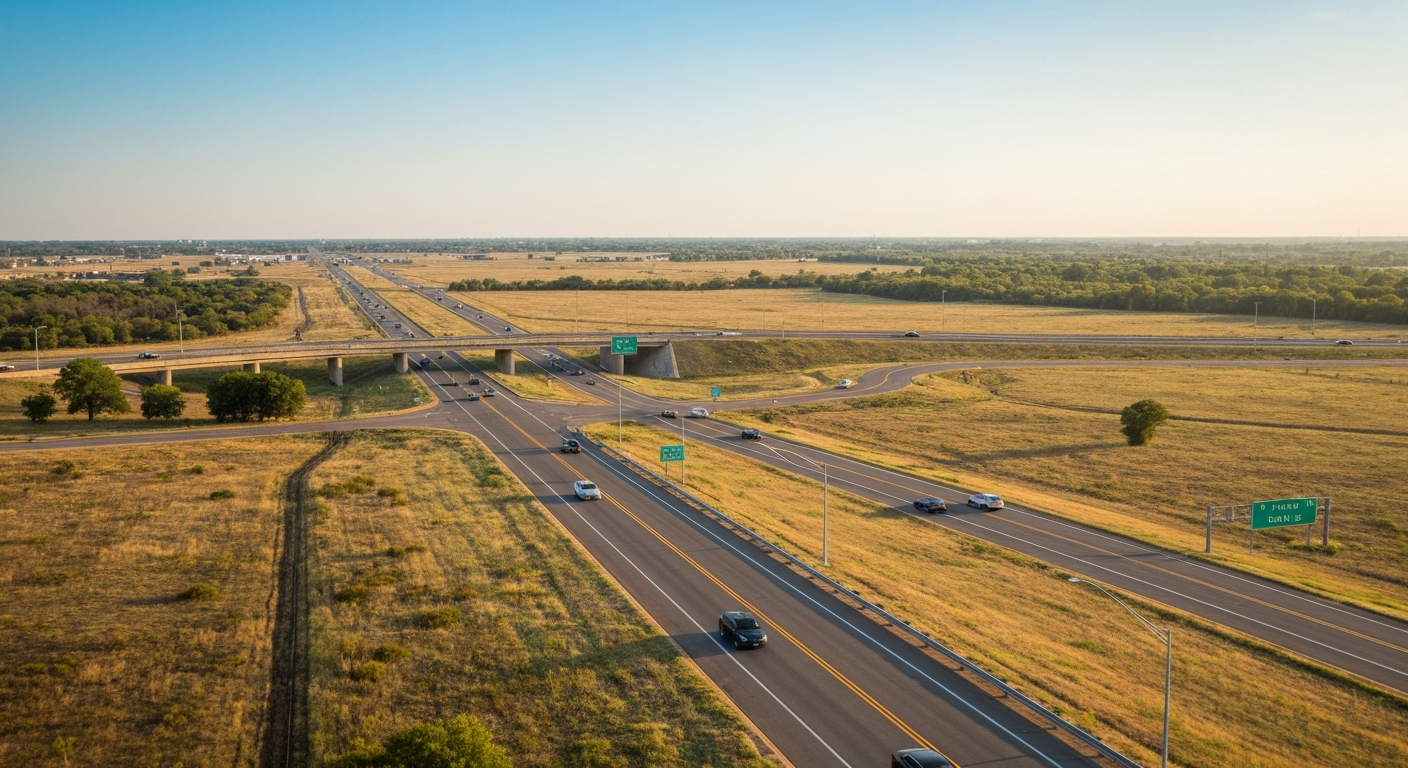
Ardmore sits exactly where logistics matter. Less than 100 miles from Oklahoma City. Less than 100 miles from Dallas-Fort Worth. That’s not metaphorical distance — it’s I-35, which moves 300,000 vehicles a day between two of the largest metro areas in the south-central U.S. For a city of 25,000, that positioning has shaped everything: the employers, the workforce, the market reach.
Michelin built a 1,400-person tire plant here in 1970 because of that I-35 corridor. Valero Energy operates a 290-employee refinery for the same reason. Dollar General and Best Buy run distribution centers here. Samuel Roberts Noble Foundation, one of the largest private agricultural research organizations in the country, calls Ardmore home. These aren’t vanity employers — they’re evidence of structural economic advantage.
Then came late 2025, when Michelin announced the plant would close. That’s the moment Ardmore is in now. A transition. But transition creates opportunity. A skilled manufacturing workforce is available. Commercial real estate is adjusting. Industrial infrastructure exists. And the I-35 corridor hasn’t moved.
If you’re considering starting a business in Ardmore, you’re looking at a ten-county trade region, a $52,954 median household income growing at 7%+ year-over-year, and unemployment that’s averaged under 5% since 2011. Here’s exactly what it takes to make it official.
Why Start a Business in Ardmore?
Ardmore is Oklahoma’s 18th-largest city and the county seat of Carter County. The population is approximately 25,064 as of 2024. That’s not big, but the economy extends far beyond city limits. Ardmore functions as the principal trade center for a ten-county region in south-central Oklahoma — meaning the customer base, workforce, and supply chains reach into rural counties and small towns that depend on Ardmore’s infrastructure and services.
The I-35 positioning is the real story. You’re 95 miles from Oklahoma City’s metro area (population 1.4 million) and 100 miles from Dallas-Fort Worth (population 7.6 million combined). That’s not a coincidence in Ardmore’s economic DNA. Major employers have always been here because of that access. Mercy Memorial Health Center employs 900. The Valero refinery employs 290 and processes crude oil for regional and national distribution. The Dollar General distribution center handles inventory for stores across the region. Best Buy operates a distribution facility. These businesses chose Ardmore because they needed to be on that corridor — close enough to both metros to serve both markets, but with lower land and labor costs than either major city.
The Michelin closure in late 2025 is the disruption. But it’s also an opening. The plant employed 1,400 people directly and supported an entire ecosystem of maintenance, logistics, and supply vendors. That workforce didn’t disappear. That industrial infrastructure — the buildings, the utilities, the expertise — didn’t disappear either. The plant site itself is now available for redevelopment. In a market where skilled manufacturing talent is increasingly scarce, Ardmore suddenly has a concentration of experienced workers looking for employers.
Samuel Roberts Noble Foundation adds another layer. It’s one of the largest private agricultural research organizations in the United States, headquartered in Ardmore. That’s intellectual infrastructure — scientists, agronomists, technicians, and the knowledge networks that come with serious research. For any business in agriculture, food production, or agricultural technology, that’s proximity to expertise most small cities don’t have.
The region’s industries are clear: manufacturing, healthcare, retail trade, energy, and logistics. Carter County unemployment has averaged under 5% since 2011. Median household income sits at approximately $52,954 and has been growing at 7%+ year-over-year — a sign of both stability and upward momentum.
Ardmore also sits within the Chickasaw Nation’s jurisdictional boundaries. Carter County is one of 13 counties in the Chickasaw Nation’s territory. The Chickasaw Nation operates an Ardmore Area Office providing tribal services and has been actively investing in economic development across the region. For most non-tribal small businesses, this affects criminal jurisdiction more than business licensing, but it’s part of the region’s governance structure and can create partnership and contracting opportunities.
Step 1: Choose Your Business Structure
You have three real options in Oklahoma: LLC, corporation, or sole proprietorship. Each has different costs and liability implications.
Limited Liability Company (LLC) is what most new business owners choose. You file Articles of Organization with the Oklahoma Secretary of State at sos.ok.gov. The filing fee is $100, one-time. Every year, you’ll pay a $25 Annual Certificate fee. That’s it. No franchise tax — Oklahoma repealed that in 2024 (it used to be an $800 surprise in some states). An LLC protects your personal assets if something goes wrong legally. You pay the $100 upfront, then $25 every anniversary. Total first-year cost: $125.
Corporation costs $50 to file (cheaper than an LLC) but requires more paperwork to maintain: corporate bylaws, annual shareholder meetings, separate tax filing. You’ll also pay the $25 annual certificate. Most small business owners don’t choose this route unless they’re planning significant growth or have investors. If you do, the filings go through the same Oklahoma Secretary of State office.
Sole Proprietorship costs nothing to file at the state level. You just start operating under your name (or file a DBA — Doing Business As — with the county). But sole proprietorship offers zero liability protection. If your business gets sued, your personal assets are exposed. For that reason, unless you’re doing consulting or freelance work with minimal risk, an LLC is worth the $100.
The Oklahoma Secretary of State is at 421 NW 13th Street, Suite 210, Oklahoma City, OK 73103. Phone: (405) 521-3912. You can file online at sos.ok.gov, which is faster.
Step 2: Register for State Taxes
Filing your business structure is different from registering for taxes. You need to do both.
Go to OkTAP (Oklahoma Taxpayer Access Point) at oktap.tax.ok.gov and register. This is where you get your Sales Tax Permit, which costs $20 plus a handling fee. You’re required to register if you’re selling any taxable goods or services. “Taxable” in Oklahoma means almost everything except groceries and certain services. Your sales tax permit is issued immediately (or within a few days if mailed), and you’ll use it to report and remit sales tax monthly or quarterly depending on your revenue.
If you’re hiring employees, you’ll also register for employer withholding through OkTAP. This lets you handle payroll taxes for your employees.
Workers’ compensation insurance is mandatory if you hire anyone. This is non-negotiable in Oklahoma — there’s no minimum employee threshold. You need it from your first hire. You can purchase it through CompSource Mutual (formerly CompSource Oklahoma) or a private carrier. It’s a business expense, but it’s required by law.
Get your EIN (Employer Identification Number) from the IRS at irs.gov/ein. It’s free. You’ll need it for taxes, hiring, and banking. You can apply online and get it immediately.
Step 3: Get Your Ardmore Business License
Oklahoma doesn’t have a statewide business license requirement — every city and county sets its own. Ardmore requires a business license for businesses operating within city limits.
The specific requirements and application process are handled through the City of Ardmore’s Development Services office. Business license and permit information is available at ardmorecity.org/470/Business-LicensesPermits. Development applications (which may include your business permit) are available at ardmorecity.org/158/Development-Applications.
Contact City Hall directly:
City of Ardmore
23 S. Washington Street, Ardmore, OK 73401
Phone: (580) 226-2100
The license cost varies depending on your business type. Call or visit in person and tell them what you’re starting — they’ll tell you the fee and what paperwork you need.
If you’re selling alcohol, that’s a separate, annual permit required under Chapter 4 of the City Code. It’s renewed every year.
The Development Services office also handles building permits if you’re constructing or renovating a space. Plan to get that before you start any physical work.
Step 4: Handle Zoning and Location
Ardmore is a small city, but it has zoning — and location matters for your business type.
The Ardmore Development Authority (ardmoredevelopment.com) assists with site selection and can point you toward business-friendly commercial and industrial properties. They understand the local market and can help you think through location strategically.
The I-35 corridor is Ardmore’s signature asset. Highway-adjacent commercial and industrial sites offer direct access to north-south freight routes. If you’re in logistics, distribution, or manufacturing, this is where you want to be. Real estate on I-35 in Ardmore is significantly cheaper than comparable land in OKC or Dallas, with better highway access than most smaller Oklahoma towns.
Downtown Ardmore centers on Main Street — the traditional commercial district. This is where retail, professional services, and restaurants cluster. If you’re starting a restaurant, salon, medical office, or other customer-facing business, downtown may make sense. It has foot traffic, parking, and established commercial infrastructure.
The former Michelin plant site is now available for industrial redevelopment. It’s a large property with existing infrastructure (utilities, parking, loading docks, buildings). If you’re in manufacturing or industrial operations and need significant space, this is a real opportunity. The Ardmore Development Authority can connect you with information about terms and redevelopment possibilities.
Home-based businesses are allowed in Ardmore but subject to zoning ordinances. Check with City Hall about whether your specific business type is permitted in residential zones. Many small consulting, professional services, and online businesses run from home — but you still need to make sure it’s zoned for it.
Building permits are required for any construction or renovation. If you’re leasing an existing space, your landlord may have already handled this. If you’re building or significantly renovating, you’ll need a permit from Development Services before work begins.
Sales Tax: What You’ll Collect
Oklahoma’s sales tax is destination-based, meaning you charge the rate at the buyer’s location, not yours.
In Ardmore, the combined sales tax rate is 9.125%:
- State of Oklahoma: 4.5%
- Carter County: 0.875%
- City of Ardmore: 3.75%
Ardmore’s 3.75% city rate is moderate for Oklahoma. Enid’s rate is 4.25%. Muskogee’s is 4.0%. Ardmore is in the middle.
You collect this on sales, file monthly or quarterly through OkTAP, and send the revenue to the state. The state distributes your portion back to the city and county. You don’t keep it — you’re collecting it on behalf of the government and remitting it. Don’t spend it as if it’s revenue.
Chickasaw Nation Jurisdiction
Ardmore is within the Chickasaw Nation’s jurisdictional boundaries. Carter County is one of 13 counties in the Chickasaw Nation’s territory. The Chickasaw Nation operates an Ardmore Area Office providing tribal services and economic development support.
For most non-tribal small businesses, this primarily affects criminal jurisdiction — where certain crimes are prosecuted — rather than day-to-day business licensing. Unlike the Muscogee Nation in eastern Oklahoma (which has complex overlapping jurisdiction affecting cities like Tulsa, Broken Arrow, and Bixby), the Chickasaw Nation’s impact on non-tribal business licensing is minimal.
That said, it’s worth understanding the jurisdiction exists. The Chickasaw Nation has been actively investing in economic development across the region. For certain business types — particularly those in agriculture, energy, or manufacturing — there may be partnership and contracting opportunities with tribal government agencies or tribal enterprises. It’s not a barrier to entry; it’s just part of the regional picture.
If you’re a tribal member or if your business is on tribal land specifically, that’s different — contact the Chickasaw Nation’s economic development office to understand specific requirements. For most Ardmore businesses, tribal jurisdiction is background context, not a compliance hurdle.
Costs at a Glance
Here’s what you actually spend to start a business in Ardmore:
- LLC filing: $100 (one-time)
- Annual certificate: $25/year
- Sales Tax Permit: $20 (one-time)
- Ardmore business license: varies by type (typically $50–150, call to confirm)
- Workers’ compensation insurance: varies by industry and number of employees (mandatory if hiring)
- Building permit: varies based on scope of work (if applicable)
No franchise tax. No city income tax. No state E-Verify mandate. Oklahoma doesn’t make you prove employees are work-authorized the way some states do.
For a basic LLC with one owner, no employees, and a simple sales operation, you’re looking at approximately $150–200 in government fees for the first year, then $25 annually after that (plus whatever your business license renewal costs, which Ardmore will specify).
If you’re hiring, workers’ compensation is an additional cost — but it’s a business expense you’d have anyway. CompSource Mutual and private carriers offer quotes based on your industry and payroll.
Making It Real
Starting a business in Ardmore means understanding what’s actually happening in the city right now. The Michelin closure is real. It’s a disruption. But Ardmore’s I-35 positioning, its skilled workforce, its role as a regional trade center, and its structural advantages haven’t changed. Samuel Roberts Noble Foundation is still there. Healthcare, energy, and logistics employers are still there. The ten-county region still depends on Ardmore’s infrastructure.
If you’re in manufacturing, skilled trades, logistics, healthcare, or agricultural services, Ardmore is genuinely interesting. You get lower costs than Oklahoma City or Dallas, access to both metros, and a workforce that has experience with serious employers. If you’re opening a retail or service business, you’re serving a population that reaches far beyond 25,000.
The paperwork is straightforward. File your LLC for $100. Register for sales tax. Get your city business license. Hire through CompSource for workers’ comp if needed. That’s it. You’re operating.
The harder work is understanding your customer, your location, and your market. Ardmore is in transition, which means some things are closing but other things are opening. The questions you need to answer are whether your business fills a gap, serves an underserved market, or takes advantage of the assets Ardmore has — its highway access, its workforce, its regional role. Answer those questions well, and the administrative steps are just paperwork.